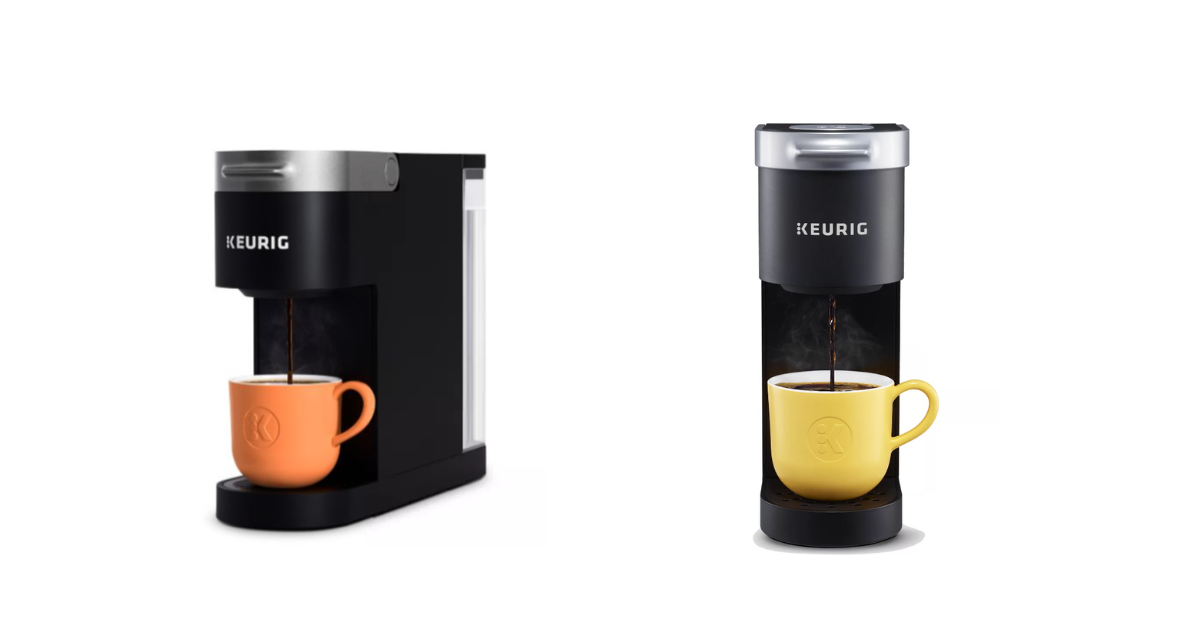
The manufacturer recommends descaling every three months, whenever the descale indicator lights, or if you notice slow or low output. The following step‑by‑step procedure follows the official manual exactly, ensuring you complete both the single‑cup and carafe cycles and the required fresh‑water rinses.
Before You Begin: Supplies and Prep
- Large ceramic mug — do not use a paper cup (for the single‑cup cycle)
- Fresh tap water
- Keurig descaling solution
- Sink for rinsing
- Optional: a Keurig water filter (remove if installed)
Procedure
- Remove any pod and grounds. Empty the reservoir and set aside a Keurig water filter if one is installed. Source
- With the brewer plugged in but powered off, pour a full bottle of descaling solution into the empty reservoir, then add one bottle of fresh water. Source
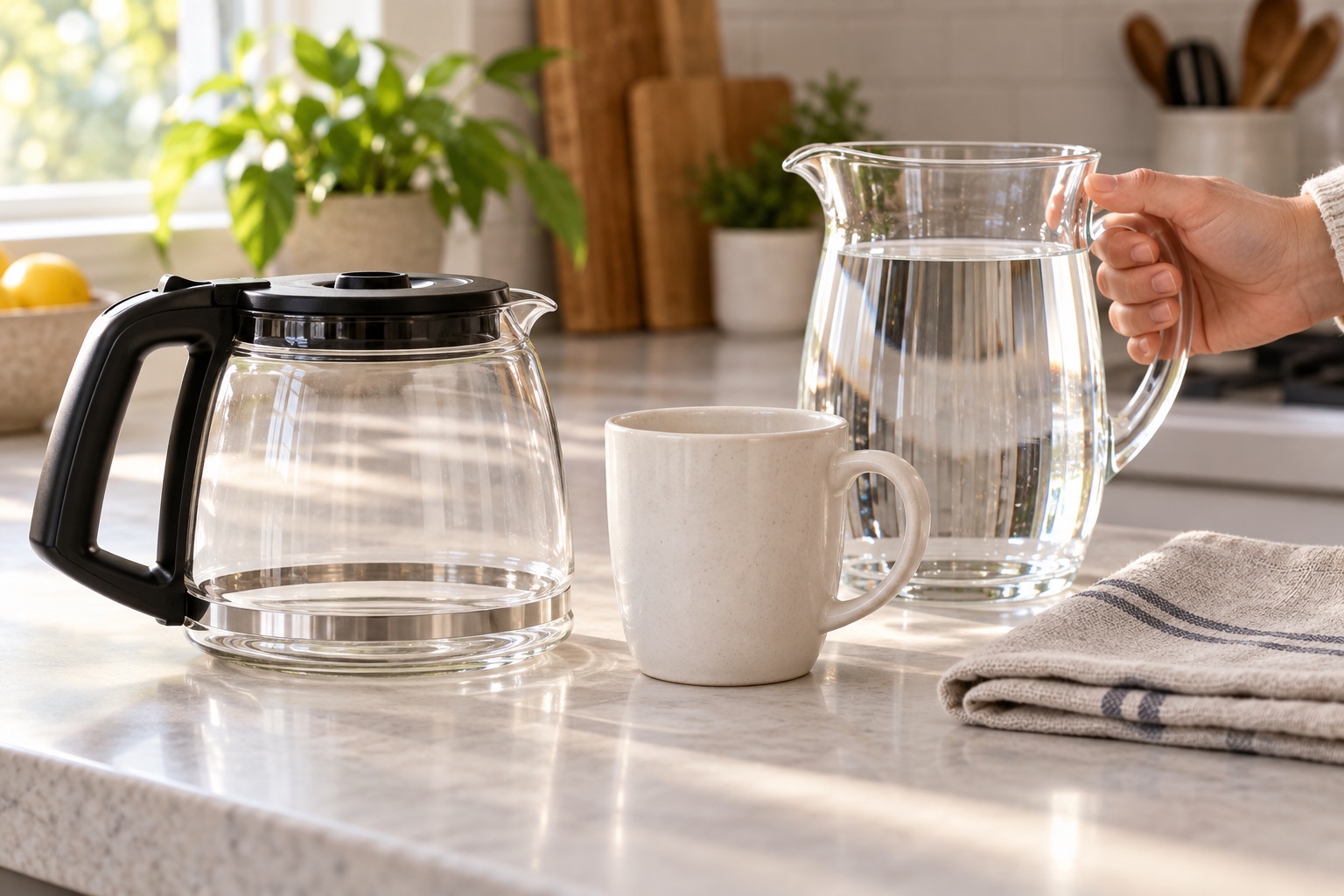
- Place a large mug on the drip tray and the carafe on the heating plate. Source
- Hold the CUPS and OZ buttons together for three seconds to enter descale mode; do not press a separate power‑on button. Source
- Press the flashing BREW control to start the single‑serve descale cycle. Source
- When that cycle ends, press flashing BREW again for the carafe descale; the carafe cycle is partial. Source
- When ADD WATER lights after the carafe cycle, pour out and rinse the mug and carafe. Source
- Discard the remaining liquid in the reservoir, rinse the reservoir, then fill it with fresh water to the MAX FILL line. Source
- Press flashing BREW for the first single‑serve fresh‑water rinse; empty the hot mug into the sink. Source
- Press flashing BREW for the second single‑serve fresh‑water rinse; empty the hot mug again. Source
- Press flashing BREW for the final carafe fresh‑water rinse; it empties the reservoir, and the hot carafe liquid goes to the sink. Source
- After the final carafe rinse, ADD WATER illuminates, descale mode exits, and the descale indicator turns off. Source

Confirming Completion
If the machine still shows low output or slow performance after completing the full sequence, the manual includes a heavily‑scaled brewer note and a troubleshooting section for partial brews. Source
Decision Checklist for Home Users
| Step | Action | Did you complete it? |
|---|---|---|
| 1 | Remove pod and grounds | |
| 2 | Empty reservoir and remove filter | |
| 3 | Fill with descaling solution + water | |
| 4 | Place mug and carafe | |
| 5 | Enter descale mode (CUPS+OZ) | |
| 6 | Press BREW for single‑serve descale | |
| 7 | Press BREW for carafe descale | |
| 8 | Rinse mug and carafe | |
| 9 | Discard reservoir liquid, rinse, refill with water | |
| 10 | Press BREW for first fresh‑water rinse | |
| 11 | Press BREW for second fresh‑water rinse | |
| 12 | Press BREW for final carafe rinse | |
| 13 | Confirm descale indicator off |
Conclusion
Keep the manual handy for reference and perform this routine every three months or as needed.