How to Clean a Coffee Pot Without Vinegar — 5 Methods
Cleaning a coffee pot has gotten complicated with all the conflicting advice flying around. Vinegar this, vinegar that — and then you actually try it and your kitchen smells like a pickle jar for two days. As someone who has destroyed more than one carafe chasing the wrong fix, I learned everything there is to know about vinegar alternatives. Today, I will share it all with you.
Here’s the thing nobody tells you upfront: mineral buildup and coffee stains are completely different problems. I figured that out at 6:47 a.m. on a Tuesday when my baking soda scrub did absolutely nothing to the white crust coating the inside of my Cuisinart. Different stains need different solutions. So let’s actually match the method to the mess.
The Fastest Fix — Baking Soda and Dish Soap
Start here. Seriously.
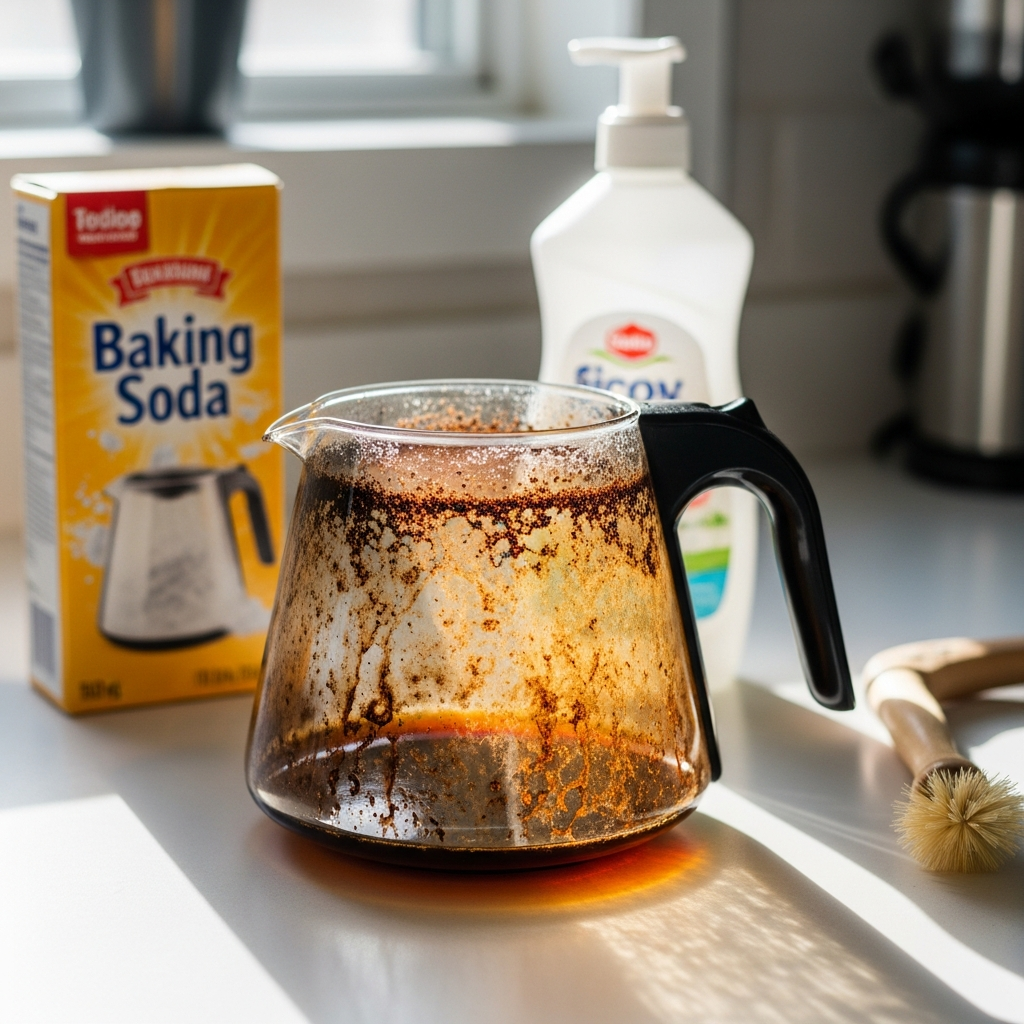
Grab 2 tablespoons of baking soda. Add a few drops of dish soap — Dawn, store brand, whatever you’ve got under the sink. Fill the pot with warm water and give it a stir. That’s the whole setup.
Soak for 15 to 30 minutes on light buildup. If your carafe looks like a coffee-stained archaeological artifact, go a full hour. While it soaks, use a bottle brush or soft cloth to swirl the mixture around — especially along the bottom edges where the brown clings hardest. Don’t skip that part. The fizz does real work, but it needs a little help.
But what does this method actually target? In essence, it’s a coffee oil and tannin remover. But it’s much more than that. Those brown stains that appear even when you rinse the pot every single day? That’s oxidized coffee oil bonding to the glass or stainless steel surface. Baking soda lifts the oils. The dish soap keeps them suspended so they rinse away instead of redepositing.
Three hot water rinses minimum when you’re done. Five minutes of actual effort spread across the soak. Your carafe comes out looking clear again — which, honestly, feels a little miraculous the first time.
Lemon Juice or Citric Acid for Mineral Buildup
This one is different. Use it when your pot looks white and crusty inside, or when the brew cycle has slowed to a crawl for no obvious reason.
That white crust is calcium and magnesium — hard water scale. Vinegar dissolves it because vinegar is acidic. So: use actual acid instead. Squeeze half a fresh lemon into the pot and fill with warm water. Or skip the mess entirely and use 1 tablespoon of citric acid powder — Modernist Pantry sells it for about $6 a container, and one container genuinely lasts forever. Dissolve the powder, let the pot sit for 20 to 30 minutes, swirl occasionally. Done.
Bottled lemon juice works fine. Fresh is not mandatory. Don’t let anyone tell you otherwise.
Probably should have opened with this section, honestly — because if your coffee tastes off and the machine seems fine, this is almost certainly your problem. Mineral buildup restricts water flow and messes with brew temperature. That weirdly bitter cup you’ve been drinking for three weeks? That’s why. This method fixes both issues at once.
Hydrogen Peroxide for Deep Discoloration
You’ve let the pot sit for three months. Maybe longer. It’s not just stained — it’s genuinely brown, like the carafe itself gave up. That’s when you reach for hydrogen peroxide.
Use 1/4 cup of standard 3% hydrogen peroxide — the kind from any pharmacy, usually around $2 a bottle. Fill the rest of the pot with warm water. Do not heat it. Do not agitate it. Let it soak untouched for 30 minutes and just let the peroxide do its thing.
This sounds aggressive. It is. It’s also the only method that reliably breaks down the stubborn organic staining that baking soda genuinely cannot touch. Safe for glass carafes. Safe for stainless steel. Skip it entirely if your pot is aluminum — peroxide will damage the surface. Rinse twice with fresh water before brewing anything.
One heads-up: the smell during the soak is sharp. Ventilate the kitchen — open a window, run the exhaust fan. The smell disappears completely after rinsing, and your pot comes back to glass-clear. Don’t make my mistake of doing this in a closed space at 7 a.m.
Denture Tablets — The Lazy Person’s Method
This one feels weird. People think I’m joking when I bring it up. I’m not.
Drop 1 or 2 denture cleaning tablets into the pot. Polident works. Generic CVS-brand tablets work just as well — I’m apparently a generic-brand person and the $3 store version works for me while the name brand never seemed meaningfully better. Fill with warm water and let it sit overnight, or at minimum 2 hours. The tablets fizz and dissolve. Zero scrubbing required. The stains lift anyway.
But what is a denture tablet doing here? In essence, it’s a dual-action cleaner engineered to break down both organic residue and mineral deposits simultaneously. But it’s much more than that — it’s basically a product designed for exactly the problem a coffee carafe develops over time. Someone just forgot to put it in the coffee aisle.
The value is genuinely hard to argue with. A pack of generic denture tablets runs about $3 and contains 40 tablets. One tablet per cleaning means 40-plus deep cleans for three dollars. That’s what makes this method endearing to us budget-conscious coffee drinkers. Compare that to buying vinegar regularly, or — worse — replacing the carafe entirely.
Honest take: severely discolored pots benefit from a quick baking soda scrub after the denture tablet soak. For maintenance cleaning or light staining, though, the tablet handles it alone. So, without further ado, just drop one in tonight before you go to bed.
How Often You Actually Need to Do This
Weekly rinse with soapy water keeps buildup from establishing itself. Deep clean every 2 to 4 weeks — adjusted for how hard your water is and how much coffee you actually brew.
Heavy use with hard water? Monthly deep cleans are completely normal. Soft water and occasional brewing? Every six weeks is fine. I’m apparently somewhere in the middle and land on every three weeks, for what that’s worth.
One tell that most people miss: if your coffee tastes bitter or sour and the machine is otherwise working, the pot is the culprit. Buildup changes flavor before it changes appearance. You’ve probably been drinking worse coffee than you need to for weeks without knowing why. Clean it today.
If you’re finding yourself cleaning more than once a week, stop — and buy a water filter pitcher instead. A $25 Brita will cut your deep-cleaning frequency roughly in half by pulling minerals out before they ever reach the pot. That’s the actual fix. Don’t make my mistake of spending a year scrubbing when a one-time purchase would have solved it.