Kirkland Signature coffee reviews have gotten complicated with all the conflicting opinions flying around Reddit and Costco forums. As someone who’s been buying every product in their coffee lineup for over three years, I learned everything there is to know about what’s actually worth buying. Today, I’ll share it all with you.
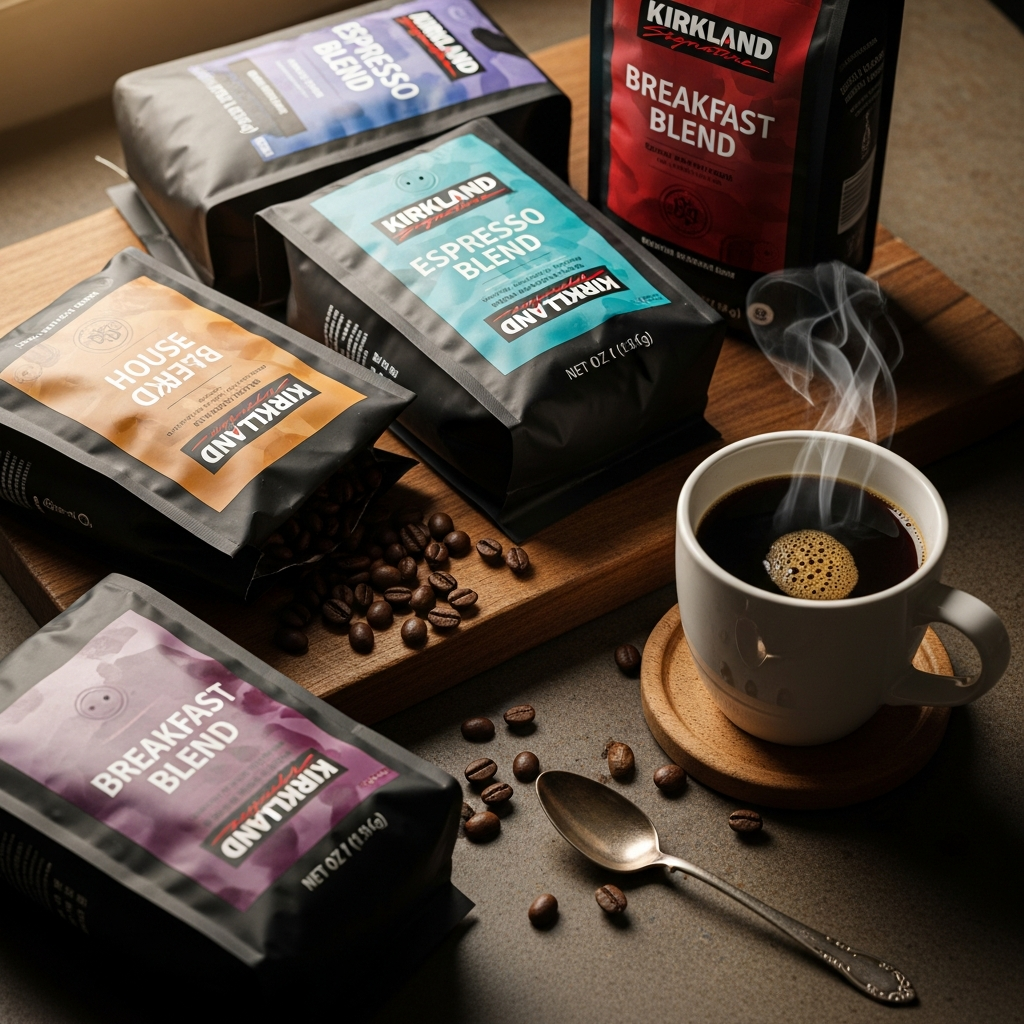
The house brand gets a lot of hype, but nobody gives you a straight answer: is it actually good, or just cheap? So I bought every Kirkland coffee product I could find — whole bean, ground, K-Cups, decaf, organic — and tested them all side by side over a month. Here’s my honest take on each one, including exactly how they stack up against the name brands sitting right next to them on the shelf.
The Kirkland Coffee Secret Nobody Talks About
Probably should have led with this: Kirkland Signature coffee is roasted by Starbucks. That’s not speculation — it’s been confirmed repeatedly. The beans come from Starbucks roasting facilities, but they’re blended and roasted to Costco’s specs, not Starbucks’. That’s why Kirkland tastes different even though it comes from the same place.
Why this matters: you’re getting Starbucks-level roasting infrastructure at Costco house-brand prices. Whether the blends are as good is another question — and that’s exactly what I tested.
Kirkland Signature Pacific Bold (Dark Roast) — The Fan Favorite
Price: $14.99 for 2.5 lbs ($0.37/oz)
Roast Level: Dark
Available As: Whole bean, K-Cups (120 ct for $35.99)
Pacific Bold is Kirkland’s most popular coffee, and after testing it, I get why. Confident dark roast that avoids the two biggest dark-roast sins: not burnt, not bitter. Deep chocolate notes, hint of smoke, surprisingly smooth finish for something this dark.
Brewed as pour over, French press, and drip — performed best in the French press where that full body really comes through. Pour over was good but exposed a slight flatness in the mid-tones you don’t notice in immersion brewing.
vs Starbucks French Roast: Starbucks ($19.99/2.5 lbs) is darker and more aggressive. Pacific Bold is more balanced and about $5 cheaper. For most people, Pacific Bold is the better buy.
Verdict: Buy it. This is the Kirkland coffee I keep coming back to. If you like dark roast but hate when it tastes like charcoal, this nails the sweet spot.
Kirkland Signature Colombian Supremo — The Daily Driver
Price: $15.99 for 3 lbs ($0.33/oz)
Roast Level: Medium-Dark
Available As: Whole bean
Costco’s biggest bag of whole bean. At $0.33/oz, one of the cheapest whole bean options in any store, period. But cheap doesn’t mean bad.
Actually surprised me. Clean, bright acidity that’s distinctly Colombian — citrus notes, medium body, slightly sweet caramel finish. Not complex or exciting, but well-roasted and consistent cup after cup.
The catch: 3-pound bag is a commitment. Unless you’re drinking 3+ cups a day or vacuum-sealing portions, the last pound will taste noticeably staler than the first. I started freezing half immediately. Solved it.
vs Peet’s Colombia: Peet’s single-origin ($16.99/lb at Target) has more nuance and brighter fruit notes. But at three times the per-ounce price, Kirkland holds its own for everyday drinking.
Verdict: Buy it if you go through coffee quickly. Value is unbeatable. Have a plan for the second half of the bag though.
Kirkland Signature House Blend — The Safe Choice
Price: $12.99 for 2.5 lbs ($0.32/oz)
Roast Level: Medium
Available As: Whole bean, ground
I’ll be honest: House Blend is boring. Not bad — just aggressively unremarkable. Medium roast, medium body, medium everything. Dark chocolate and hazelnut notes that are pleasant but don’t make you stop and think about what you’re drinking.
That said, “boring but reliable” has its place. Hosting Thanksgiving? Stocking an office? House Blend offends nobody. It’s the khaki pants of coffee. Functional, inoffensive, incredibly cheap.
vs Starbucks Pike Place: Pike Place ($19.99/2.5 lbs) has a roastier, slightly more complex profile. But it’s also 60% more expensive, and I’d argue the flavor gap doesn’t justify it. House Blend gets you 85% of the way there.
Verdict: Buy it for the cheapest whole bean that doesn’t taste cheap. Skip if you want interesting flavors.
Kirkland Signature Organic Sumatra — The Hidden Gem
Price: $16.99 for 2 lbs ($0.53/oz)
Roast Level: Dark
Available As: Whole bean
This is my #1 Kirkland product, and it’s the one most people walk past. The Organic Sumatra has the richest, most complex flavor in the entire Kirkland lineup. Deep earthy tones, dark chocolate, syrupy body, almost zero acidity. Tastes like coffee that should cost $18-20 per pound.
I ranked it #1 in my Costco coffee beans ranking, and after six more months of buying it, that ranking still stands. Makes incredible French press and pulls surprisingly well as espresso too.
Organic cert adds to the cost, pushing it above $0.50/oz. But it’s still less than half the price of comparable single-origin Sumatran from specialty roasters.
vs Peet’s Sumatra: Peet’s is excellent but costs $12.99/lb at most retailers. Kirkland’s organic version is nearly as good at roughly 60% of the price.
Verdict: Absolutely buy it. Best coffee Kirkland makes. Competes with beans that cost twice as much.
Kirkland Signature Decaf (Dark Roast) — Better Than Expected
Price: $14.99 for 3 lbs ($0.31/oz)
Roast Level: Dark
Available As: Whole bean, ground
Decaf gets a bad reputation, and most of it is deserved. But Kirkland’s is genuinely decent. Dark-roasted to compensate for decaffeination flavor loss, and it works — chocolate and roasty notes without the hollow, cardboard taste that plagues most decaf.
At $0.31/oz for 3 pounds, cheapest in the Kirkland lineup by price. Significant annual savings over Starbucks Decaf ($22.99/2 lbs) or Peet’s Decaf ($14.99/lb).
Verdict: Buy if you drink decaf. Won’t convert decaf-haters, but for the category it’s solid and priced right.
Kirkland Signature K-Cups — The Keurig Play
Price: $35.99 for 120 pods ($0.30/pod)
Varieties: Pacific Bold, Breakfast Blend, Summit Roast, House Decaf
Organic: Yes, all varieties
Dollar for dollar, the best K-Cup value at Costco. At $0.30/pod, significantly cheaper than Starbucks ($0.65/pod), Green Mountain ($0.55/pod), or even San Francisco Bay OneCups ($0.37/pod). And they’re all organic and Fair Trade.
Tested Pacific Bold K-Cups against the whole bean version — K-Cup is about 70% as good. You lose body and complexity (that’s the Keurig tax), but core flavor is there. Breakfast Blend is light and bright, good for people who think Costco K-Cups all taste the same. They don’t.
House Decaf K-Cups are harder to find in warehouses but available on Costco.com. Best decaf pod I’ve found at any price point.
vs Starbucks K-Cups: Starbucks at Costco runs about $54.99/72 pods ($0.76/pod). More than double the price. They taste a bit more “Starbucks-y” — roastier, more intense — but Kirkland Pacific Bold gets you most of the way for less than half the cost.
Verdict: Own a Keurig? Buy Kirkland. No reason to pay double for name-brand pods when these are this good.
The Price Comparison: Kirkland vs. Name Brands
Here’s why Kirkland is such a compelling buy — the price gap is real:
| Coffee | Price | Per Ounce |
|---|---|---|
| Kirkland House Blend (2.5 lbs) | $12.99 | $0.32 |
| Kirkland Colombian Supremo (3 lbs) | $15.99 | $0.33 |
| Kirkland Pacific Bold (2.5 lbs) | $14.99 | $0.37 |
| Kirkland Organic Sumatra (2 lbs) | $16.99 | $0.53 |
| Starbucks Pike Place at Costco (2.5 lbs) | $19.99 | $0.50 |
| Peet’s Major Dickason’s at Costco (2 lbs) | $14.99 | $0.47 |
| Starbucks French Roast at Costco (2.5 lbs) | $19.99 | $0.50 |
| Starbucks Pike Place at Walmart (28 oz) | $15.98 | $0.57 |
| Peet’s Major Dickason’s at Target (18 oz) | $13.99 | $0.78 |
Pattern is clear: Kirkland runs 30-50% less per ounce than name brands at Costco, and 50-70% less than those same brands at Walmart or Target. Even Costco’s Starbucks and Peet’s are cheaper than elsewhere — but Kirkland still undercuts them significantly.
Which Kirkland Coffee Should You Buy?
After testing the full lineup, here’s my cheat sheet:
- Best overall: Kirkland Organic Sumatra — rich, complex, worth the slight premium
- Best value: Kirkland Colombian Supremo — $0.33/oz for genuinely good coffee
- Best dark roast: Kirkland Pacific Bold — smooth, chocolatey, zero bitterness
- Best for offices/crowds: Kirkland House Blend — cheap, inoffensive, reliable
- Best K-Cups: Kirkland Pacific Bold pods — $0.30/pod for organic is unbeatable
- Best decaf: Kirkland Decaf Dark Roast — actually tastes like coffee, not cardboard
The Bottom Line on Kirkland Coffee
Is it actually good? Yes — with caveats. It won’t compete with freshly roasted beans from your local specialty roaster. Roast dates run 4-8 weeks old by purchase, and the blends prioritize consistency over complexity.
But for the price? Kirkland punches way above its weight. Organic Sumatra legitimately impressed me. Pacific Bold is a reliable daily dark roast. Colombian Supremo is nearly impossible to beat on value. The only products I’d steer you away from are House Blend (boring) and anything that’s been sitting on the shelf with a roast date older than 6 weeks.
I’m apparently the kind of Costco member who checks roast dates on every bag. If you’re a member who drinks coffee daily, you should be buying Kirkland. Full stop. The savings add up to $200-400 per year vs equivalent name brands, and the quality gap is way smaller than the price gap suggests.
For more Costco recs, my Costco coffee beans ranking covers 12 brands head to head. Or if Pacific Bold has you craving more options, my best dark roast coffees guide goes beyond Costco.