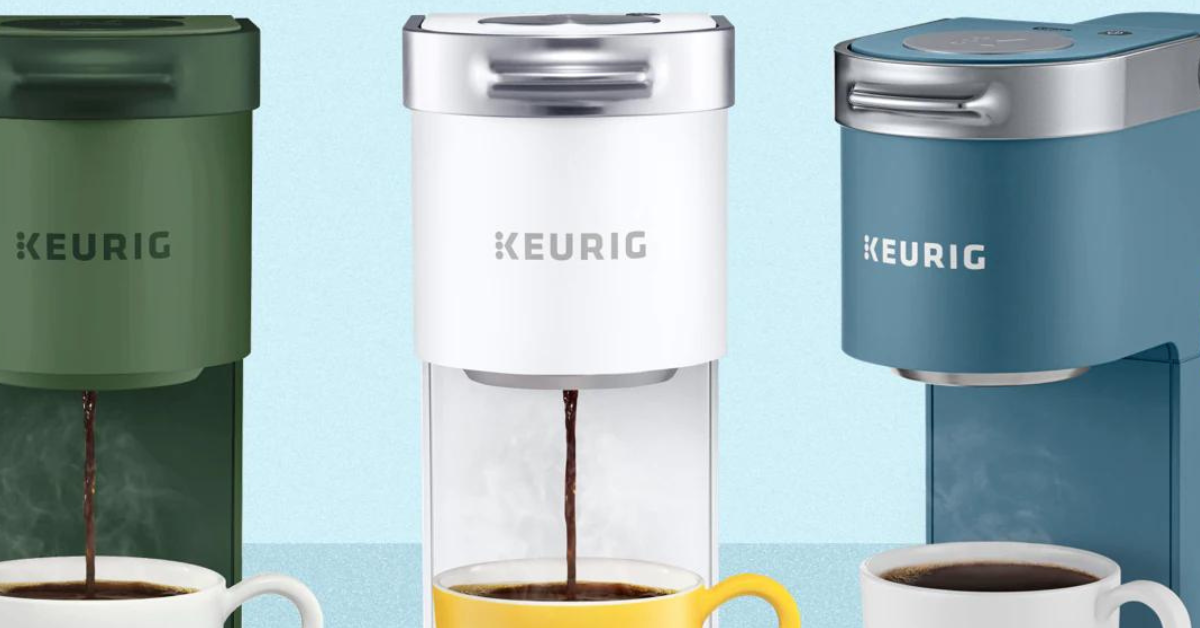
The best Keurig model for most homes is the K-Supreme because it combines four cup sizes, a 66-ounce movable reservoir, Strong and Over Ice settings, and MultiStream brewing without the complexity of a connected machine. Choose the K-Express for a smaller budget, the K-Café SMART for milk drinks, or the K-Duo Hot & Iced when you also need a full carafe.
Shop the top Keurig models
Best for most homes: see the Keurig K-Supreme on Amazon.
Best budget choice: see the Keurig K-Express on Amazon.
Best for milk drinks: see the Keurig K-Café SMART on Amazon.
This 2026 Keurig comparison separates current home brewers from legacy and commercial models, then matches each machine to the person it serves best. Model availability changes, so confirm the current configuration on Keurig’s official coffee-maker catalog before buying.
Keurig Models Compared at a Glance
| Model | Best for | Reservoir | Cup choices | Standout feature |
|---|---|---|---|---|
| K-Supreme | Best overall | 66 oz, dual position | 6, 8, 10, 12 oz | MultiStream + Over Ice |
| K-Express | Best value | 42 oz | 8, 10, 12 oz | Strong Brew |
| K-Elite | Most brew control | Large removable tank | 4, 6, 8, 10, 12 oz | Temperature control + iced setting |
| K-Café SMART | Lattes and cappuccinos | Multi-cup reservoir | Multiple sizes | Milk frother + BrewID |
| K-Duo Hot & Iced Gen 2 | Pods and carafes | 72 oz shared tank | Single cups + carafe | Ground coffee and K-Cups |
| K-Mini | Tiny kitchens and travel | Single-cup fill | 6–12 oz | Very narrow body |
| K-Slim | Slim design with reservoir | 46 oz | 8, 10, 12 oz | Under 5 inches wide |
| K155 OfficePRO | Small offices | 90 oz | 4, 6, 8, 10 oz | Commercial certification + touchscreen |
Specifications describe the commonly sold U.S. versions available when this guide was updated. Retailer-exclusive versions can differ.
How the Keurig Model Families Differ
Keurig’s model names make more sense when you group them by job:
- Basic single-serve: K-Express and K-Classic prioritize simple buttons and lower cost.
- Compact: K-Mini and K-Slim fit narrow counters. The Mini uses fresh water for every cup; the Slim stores several cups of water.
- Premium single-serve: K-Supreme and K-Elite add stronger brewing, iced-coffee support, larger reservoirs, or more adjustment.
- Specialty drinks: K-Café models add a milk-frothing system and concentrated coffee setting. They do not make true pressure-brewed espresso.
- Combination brewers: K-Duo models use K-Cup pods for single cups and ground coffee for a carafe.
- Commercial: K150, K155, K-1500, and newer business systems are designed for heavier shared use and have different service and plumbing options.
The 8 Best Keurig Models in 2026
1. K-Supreme — Best Keurig for Most People
The K-Supreme is the easiest model to recommend because it improves the core single-cup experience without requiring an app or milk system. Keurig’s MultiStream design uses several water streams to saturate the pod more evenly than the single central stream used in older basic brewers. You can choose 6, 8, 10, or 12 ounces, press Strong for more intensity, or use the Over Ice setting.
The 66-ounce removable reservoir can sit behind the brewer or along its side, which is genuinely useful on crowded counters. The main limitation is simple: it only brews K-Cup-size servings, not a carafe.
- Choose it if: you want the best balance of flavor features, size, and simplicity.
- Skip it if: you regularly brew a pot for several people.
2. K-Express — Best Budget Keurig
The K-Express keeps the features that matter and drops most extras. It brews 8-, 10-, and 12-ounce cups, includes a Strong button, and uses a 42-ounce reservoir. Its narrow body is easier to place than the K-Elite or K-Café, while the multi-cup tank avoids the K-Mini’s refill-before-every-cup routine.
Do not confuse it with the K-Express Essentials. The Essentials version is a retailer-oriented lower-price model with a 36-ounce reservoir and can have a different feature set. Check the exact name on the box.
- Choose it if: you want inexpensive, uncomplicated pod coffee with a removable reservoir.
- Skip it if: a 6-ounce cup, temperature control, or a dedicated iced program is important.
3. K-Elite — Best for Temperature and Cup-Size Control
The K-Elite is an older premium design that remains useful because of its unusually broad controls. It offers five cup sizes from 4 to 12 ounces, adjustable brew temperature, Strong Brew, an iced setting, hot water on demand, and a large removable reservoir. It is a better fit than the K-Supreme when a 4-ounce concentrated cup or temperature adjustment matters to you.
Its tradeoff is footprint and age: it is wider than the compact models and lacks MultiStream. It is still listed by Keurig, but confirm availability rather than assuming every color or package remains in production.
- Choose it if: you value manual control and a large water tank.
- Skip it if: you want the newest brewing platform or the narrowest machine.
4. K-Café SMART — Best for Lattes and Cappuccinos
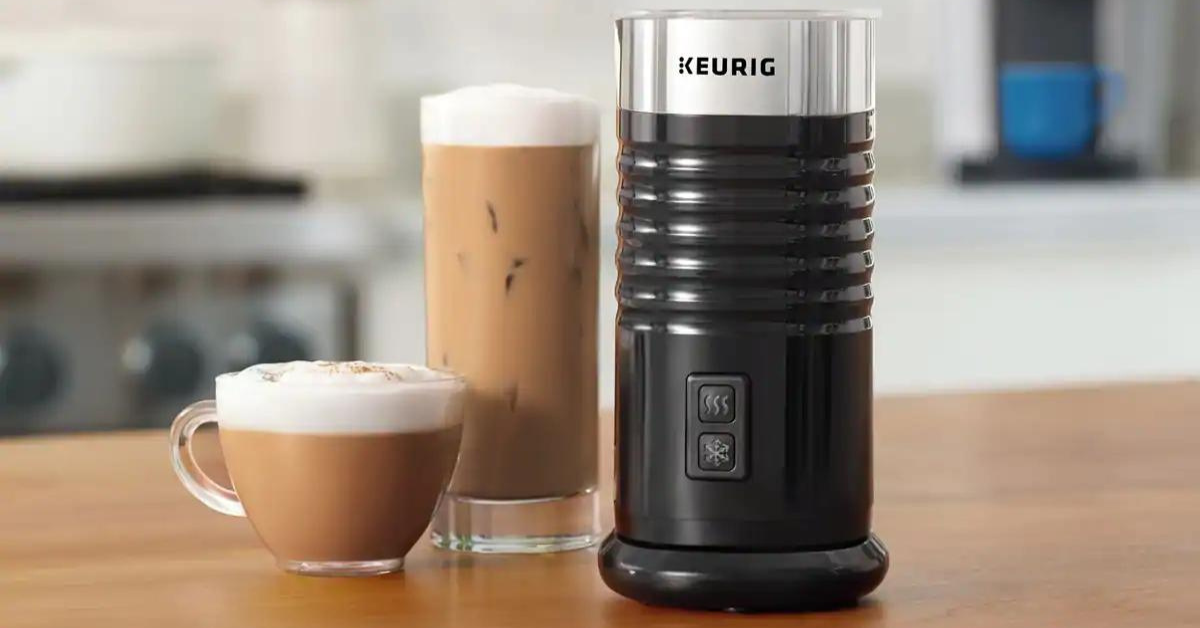
The K-Café SMART pairs a K-Cup brewer with a built-in milk frother. BrewID recognizes compatible pods and can suggest settings through Keurig’s connected system, while the concentrated coffee setting creates a stronger base for milk drinks. It makes convenient café-style drinks, but it does not generate the pressure or true espresso produced by an espresso machine.
The frother and connected features add cleaning, counter space, and cost. If you mainly drink black coffee, the K-Supreme or K-Elite is the more direct choice.
- Choose it if: you want one appliance for pod coffee and frothed-milk drinks.
- Skip it if: you expect true espresso or dislike cleaning a milk system.
5. K-Duo Hot & Iced Gen 2 — Best for Pods and a Full Pot
The second-generation K-Duo solves the household argument between single-serve convenience and a traditional carafe. It accepts K-Cup pods on one side and ground coffee for the carafe, draws from one 72-ounce reservoir, and adds Strong and Brew Over Ice options. This is the logical model for a household that makes quick weekday cups but wants a pot on weekends or for guests.
It occupies more counter space than a single-serve brewer, and buyers should distinguish the current Hot & Iced Gen 2 from older K-Duo, K-Duo Essentials, and K-Duo Plus packages.
- Choose it if: you alternate between one cup and a carafe.
- Skip it if: you never brew ground coffee by the pot.
6. K-Mini — Best for the Smallest Spaces
The K-Mini is built around minimum width and maximum simplicity. Add between 6 and 12 ounces of water for each brew, insert a pod, and the machine uses the water you added. The single-cup reservoir reduces bulk and avoids water sitting for days, but it also means measuring and refilling every time.
- Choose it if: you have a dorm, RV, office corner, or extremely small kitchen.
- Skip it if: several people brew cups back to back.
7. K-Slim — Best Narrow Keurig With a Reservoir
The K-Slim sits between the K-Mini and full-size machines. It is less than five inches wide yet stores 46 ounces of water and brews 8-, 10-, and 12-ounce cups. MultiStream is included, so it offers a more current brew platform than older compact basics.
Choose it over the Mini when you want a narrow brewer but do not want to refill for every cup. Choose the K-Express instead if Strong Brew matters more than shaving a little width.
8. K155 OfficePRO — Best Established Small-Office Model
The K155 is a commercial-style brewer with a 90-ounce reservoir, 4-, 6-, 8-, and 10-ounce servings, an adjustable-temperature touchscreen, drainable internal tank, and certifications intended for shared environments. It is much larger and more expensive than a normal home brewer, but it is designed for repeated office use.
Keurig’s current commercial catalog also includes the K-1500, K-1550, K-2500, and larger systems. Businesses should compare service, plumbing, expected daily volume, and distributor support—not just retail price.
Keurig K150 vs K155: What Is the Difference?
The K150 and K155 belong to the same commercial family, but their cup-size menus differ. According to Keurig Commercial, the K150 offers 4, 6, 8, 10, and 12 ounces, while the K155 offers 4, 6, 8, and 10 ounces. Both use a 90-ounce reservoir, color touchscreen, adjustable temperature, energy-saving controls, and commercial certifications.
The K150P is the plumbing-ready variant, although Keurig notes that the direct-plumb accessory is required. The K155 can also be paired with the compatible K150/K155 direct-plumb kit. For a new small-business purchase, also compare the K-1500 and K-1550 because they add newer features and a 96-ounce reservoir.
K-Classic vs K-Select vs K-Express
These three names frequently confuse shoppers:
- K-Classic: the older simple workhorse with 6-, 8-, and 10-ounce sizes and a 48-ounce reservoir.
- K-Select: adds Strong Brew and an additional larger serving to the basic formula; availability can vary.
- K-Express: the narrower current-value choice with 8-, 10-, and 12-ounce sizes, Strong Brew, and a 42-ounce reservoir.
Choose K-Classic when you find a good price and want a 6-ounce button. Choose K-Express for a slimmer design and 12-ounce cup. Choose K-Select only when its exact retailer package and price beat those alternatives.
How to Choose the Right Keurig
1. Decide Between Single Cups and a Carafe
If you only use K-Cups, avoid paying for a K-Duo. If you routinely serve three or more people at once, a carafe brewer is usually faster and creates less pod waste.
2. Measure the Counter
Measure width, depth, and open-lid height, including clearance below cabinets. Narrow models can still be deep, and rear reservoirs need room to remove and refill.
3. Match Reservoir Size to Daily Use
A single-cup tank is fine for one occasional user. A 40- to 66-ounce reservoir is more convenient for a household. Shared offices benefit from commercial capacity and drainable tanks.
4. Buy Only the Controls You Will Use
Strong Brew is useful because larger pod servings can taste thin. Temperature control, app connectivity, milk frothing, and carafe scheduling are valuable only if they match your routine.
5. Plan for Cleaning and Pod Cost
Every Keurig needs regular rinsing, needle cleaning, water-filter replacement when used, and descaling based on water conditions and the manual. Reusable filters can reduce pod waste and let you use ground coffee, but compatibility varies by brewer.
For more model-specific advice, browse our Keurig guides or see the best Keurig models for iced coffee.
Frequently Asked Questions
What is the difference between Keurig models?
The main differences are reservoir capacity, cup sizes, Strong or Over Ice settings, MultiStream brewing, temperature adjustment, milk frothing, carafe capability, and commercial certification. All current home pod models perform the same basic task; the extra features determine convenience and flexibility.
Which Keurig model makes the strongest coffee?
Choose a model with Strong Brew and use a smaller cup size. K-Elite adds temperature control and a 4-ounce option, while K-Supreme provides Strong Brew and MultiStream. Pod freshness and the coffee-to-water ratio matter as much as the brewer.
Is the K-Supreme better than the K-Elite?
K-Supreme is better for most buyers who want MultiStream, a movable reservoir, and straightforward controls. K-Elite is better when you specifically want temperature adjustment, five cup sizes including 4 ounces, and hot water on demand.
Do all Keurig models use the same K-Cups?
Current K-Cup home brewers accept standard K-Cup pods, but accessories and reusable filters are not universally interchangeable. K-Duo carafe sides use ground coffee, and commercial or discontinued systems may have different requirements.
Final Verdict
Buy the K-Supreme if you want the safest all-around home choice. Pick K-Express for value, K-Elite for maximum cup and temperature control, K-Café SMART for frothed-milk drinks, or K-Duo Hot & Iced Gen 2 for both pods and a carafe. For an office, start with expected daily volume and support requirements, then compare K155 with Keurig’s newer commercial systems.