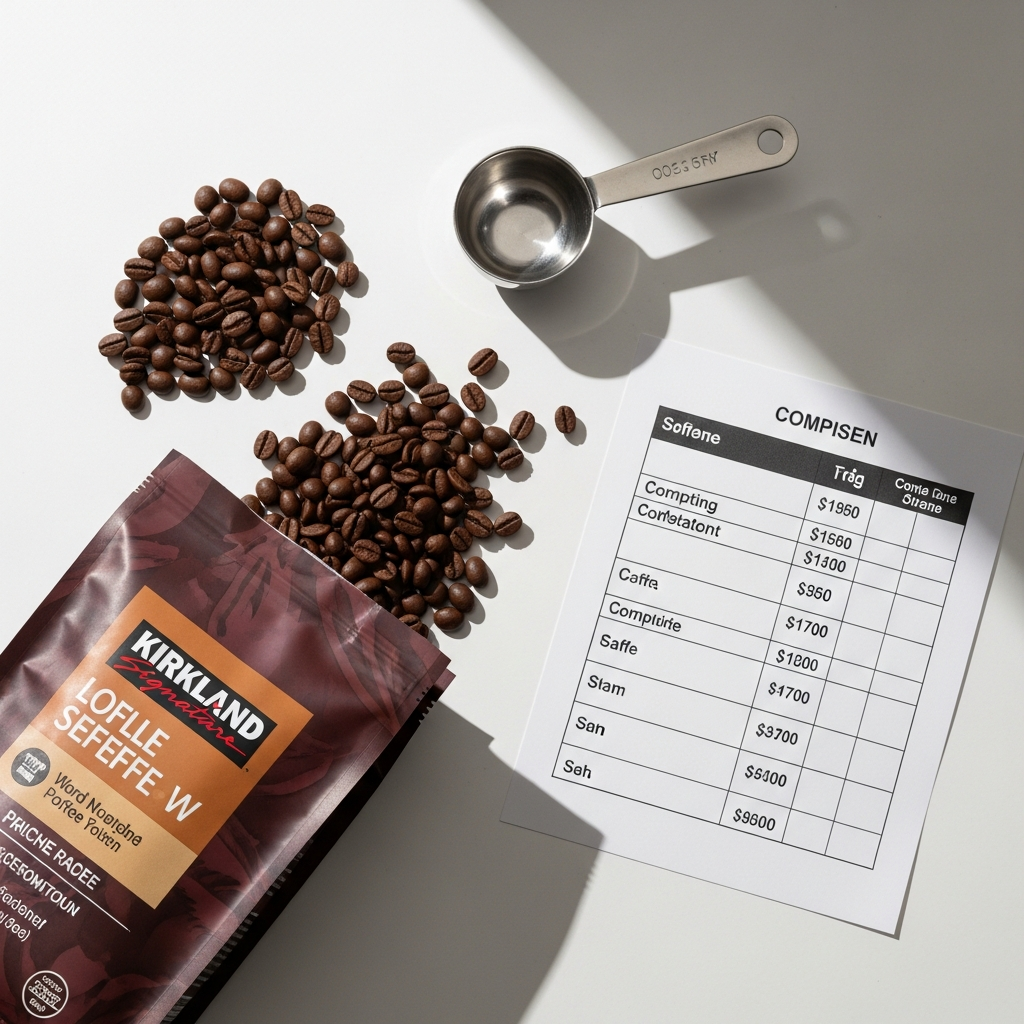
Kirkland Signature Medium Roast is the best value play
Last week I grabbed a bag of Kirkland Signature Medium Roast at $9.99 for a 2-pound bag — that’s $5 per pound or roughly $0.31 per ounce. That’s the move for most home brewers, honestly. This roast is consistently available across most Costco locations right now, though SKU rotation happens occasionally, so call ahead if you’re making a special trip. The medium roast hits that Goldilocks zone: not so light that it tastes thin and acidic in a French press, not so dark that it becomes a one-note charcoal bomb in your drip machine.
Want some real perspective? A 1-pound bag of Starbucks House Blend at Costco runs about $11 for 16 ounces — that’s $0.69 per ounce. Lavazza, the Italian stalwart Costco also stocks, comes in around $7.99 for 10 ounces, or $0.80 per ounce. Kirkland undercuts both by a meaningful margin while delivering a cup that tastes roasted, balanced, and familiar. The roast chemistry here leans into what coffee scientists call the “second crack” early window — you get caramelized sugars and browning reactions without the burnt, ashy notes that show up in darker profiles.
For drip coffee makers and French press, this is the everyday recommendation. Probably should have opened with this section, honestly, because the value prop is so strong that everything else feels like refinement.
Kirkland Dark Roast if you drink espresso or Moka pot
The dark roast is where Kirkland gets bold. Same $9.99 per 2-pound bag, same per-pound math, but the flavor profile shifts entirely. Darker roasts lose some origin complexity and gain body — that heavy, syrupy mouthfeel that espresso machines and stovetop Moka pots actually demand.
The roasting process pushes past the second crack into urban/French roast territory, breaking down acids and building emulsified oils that coat your palate. You’ll pick up chocolate and walnut notes — not because the packaging says so, but because extended heat exposure caramelizes compounds in the bean that literally taste that way. This roast costs the same as Starbucks Dark at Costco, which usually runs $10.99–$11.99 for a pound, making Kirkland the obvious choice if you have an espresso setup.
One honest note: the medium roast doesn’t shine in espresso. It pulls thin and bright, missing the body that lever machines and pump espresso machines need to produce that textured shot. If you’re doing stovetop Moka pot or a budget espresso maker, the dark roast changes the game entirely. The medium works fine for everything else.
Kirkland Single-Origin Reserve (when Costco has it)
Costco rotates limited single-origin lots — I’ve seen Ethiopian natural processed and Colombian microlot offerings move through the warehouse intermittently. Availability is spotty, which is why this one’s secondary. When they do stock single-origins, they typically run $12.99–$14.99 per 2-pound bag, landing around $6.50–$7.49 per pound.
Still cheaper than ordering from most online specialty roasters, where single-origins run $15–$18 per pound. The gap narrows when you factor in shipping, but here’s the real advantage: immediate access and their return policy. Buy it, don’t like it, bring it back for a full refund — no receipt required for Costco members, and yes, this works for coffee too.
Should you upgrade from medium to single-origin? Only if you’re pouring over. Pour-over brewing exposes the bean’s unique terroir — you’ll taste the floral notes in Ethiopian naturals or the caramel complexity in Colombian geishas. French press and drip machines muddy those subtle differences. Espresso machines extract so aggressively that single-origin advantages largely disappear. For pour-over devotees, the Kirkland single-origin at that price point is worth the swap.
The per-pound math and price trends
Here’s the actual comparison table to keep handy when you’re at Costco:
| Brand & Roast | Bag Weight | Price (Est.) | Cost per Pound |
|---|---|---|---|
| Kirkland Medium | 2 lbs | $9.99 | $5.00 |
| Kirkland Dark | 2 lbs | $9.99 | $5.00 |
| Starbucks House Blend | 1 lb | $11.00 | $11.00 |
| Lavazza Super Crema | 10 oz (0.625 lbs) | $7.99 | $12.78 |
Kirkland’s pricing has held steady since at least March 2024 — no jumps, no surprise hikes. That stability matters if you’re a regular buyer. You’re not chasing price fluctuations at specialty chains or watching for sales. The cost is predictable, which removes friction from the weekly shopping routine.
The delta is real: buying Kirkland medium over Starbucks House saves you about $12 per pound. If you drink half a pound per week, that’s $312 annually. Over a year, you’re looking at meaningful savings without sacrificing brew quality — and for many palates, Kirkland actually tastes better because it’s fresher. Costco’s volume means faster turnover.
Grind size and storage matter more than the bag
Here’s where I made a mistake early on. Bought Kirkland beans once, steeped them for two weeks in the original valve bag, ground them coarse, and thought they tasted flat and stale. Wrong move, all of it.
Whole beans start degassing oxygen immediately after roasting. The original Kirkland bag has a one-way valve that lets CO₂ out, but it doesn’t seal against oxygen infiltration long-term. After 10–14 days, the beans oxidize and lose volatiles that carry flavor. That’s not a Kirkland problem — it’s a storage problem. Buy whole bean, grind within two weeks max, and store in an airtight container in a cool, dry spot away from heat and light. A basic $8 vacuum-seal container from Target works perfectly. Grind fresh and you’ll taste why Kirkland is competitive with beans twice the price.
Grind size also shapes the cup. A burr grinder — not a blade grinder; blade grinders are chaos — set to medium-fine for drip, coarse for French press, and espresso-fine for Moka pots will unlock what’s actually in the bag. The medium roast in particular has enough body to handle those variables. Cheap grinders produce fines (powder) that over-extract and taste bitter. A $25 manual burr grinder or a $40 electric one will do more for your coffee experience than swapping brands.
So yes, Kirkland coffee beans at Costco are worth it. The math is undeniable, the taste is solid, and the value play is concrete. Grab medium roast for everyday brewing, dark roast for espresso, and single-origin if you pour-over and they have it in stock. Store it right, grind it fresh, and you’re drinking objectively good coffee at a price that frees up budget for a better grinder or a scale that actually improves your mornings.