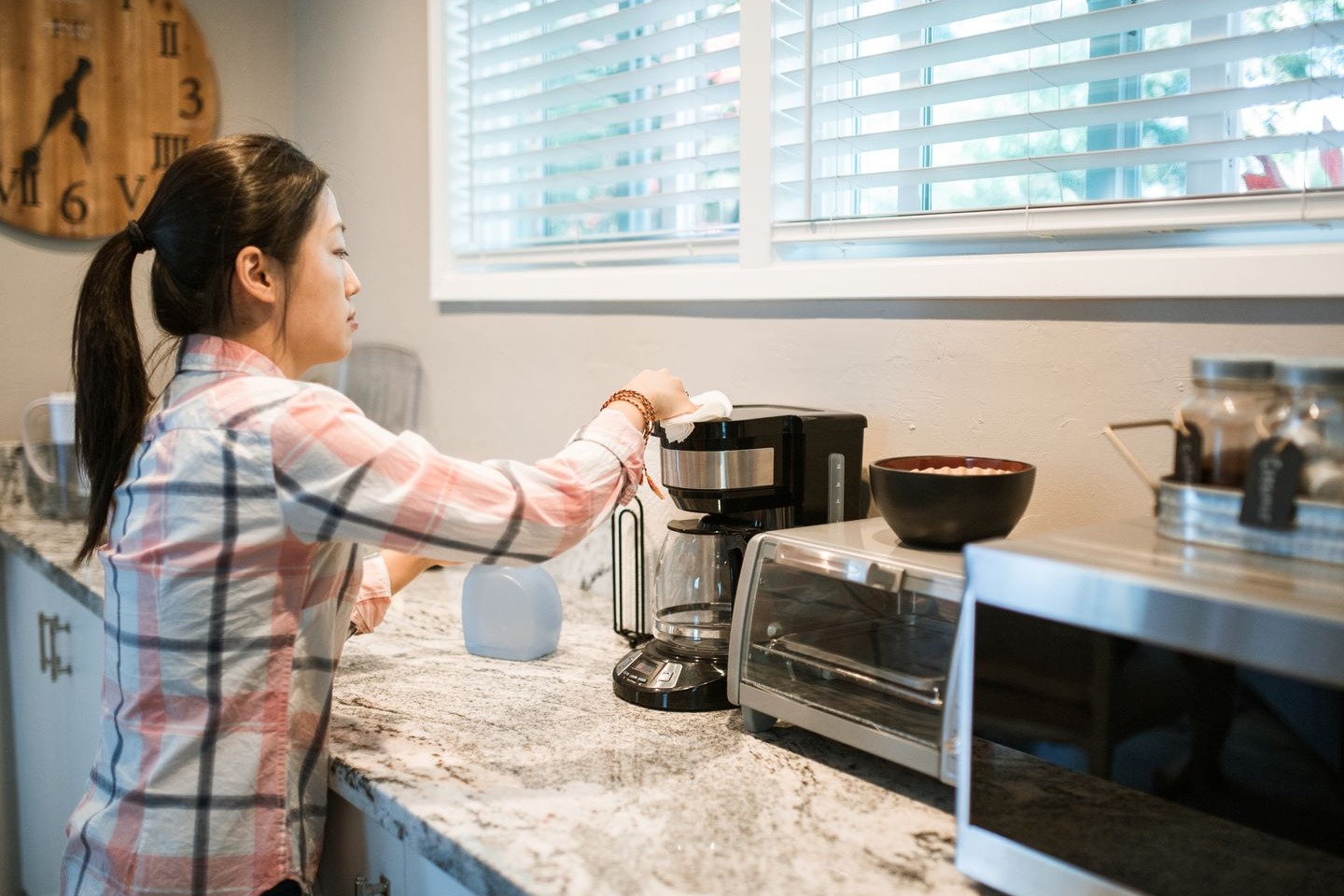
Minerals in your tap water can build up inside a Moccamaster’s copper boiling element, forming scale that slows water flow and can eventually stop it. This buildup also affects brewing temperature and saturation time, which can degrade the taste of your coffee and shorten the life of the machine. The manufacturer recommends keeping the scale under control to maintain performance.
When to Descale
Moccamaster advises descaling every 100 brew cycles or when you finish a box of 100‑count filters—whichever comes first. If you use hard water, you may need to descale more often, though no specific threshold is given. The goal is to prevent the scale from restricting the water channel in the copper element, which can eventually cause permanent damage.
What to Use (and What to Avoid)
- Scale removal: Urnex Dezcal or Urnex BioCaf Descaler.
- Oil removal: Urnex Cleancaf or Urnex BioCaf Cleaner.
- Never use vinegar. The manufacturer states vinegar is not strong enough to break down mineral buildup, is difficult to rinse, and can leave a lingering odor and aftertaste in future brews.
All product names are those explicitly recommended by Moccamaster support.
Descaling Procedure (Five Steps)
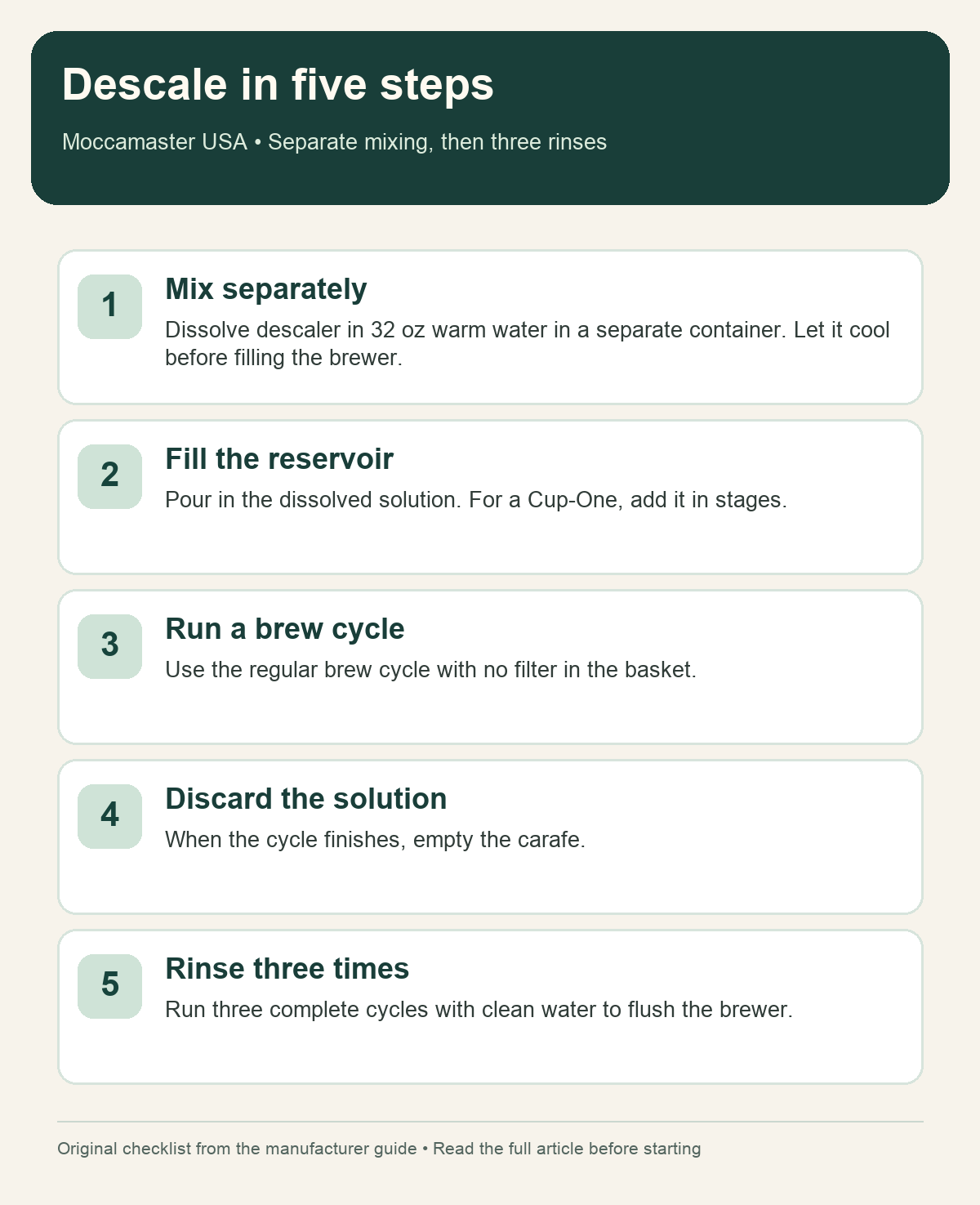
- In a separate container, dissolve the descaling powder in 32 ounces of warm water. Stir until fully dissolved. Do not add the powder directly to the water reservoir; this can clog the heating element. If you used hot water, wait until the solution cools before pouring into the machine. Source
- Pour the dissolved solution into the water reservoir. If you have a Cup‑One model, pour it in stages because the reservoir is smaller. Source
- Run a brew cycle as if you were brewing coffee. Do not add a filter to the brew basket. Source
- Once the brew cycle is complete, discard the descaling solution from the carafe. Source
- Run three complete cycles of clean water through the brewer to fully rinse the descaling solution from the machine. Source
Cleaning Procedure (Five Steps)
- In a separate container, dissolve the cleaning powder in 32 ounces of warm water. Stir until fully dissolved. Do not add the powder directly to the reservoir; wait until the solution cools if you used hot water. Source
- Pour the dissolved cleaning solution into the water reservoir. Cup‑One users should pour in stages. Source
- Run a full brew cycle as if brewing coffee; no filter is needed in the brew basket. Source
- Discard the cleaning solution from the carafe once the cycle completes. Source
- Run three complete cycles of clean water through the brewer to fully rinse the cleaning solution. Source
Removable Parts Care
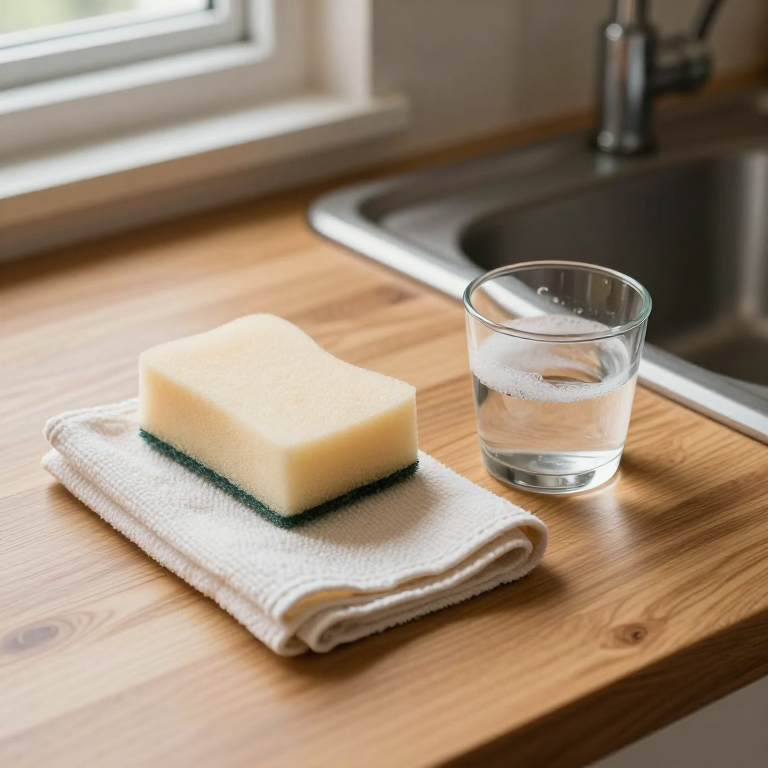
- Do not place removable components in the dishwasher. High heat can make the parts brittle. Hand‑wash them with mild dishwashing detergent. Source
- For a stained thermal carafe, soak it overnight with electric dishwasher detergent dissolved in hot water, then rinse thoroughly. Source
- When filling the water reservoir, use a separate pitcher. Filling directly from the carafe can transfer coffee oils and create a filmy buildup inside the reservoir. Source
Decision Checklist for Your Moccamaster
| Question | Action |
|---|---|
| Have you reached 100 brew cycles or finished a box of filters? | Descale now. |
| Do you use hard water? | Consider descaling sooner; no specific threshold is given. |
| Do you want to remove mineral scale? | Use Urnex Dezcal or BioCaf Descaler. |
| Do you want to remove coffee oils? | Use Urnex Cleancaf or BioCaf Cleaner. |
| Will you use vinegar? | Do not; it is ineffective and leaves odor. |
| Will you wash removable parts in the dishwasher? | Do not; hand‑wash instead. |
| Will you fill the reservoir from the carafe? | Do not; use a separate pitcher. |
Limitations
All steps and product recommendations come directly from Moccamaster’s official guides on us.moccamaster.com and the support center. No firsthand testing or additional claims are made beyond these sources.