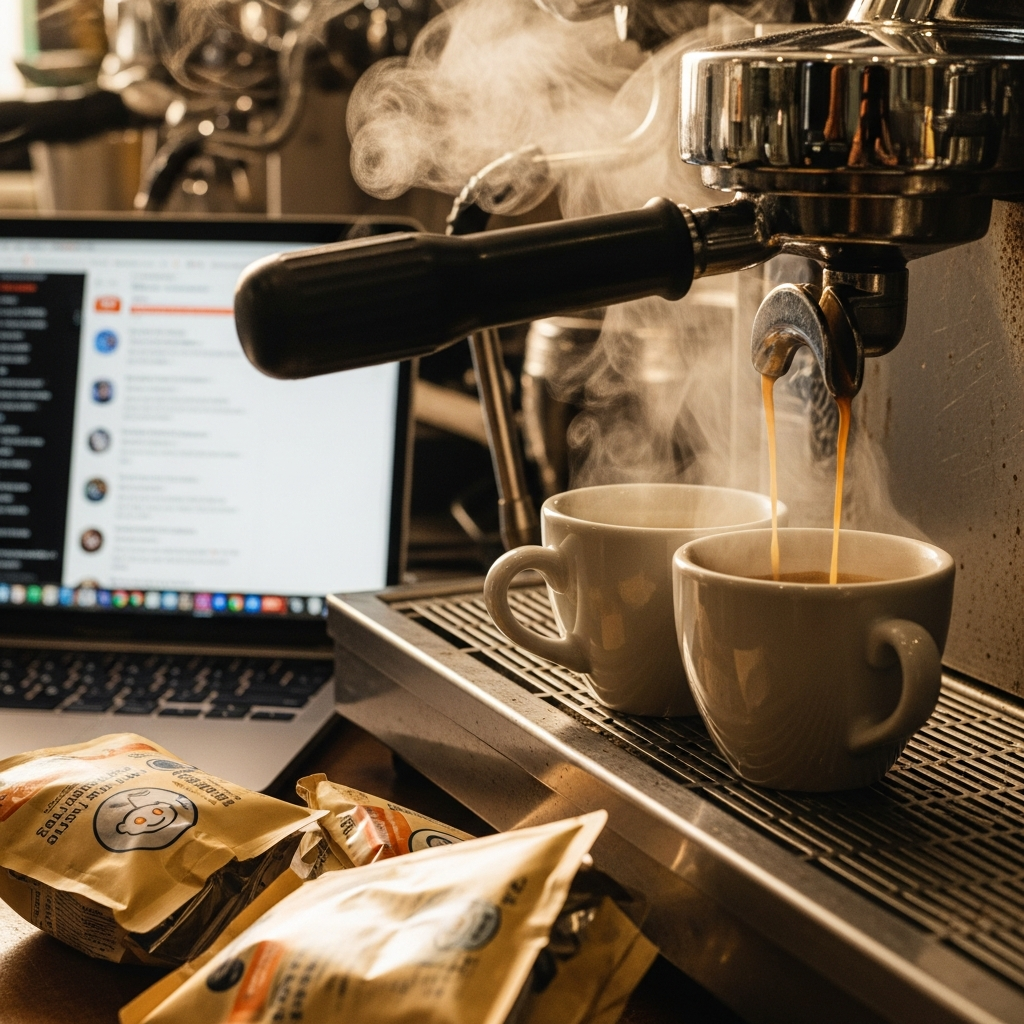
Coffee Slang Every Regular Should Know
Coffee slang has gotten complicated with all the competing vocabularies flying around. I’ve spent enough time in coffee shops — from the drive-thru Starbucks two blocks from my apartment to the aggressively minimalist pour-over place downtown that charges $7 for a cup — to realize this isn’t one unified language. It’s regional dialects. A barista pulling shots at a specialty roastery and a barista at your local Starbucks are speaking different versions of English, even when the words match. Context is everything.
As someone who has logged an embarrassing number of hours on both sides of the counter, I learned everything there is to know about how these terms actually get used in the wild. Today, I will share it all with you. This isn’t a dictionary. Think of it as a translation guide organized by where you’d actually hear these terms — so when a barista says something that makes zero sense, you’ll finally understand what they meant and why they said it that way.
What You Hear at the Starbucks Counter
Starbucks invented some of its vocabulary deliberately. The rest leaked out of their POS system and into everyday speech. Either way, you need to know it.
Start with the size situation. Tall is small. Grande is medium. Venti is large. Starbucks broke the natural language hierarchy on purpose back in 1994 — grande literally means “large” in Italian, but they slapped it onto the medium size to make the smaller option feel less small. Marketing psychology baked directly into the menu. Once you see it, the absurdity is obvious. New customers genuinely think they’re ordering wrong, though. Don’t make my mistake of confidently ordering a “large” and getting a blank stare.
But what is “skinny,” exactly? In essence, it’s nonfat milk and no whipped cream. But it’s much more than that — it’s Starbucks-specific shorthand that somehow infiltrated independent shops so thoroughly that baristas everywhere now understand it immediately, even the ones who visibly resent it. The term defines a drink by what it lacks rather than what it is. Saves about eight seconds at a busy counter, so it persists.
When a barista repeats your order back in that cryptic rapid-fire way — “Venti iced caramel macchiato, two pumps, extra shot, no whip, almond milk” — they’re translating you into POS shorthand. The pump count refers to syrup. Extra shot means an additional espresso pull. They’re not being weird. They’re confirming the transaction in their native language, which happens to sound like a secret code.
Then there’s the “secret menu.” Which isn’t secret. It’s drinks that customers invented and other customers now order by name — the Pink Drink, the Medicine Ball, the Undertow. Real drinks with real standardized recipes, crowdsourced on Reddit and TikTok and then quietly absorbed into muscle memory at every location. Starbucks corporate pretends they don’t officially exist. That somehow makes them feel exclusive. Every location has made one today, obviously.
Third-Wave Shop Slang That Can Feel Like a Test
Probably should have opened with this section, honestly. Specialty coffee has a reputation for gatekeeping, and the jargon doesn’t exactly help. But here’s the actual truth: the precision matters when you’re paying $22 for a 250g bag of single-farm beans from a specific hillside in Ethiopia.
“Single-origin” means the coffee comes from one country or farm rather than a blend. “Micro-lot” narrows it further — sometimes down to a single harvesting parcel. That distinction isn’t trivial. Single-origin coffees carry distinct flavor profiles that blending would erase entirely. A barista mentioning it isn’t showing off. They’re telling you something real about what’s in the cup.
When someone says the coffee is “natural process,” they mean the whole cherry was dried with the bean still inside — creating fruity, sometimes almost winey flavors. “Washed process” means the fruit was removed before drying. Cleaner. Brighter. These aren’t arbitrary categories with arbitrary names. The processing method changes the entire chemical composition of what you’re tasting. That’s why it’s worth naming.
“Dialing in” is what baristas do behind the espresso machine when extractions are off. They’re adjusting grind size — finer or coarser — until the shot pulls in the target window, usually 25 to 30 seconds. Too fast means under-extracted. Sour. Too slow means over-extracted. Bitter. The grind is essentially the only variable they can easily change once everything else is locked in. Watching someone dial in is watching genuine real-time problem-solving — I’m apparently a nerd about this and find it fascinating while most people find it boring.
And yes, “third wave” is real slang. It refers to coffee culture that prioritizes quality, traceability, and precision over convenience — that was first wave — or just good-tasting mass-market coffee — that was second wave. Some roasters hate the term. Some embrace it. Either way, when someone drops it into conversation, they’re positioning themselves in a very specific corner of the coffee world. That’s what makes the phrase endearing to us obsessives.
Espresso Slang Your Barista Uses When You’re Not Listening
Back-of-house espresso terminology is where things get specific and a little blunt. So, without further ado, let’s dive in.
“Ristretto” means a restricted shot — same amount of grounds, shorter extraction time, more concentrated result. “Lungo” is the opposite: longer extraction, more water, less intensity. Both Italian terms stuck because they’re precise. They sound less clinical than “short shot” or “long shot” even though that’s exactly what they are.
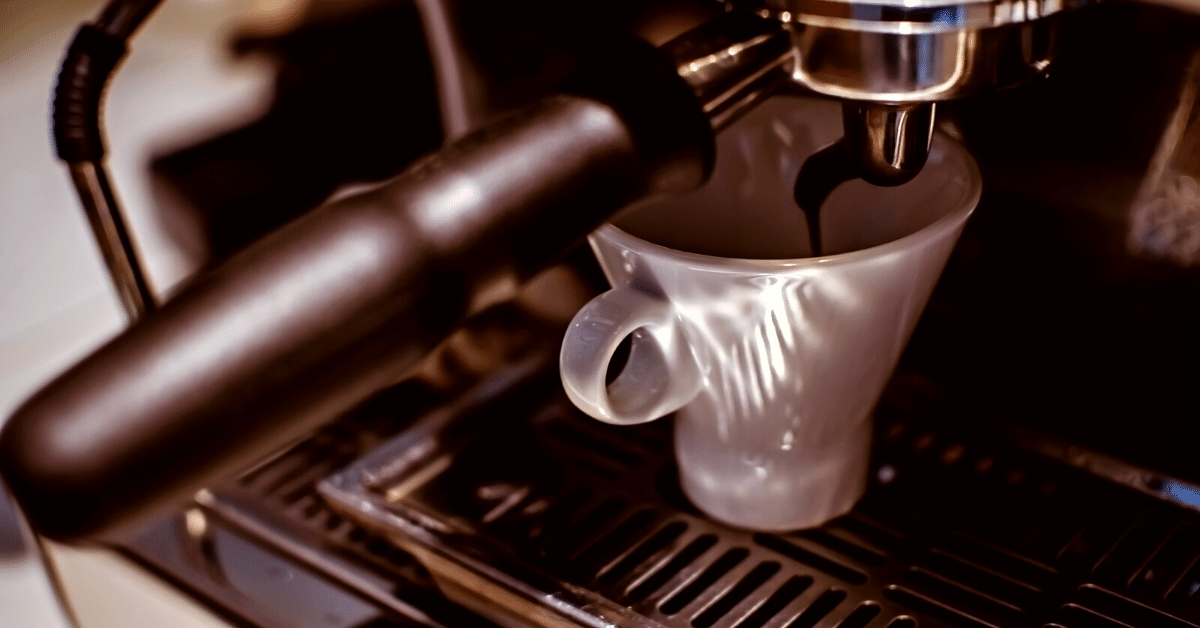
A “dead espresso” is a shot that sat more than 10 seconds after pulling. It oxidizes. The crema breaks down. It tastes flat and kind of metallic. If a barista pulls a shot and immediately dumps it without making your drink, they spotted a dead shot — or something called channeling.
Channeling is when water finds a weak path through the coffee puck and rushes through instead of distributing evenly. It ruins the extraction — certain parts over-extract while others barely get touched. The barista dumping that shot isn’t being precious. They’re saving you from tasting something objectively bad. Understanding this one term completely changes how you perceive those moments.
“The puck” is the pressed disc of ground coffee that remains in the portafilter basket after pulling a shot. When a barista mentions “puck prep” or says “the puck crumbled,” they’re describing technical details that happen about eight inches below the customer’s line of sight. Most people never see it.
And the “naked portafilter” — also called a bottomless portafilter — is exactly what it sounds like. No spout. Used specifically to diagnose extraction problems visually. If you’ve watched James Hoffmann’s YouTube channel or basically any espresso content online, you’ve seen one. The espresso spraying sideways in every direction? That’s channeling. And it’s completely intentional to expose it that way.
Coffee Internet Slang — Reddit, YouTube, and the Gear Nerds
r/Coffee and the comment sections of specialty coffee YouTube channels have developed their own dialect. It’s dense. Here’s the essential vocabulary.
“WDT” stands for Weiss Distribution Technique — stirring grounds in the portafilter basket with a thin needle tool before tamping, supposedly breaking up clumps and improving extraction consistency. It’s become almost religious in home-barista circles. I’m apparently someone who does this every single morning and a $12 tool from Amazon works for me while eyeballing it never produced consistent results. Some professional baristas think it’s overkill. The forums disagree endlessly.
“Bloom” is the pre-infusion step in pour-over brewing — you wet the grounds with a small amount of hot water, usually about twice the weight of the coffee, then wait 30 to 45 seconds before the main pour. Freshly roasted beans release CO2, and blooming lets that happen before extraction starts. It’s real chemistry. Online, it’s become a ritual that some people treat with genuine reverence and others treat like a minor inconvenience.
“TDS” means total dissolved solids — a measurement of how much flavor compound actually made it into your cup. When someone complains a coffee tastes weak, they might mean low TDS, or they might just mean they wanted something stronger. The term clarifies the distinction, but only when everyone in the conversation is using it the same way. That happens maybe 60% of the time on forums.
Then there’s “the God shot” — an espresso that pulls perfectly. Right crema, right timing, tastes incredible. It’s semi-ironic because most working baristas find the phrase a little cringe. It’s also completely sincere, because when you actually pull one after twenty mediocre attempts, you know it immediately. That’s what makes it endearing to us home espresso people who have burned through way too many beans chasing it.
One small thing: coffee forums argue endlessly about “pour-over” versus “pourover.” Both spellings are correct. Neither is worth the argument. I say this as someone who has participated in that argument. Don’t make my mistake.
Slang That’s Changed Meaning (or Shouldn’t Exist Anymore)
Some coffee slang has gotten so vague it’s nearly useless in practice.
“Double shot” used to mean two espresso pulls in one drink — clean and logical when every machine pulled roughly the same 1-ounce volume per shot. Now? Shot volumes vary wildly across equipment and cafes. A double at Starbucks runs about 2 ounces total. A double at a specialty shop running a higher ratio might hit 2.5 or even 3 ounces. Same term. Different drink. The word survives out of habit rather than accuracy.
But what is “strong coffee”? In essence, it’s whatever the person asking wants it to mean. But it’s much more than that — or rather, it’s three different things simultaneously: high caffeine density, bold flavor intensity from extraction, or high extraction yield as a percentage of the grounds’ soluble material. A barista fielding this request has to guess which one you mean. First, you should specify what you actually want — at least if you want to get what you’re imagining.
“Black coffee” has gotten weirdly ambiguous too. At some specialty shops, a barista will ask if you want milk even after you said black — because they’re checking whether you mean “no milk added” or “this specific black brewing method.” Helpful precision. Also sounds mildly insulting if you don’t know why they’re asking.
“Bulletproof coffee” is a branded term — Bulletproof is the company name, butter-blended coffee is the actual practice. It became so ubiquitous that people now use the brand name generically, exactly like Frappuccino. Same phenomenon, different origin story. That was probably around 2014 when it really took off, and it never fully disentangled the brand from the category.
Here’s the honest truth: if you’re ever standing at a café counter with no idea what something means, just ask. Good baristas don’t judge — they’d rather answer one question than make you a drink you don’t want. The ones who do judge? Not worth your money or your repeat business.