America’s coffee bill has jumped again. In June 2026, the price of coffee for home consumption was 12.9% higher than a year earlier, according to the latest U.S. Bureau of Labor Statistics data. Roasted coffee was up 12.2%, while instant coffee was up 15.9%.
Those percentages sound abstract. The more useful question is personal: what does your normal coffee routine now cost over an entire year?
The short answer
A $6.50 café drink bought five times a week costs $1,690 a year before tips. Buying it every day raises the total to $2,372.50.
How much does coffee cost per year?
The calculation is simple:
Price per drink × drinks per week × 52 = annual coffee cost
| Café price | 3 times a week | 5 times a week | Every day |
|---|---|---|---|
| $4.00 | $624 | $1,040 | $1,460 |
| $5.00 | $780 | $1,300 | $1,825 |
| $6.50 | $1,014 | $1,690 | $2,372.50 |
| $8.00 | $1,248 | $2,080 | $2,920 |
These figures do not include tips, delivery fees, food, or the extra drink that occasionally joins the order. A 20% tip turns the five-day, $6.50 habit from $1,690 into $2,028.
Coffee inflation is running far ahead of overall inflation
The headline Consumer Price Index rose 2.7% over the 12 months ending in June 2026. Coffee rose 12.9% during the same period—nearly five times as quickly.
The category did cool from May to June: the seasonally adjusted coffee index fell 2.0% for the month. But a one-month decline does not erase the much larger year-over-year increase already showing up on grocery receipts.
The distinction between café coffee and beans at home matters. The BLS figures above measure coffee purchased for home use. A cappuccino from an independent café also reflects rent, wages, milk, insurance, utilities, equipment, card-processing fees, and other operating costs. That is why your local menu may move differently from the grocery-store index.
Why coffee prices are still volatile
Coffee starts as an agricultural commodity, so the retail price is connected—imperfectly and with a delay—to harvests, inventories, shipping, currency movements, and the price importers pay for green coffee.
The International Coffee Organization reported that its Composite Indicator Price averaged 248.90 U.S. cents per pound in June 2026. That was 2.8% below May, but the month itself was unusually choppy: the benchmark fell to a nearly two-year low on June 9 and then rebounded 17.4% by the end of the month.
There is some potential supply relief ahead. USDA reporting forecasts Brazil’s 2026/27 crop at 71.9 million 60-kilogram bags, including 47.5 million bags of arabica. Vietnam’s 2026/27 production is forecast at 32.5 million bags. Forecasts are not guarantees, however, and better harvest expectations do not pass through to a café menu overnight.
Is brewing at home actually cheaper?
Almost always—but the honest answer depends on the beans, dose, milk, waste, and equipment you use.
Consider a transparent example:
- A 12-ounce bag costs $16.
- You use 18 grams of coffee per drink.
- The bag produces about 18 drinks.
- The beans therefore cost about $0.89 per cup.
- Allow another $0.20 for a filter, water, electricity, or a modest amount of milk.
That puts the consumable cost near $1.09 per drink, or about $283 for five drinks a week over one year. Compared with five $6.50 café drinks a week, the difference is approximately $1,407 annually.
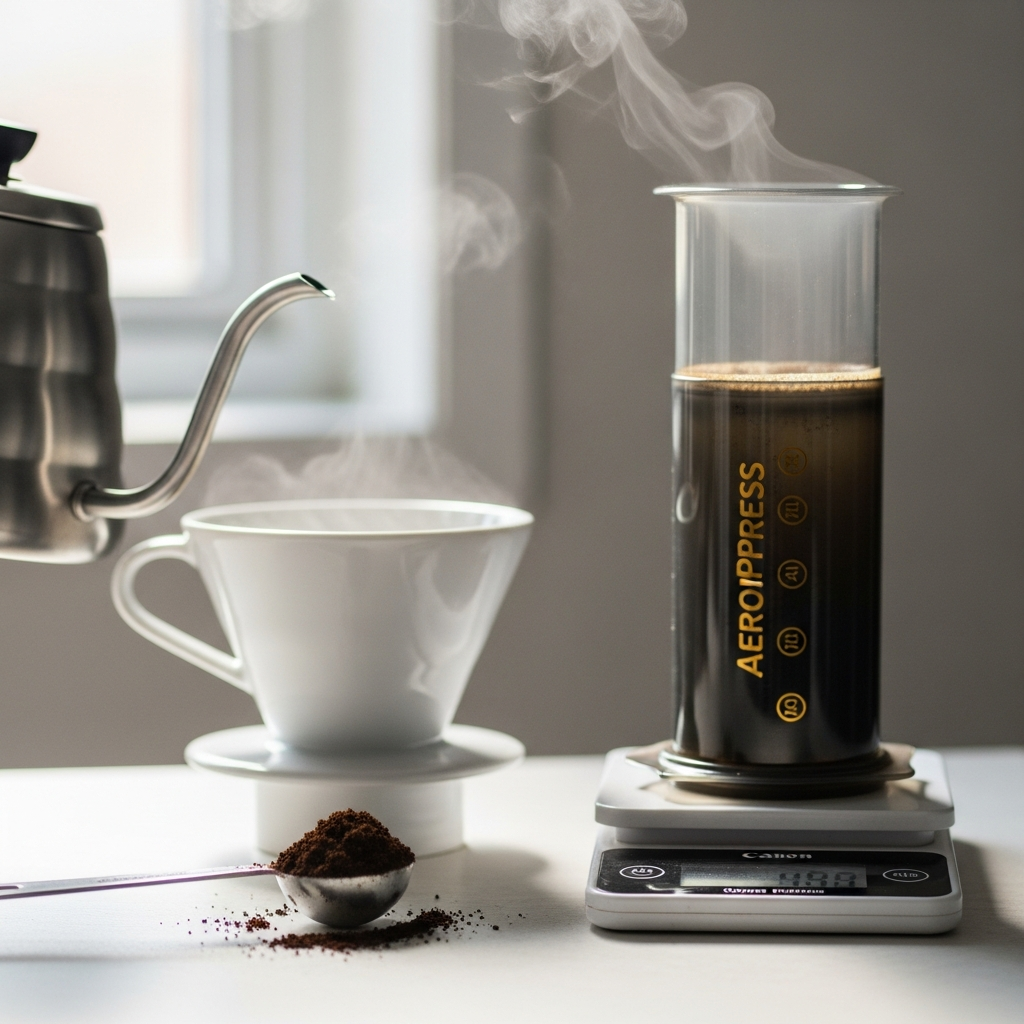
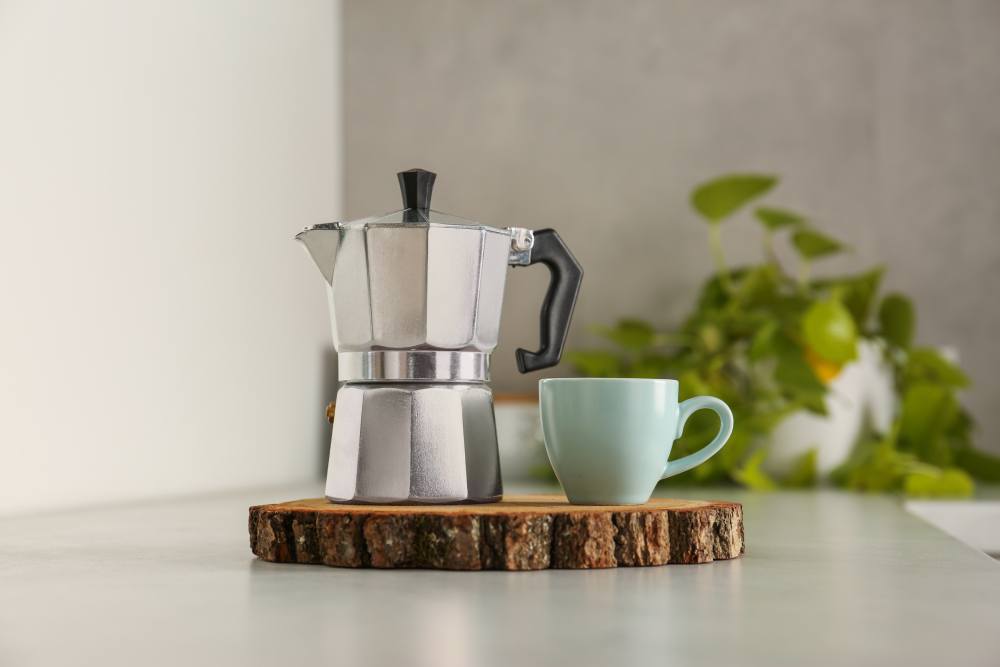
This is a scenario, not a universal average. Premium beans, large milk drinks, wasted coffee, and an expensive machine raise the home-brew number. A simple setup using a Moka pot, good beans for a Moka pot, or a basic drip brewer can keep equipment costs comparatively low.
The best way to cut the bill without giving up cafés
The most sustainable savings plan is rarely “never buy coffee again.” Café visits are social, convenient, and sometimes the point of the habit.
A hybrid routine preserves that value:
- Choose the café days deliberately. Two $6.50 drinks a week cost $676 annually; five cost $1,690.
- Make the default order smaller. Cutting $1.50 from three weekly orders saves $234 a year.
- Reproduce the expensive part at home. If milk texture is the obstacle, a coffee maker with a frother can be more useful than buying a more elaborate brewer.
- Measure your beans. A consistent dose reduces the quiet cost of overfilling and dumping failed brews.
- Track the real total for one month. Include tips, delivery, and food purchased because you entered the café.
We are building a city-by-city coffee price index
National inflation data answers an important question, but it cannot tell you what a latte costs in your neighborhood. Fluent in Coffee’s Coffee Inflation Index is designed to close that gap.
The project combines a free annual-cost calculator with moderated, reader-submitted local prices. Entries are not published automatically, and city comparisons require multiple legitimate submissions. That keeps the project useful without pretending an early convenience sample is a scientific national survey.
If you bought coffee recently, add the drink, price, city, and purchase date. A receipt or public menu link makes the entry easier to verify. As the dataset grows, we will publish updated city comparisons and make the methodology visible.
What is your annual coffee number?
Run your real routine through the calculator, then add one recent local price to the moderated index.
Sources and methodology
- U.S. Bureau of Labor Statistics, June 2026 detailed Consumer Price Index
- U.S. Bureau of Labor Statistics, June 2026 12-month analysis
- International Coffee Organization, June 2026 market highlights
- USDA Foreign Agricultural Service, Brazil Coffee Annual 2026
- USDA Foreign Agricultural Service, Vietnam Coffee Annual 2026
Calculations use 52 weeks and 365 days. Home-brew figures are clearly labeled scenarios based on the stated bag size, dose, and add-on assumptions. Government and industry figures were checked July 26, 2026.