Can You Grind Coffee in a Magic Bullet? (Yes — Here’s How)
The Short Answer — Yes, With the Right Blade
Coffee grinding has gotten complicated with all the gear snobbery flying around. But sometimes you just need to know if the thing sitting on your counter will do the job. As someone who’s burned through two dedicated grinders in three years, I learned everything there is to know about using whatever appliance is within arm’s reach at 6:45am.
So — can you grind coffee beans in a Magic Bullet? Yes. But there’s one thing you need to get right before you even think about dropping beans into that little cup: the blade. I learned this the hard way after destroying a batch of Guatemalan single-origin beans — $18 from a roaster on Maple Street — with the wrong attachment. What I got was a wet, paste-like disaster that smelled vaguely of regret. The whole batch went in the trash. Don’t make my mistake.
The Magic Bullet works for grinding coffee beans as long as you’re using the flat blade attachment. Not the cross blade that ships standard with the blending cup. That distinction is the entire ballgame. Get it right and you can pull a usable coarse or medium grind in under thirty seconds. Get it wrong and you’re scraping bean paste out of a blender at 7am, still half-asleep.
Worth saying upfront: the Magic Bullet is a blade grinder, not a burr grinder. The grind will never be perfectly consistent — some pieces coarser, some finer, the distribution shifting from batch to batch. For certain brew methods, that’s completely fine. For others, it’s a dealbreaker. We’ll get into all of that below.
Flat Blade vs Cross Blade — Which One to Use
But what is the flat blade, exactly? In essence, it’s the dry-grinding attachment Magic Bullet includes for milling hard ingredients. But it’s much more than that — it’s the difference between usable coffee grounds and an expensive mess.
The Magic Bullet typically ships with two blade types. The cross blade — the one that looks like an X when you stare straight down at it — is designed for wet work. Smoothies, sauces, salsa. It pulls liquid up through the blades in a circular motion, which is exactly what you want when you’re blending a frozen banana. Exactly what you don’t want when you’re trying to break down dry coffee beans.
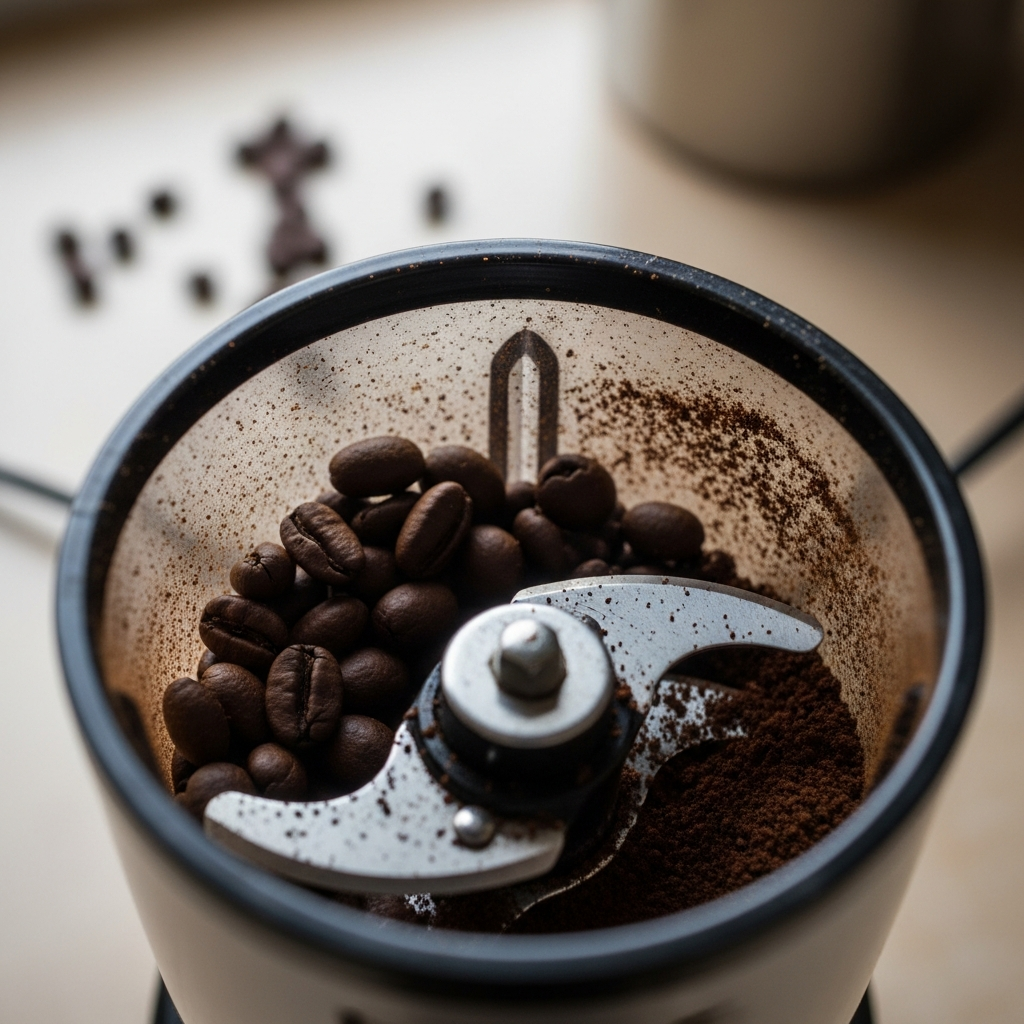
The flat blade sits lower and hits the beans more directly. You’ll sometimes see it called the “milling blade” in the Magic Bullet documentation — and honestly, that name tells you everything. It’s built for dry ingredients: spices, grains, and yes, coffee beans. The flat blade creates the kind of impact and friction that actually breaks beans down into usable grounds, rather than spinning them uselessly along the cup wall.
If your Magic Bullet didn’t come with a flat blade — or you’ve lost it somewhere in a junk drawer, as one does — replacement flat blades run around $8–$12 on Amazon as Magic Bullet-compatible accessories. The MB-1001 model, which is the original 11-piece set, includes both blades. So if you bought the full kit, it’s in your kitchen somewhere. Check behind the immersion blender.
Probably should have opened with this section, honestly — because none of the steps below matter if you’ve got the wrong blade on the cup.
Step-by-Step — How to Grind Coffee in a Magic Bullet
Frustrated by weak, muddy coffee coming out of a drip machine with a cracked carafe and a missing filter basket lid, I started using my Magic Bullet as a grinder out of pure necessity. That was maybe three winters ago. Here’s the exact method I landed on after two weeks of uneven cups and one incident involving grounds all over the stovetop.
- Start with the flat blade cup. Attach the flat milling blade to the short cup — not the tall one. The shorter cup gives beans less room to bounce around and produces a more controlled grind. Small detail. Matters a lot.
- Fill no more than halfway. Overfilling is the most common mistake. When the cup is too full, the beans on top never get hit by the blade consistently — you end up with whole beans floating above fine powder at the bottom. Fill the short cup to the halfway point, which works out to roughly 2 to 3 tablespoons of whole beans for a standard one-to-two cup brew.
- Pulse in 3–5 second bursts. Press and release, press and release. Don’t hold it down and let it run. Each pulse should be about three to five seconds — that’s it. Continuous grinding heats the beans, stresses the motor, and produces an uneven result that’ll make your coffee taste like it was made by someone who gave up.
- Shake between pulses. After each pulse, flip the cup right-side up with the blade still attached and give it a firm shake. This redistributes the grounds so the bigger chunks fall back down toward the blade. It’s the closest you’ll get to even distribution out of a blade grinder — which isn’t saying much, but it helps.
- Check after 4–5 pulses. Unscrew the blade, tap the grounds out into your hand or onto a measuring spoon, and look at the texture. Check for the consistency you want before going further. Over-grinding is easy and impossible to undo — and there’s nothing sadder than dust that used to be nice coffee beans.
Total grind time from start to finish? Usually under 45 seconds for a coarse grind. Medium takes 60 to 75 seconds with rest intervals built in. Don’t rush it.
What Grind Size Can You Get — And Which Brew Methods Work
This is where honesty matters more than enthusiasm.
Coarse Grind — French Press and Cold Brew
This is where the Magic Bullet actually holds its own. Four or five short pulses with shaking between each one gets you a chunky, coarse grind that works fine in a French press or a cold brew setup — I use a wide-mouth mason jar, nothing fancy. The inconsistency that’s baked into blade grinders is least problematic at coarser sizes. Your brew method is already forgiving of variation, so the randomness doesn’t punish you.
Medium Grind — Drip Coffee and Moka Pot
Doable — takes more pulses, more patience, and more shaking. The result is workable for a drip machine or a stovetop Moka pot, though the cup will taste a little different from batch to batch depending on how consistent your pulse timing was. That’s what makes blade grinding maddening to precision-minded coffee people. But for a Tuesday morning when your actual grinder breaks? It gets you there.
Fine Grind — Espresso
Don’t bother. Getting a true espresso-fine grind out of a Magic Bullet means running it long enough that the motor starts heating up and blade friction begins slightly toasting the grounds before they ever reach the portafilter. The result is inconsistent, the process stresses the machine, and espresso is unforgiving enough that even a decent burr grinder at $150 can struggle to dial it in. The Magic Bullet won’t cut it here. That’s not an insult — it’s just not what the thing was designed for.
Will It Damage Your Magic Bullet
Occasional use? No real damage to worry about. The flat blade can handle dry grinding — that’s literally why it exists. But two things are worth understanding before you make this a daily habit.
First, blade wear. Coffee beans are harder than most people realize — apparently harder than most nuts, harder than dried spices. Grinding them daily will dull the flat blade faster than using it for flaxseed or oats. A replacement runs under $10, so it’s not a financial disaster, but you’ll notice the grind getting coarser and less effective over time as the edge wears down.
Second, motor heat. The Magic Bullet’s motor isn’t built for sustained high-load operation. The manual — which I’ll admit I read after something went wrong, not before — recommends running it no longer than a minute continuously before giving it a rest. Pulse grinding naturally manages this. But if you’re running it hard chasing an espresso-fine grind over multiple long cycles, you’ll feel the cup getting warm. Warm is a warning. Hot is a problem.
For occasional use — a few times a week, coarse to medium grind sizes, proper pulse technique — the Magic Bullet handles it fine. Daily espresso grinding is a different story and will shorten the blade’s useful life noticeably within a few months.
When to Use a Real Grinder Instead
The Magic Bullet is a workaround, not a solution. There are specific situations where you should just stop and invest in the right tool.
- You drink espresso. Full stop. Espresso demands grind consistency that no blade grinder can deliver. A burr grinder like the Baratza Encore — around $179 — or even the Oxo Brew Conical Burr Grinder at roughly $99 will change your espresso quality in ways the Magic Bullet simply never could.
- You grind every single day. A dedicated grinder pays for itself in blade replacements and morning frustration within a few months. Even a $30 manual hand grinder — the Hario Mini Mill is the one I used for about a year — produces more consistent results than a Magic Bullet.
- You actually care about flavor consistency. The batch-to-batch variation in a blade grinder is real. If you’ve started wondering why some mornings your coffee tastes noticeably better than others, your grind consistency is probably the culprit. A burr grinder eliminates that variable entirely.
- You’re brewing pour-over or Aeropress with any real precision. These methods reward grind consistency in a way that makes the Magic Bullet’s randomness more noticeable — and more annoying the more you pay attention to it.
The Magic Bullet is genuinely useful when your grinder breaks, when you’re traveling with limited bag space, or when you’re making French press for a camping trip and don’t want to pack a separate appliance. Use it for what it actually handles well. Just don’t mistake “it works” for “it’s the right tool.” Those are two different things, and one of them will make your coffee better.