The Kirkland Beans Themselves Aren’t the Problem
I’m going to start with the thing you probably need to hear: your bag of Kirkland medium roast isn’t defective. You didn’t buy a dud.
Kirkland’s house blend sits solidly in the middle of the pack for a store brand — a medium roast from Central and South America, priced around $8.99 for a whole pound at Costco. That’s genuinely competitive. I’ve had plenty worse from brands twice the price. The beans themselves have enough complexity to taste clean when brewed correctly, and enough body to feel satisfying in a regular drip cup.
But if your cup tastes bitter? Like you’re chewing on coffee grounds, or there’s a burnt leather note that shouldn’t be there? The beans aren’t guilty. Almost always, it’s one of four things happening in your process: how fine you’re grinding them, how hot your water is, how long they’re sitting around after you open the bag, or how much you’re using and for how long you’re brewing.
The good news — you can fix this in about five minutes. Probably should have opened with this section, honestly. People spend money on expensive beans when their actual problem is sitting in their kitchen right now.
Check Your Grind Size First
Over-extraction is the main culprit.
When water passes through coffee grounds too slowly — because they’re ground too fine — it pulls out way more than the good flavors. You get bitterness, harshness, that unpleasant astringency that makes your mouth feel dry. Kirkland beans are forgiving. They’re a medium roast, meaning they have enough sweetness and body to survive imperfect brewing. But they will absolutely betray you if you grind them like talcum powder.
Learned this the hard way. I had a cheap grinder that only had two settings: “too coarse” and “flour.” For two weeks I was using the flour setting, blaming Costco, when really I was just over-extracting every single cup. Then I upgraded to a burr grinder — spent $35 on a Baratza Encore — and the same beans tasted completely different. Not just less bitter. Actually sweet, with chocolate notes I hadn’t noticed before.
Here’s what you need to know about grind size for Kirkland beans:
- Drip machine — Medium grind, like sand. Not fine sand. Actual beach sand. If you run it between your fingers, individual grains should be visible. You’re aiming for a brew time of 4-5 minutes total.
- French press — Coarse grind, like sea salt. Bigger pieces. The whole point of a French press is that the water sits with the grounds, so you need bigger pieces or you’ll over-extract in 4 minutes and get bitter sludge at the bottom.
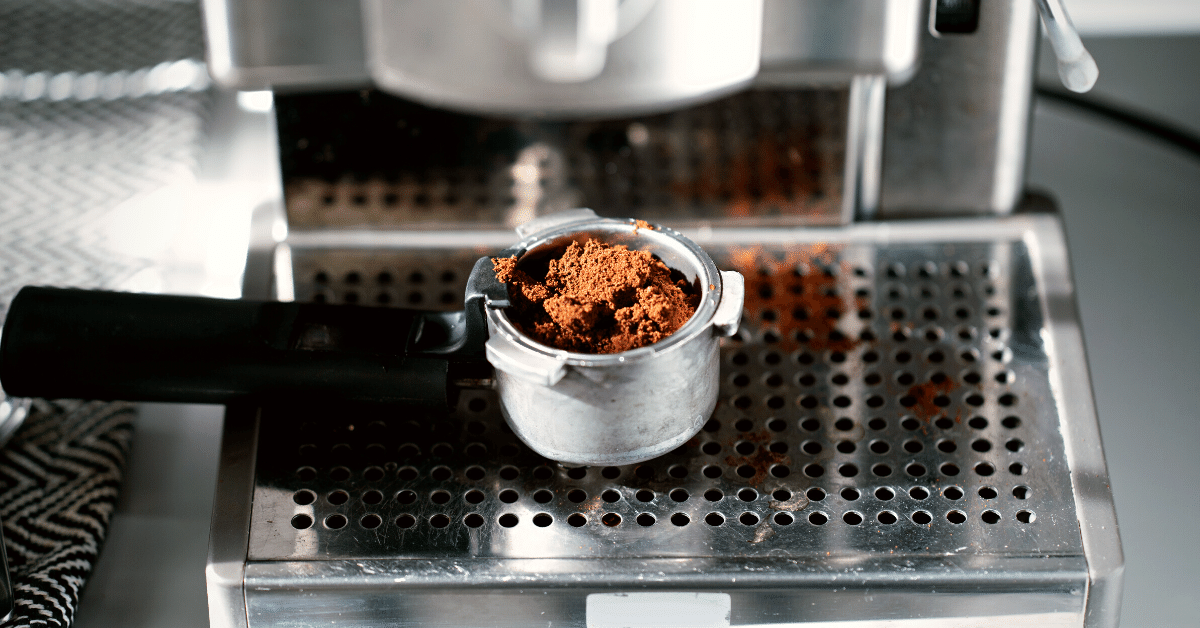
- Espresso or Moka pot — Fine grind, but not powder. Think powdered sugar texture, not flour. This one’s easy to mess up because the resistance is tighter, so any grind variation gets magnified.
- Pour-over (Chemex, V60, Kalita Wave) — Medium-fine, slightly finer than drip but not espresso-fine. Brew time should be 3-4 minutes.
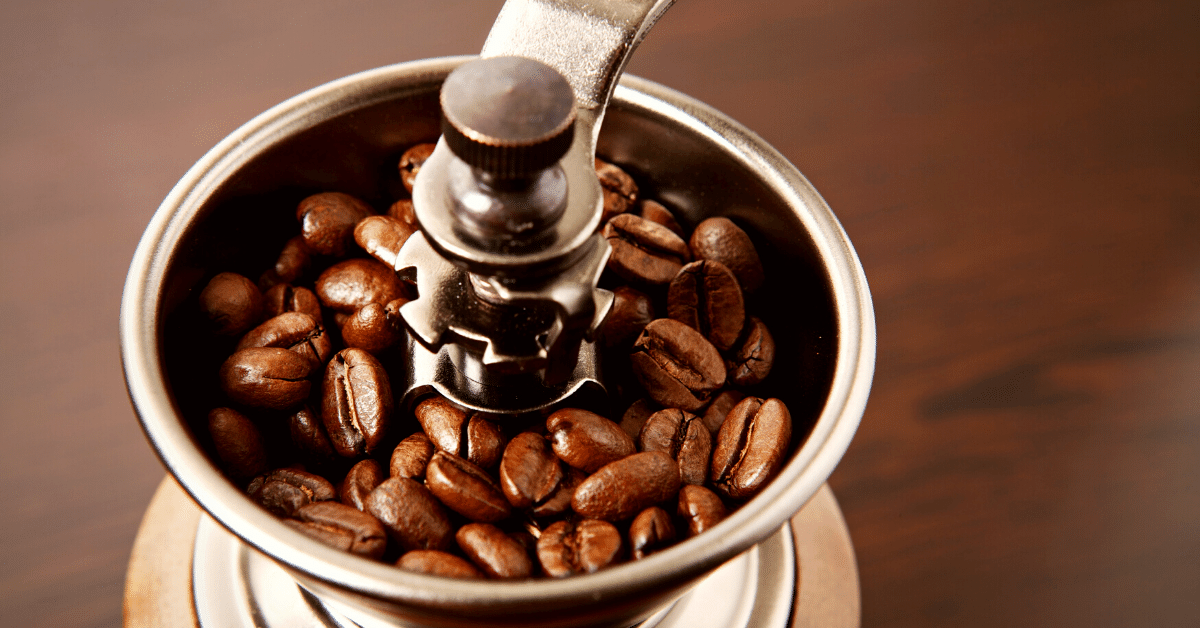
If you’re using pre-ground Kirkland beans — the kind that come already ground in the bag — that’s your first problem. Pre-ground coffee oxidizes the moment it’s broken into smaller pieces. Within two weeks of the bag being opened, you’re tasting staleness wrapped in bitterness. Get a grinder at home if you can. Whole beans are always better. If you don’t have one yet, that $30-40 burr grinder is the single best investment you can make in your coffee taste.
Water Temperature Is Killing Your Cup
Boiling water is too hot.
A lot of people still do this. They fill a kettle, wait for the whistle, and immediately pour it over grounds. That 212°F water is scorching a medium roast — like cooking a steak on maximum heat when you actually wanted medium-rare. The result tastes burnt, ashy, and bitter.
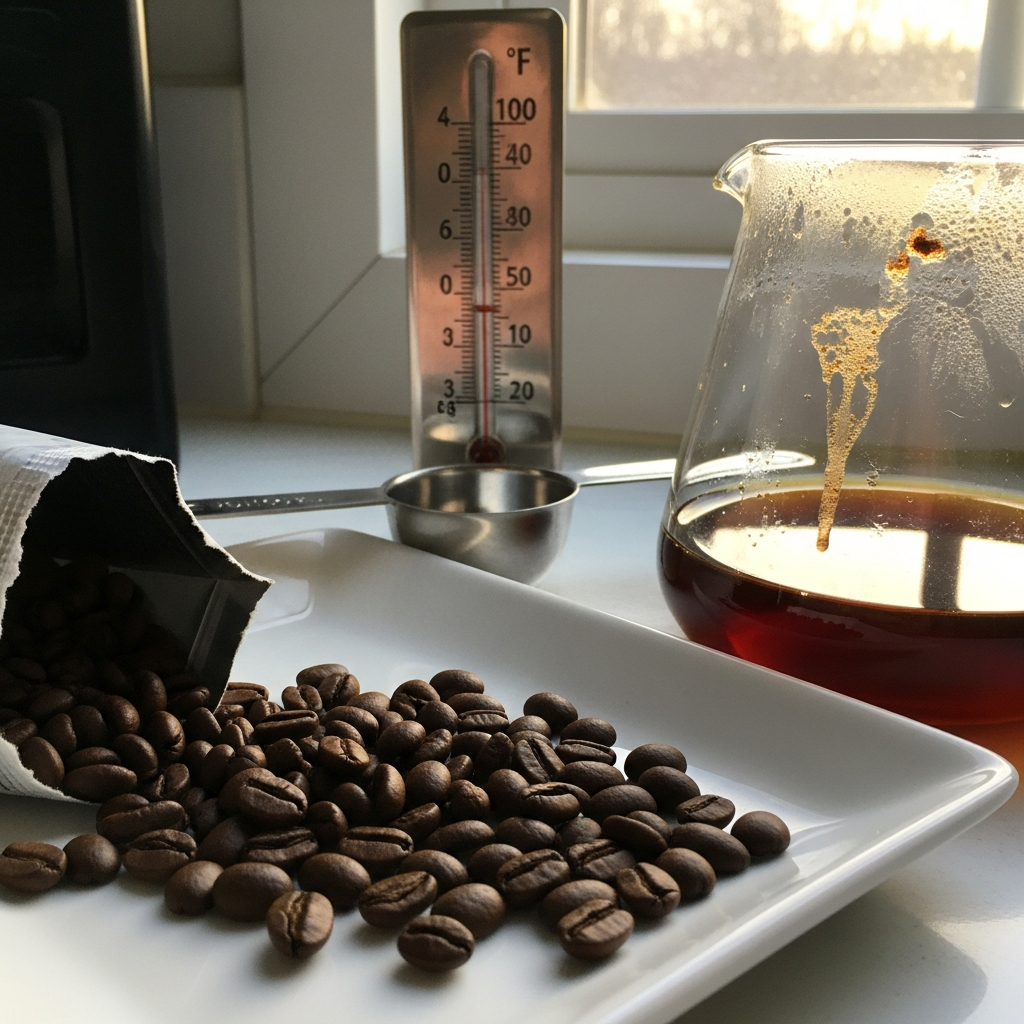
Kirkland’s medium roast needs water between 195°F and 205°F. Dark roasts can handle slightly hotter water, but medium roasts start losing their good qualities above 205°F.
You probably don’t have a thermometer sitting next to your coffee setup. Here’s the hack: boil your water, then wait 30 seconds before pouring. Not 20 seconds. Thirty. Your kettle will cool from 212°F to roughly 200°F in that time, depending on the room temperature and whether you’re pouring immediately or letting it sit a moment longer. If it’s winter and your kitchen is cold, wait 35 seconds. If it’s summer and hot, 25 seconds works.
If you’re serious about getting this right, a basic electric kettle with a temperature display costs about $25-30. I grabbed a Fellow Opus from Amazon for $49, and I use it every single day. It holds temperature, which matters if you’re brewing multiple cups. But honestly? The 30-second wait after boiling is free and it works.
I had a friend whose Kirkland coffee tasted terrible. She’d been using water straight off a boil for months. We brewed the exact same beans at 200°F instead of 212°F, and she immediately tasted the difference. Same beans, same grind, same ratio. Just temperature. She was shocked.
Storage Is Silently Ruining Your Beans
Here’s what happens to your Kirkland bag after you open it at home.
The bag is a standard one-way valve design. It lets carbon dioxide escape so the bag doesn’t puff up, but it’s not resealable like the bags from specialty roasters. Once you open that top and rip into it, you’ve basically started a clock. The beans are exposed to oxygen, light, and humidity. They begin oxidizing immediately.
In a regular kitchen cupboard, with the bag folded over or clipped, your Kirkland beans start tasting stale and bitter within 3-5 days. By two weeks, they’re noticeably flat. The brightness goes away. What you’re left with is that burnt, ashy bitterness that no amount of brewing adjustment will fix.
Move them to an airtight container. That’s the solution. A mason jar works. A dedicated coffee canister from OXO or Airscape works better — runs $15-25. The container should be opaque or dark, and it should live in a cool, dark place. Not the refrigerator, since condensation messes with the beans. Not on the counter next to your stove, since heat speeds up oxidation. A cupboard, a pantry, anywhere that stays around 70°F and doesn’t get sunlight.
Made the mistake of leaving an open Kirkland bag on my counter for a week. I kept thinking I’d use it, so why bother moving it? By day four it tasted genuinely unpleasant. I switched to a container, and fresh beans from a new bag tasted like night and day. Same roast, same everything. The only variable was storage.
Whole beans stay reasonably fresh for 2-3 weeks in an airtight container. Pre-ground lasts about 1 week. If you buy the bigger Kirkland bags and only use coffee occasionally, consider freezing half of it in an airtight freezer bag. Thaw it the morning you want to use it. Freezing doesn’t ruin coffee if you do it right.
Brew Ratio and Time — The Silent Culprits
Too much coffee or too long a brew time tastes bitter. Full stop.
The standard ratio is 1 gram of coffee to 16 grams of water. That’s the baseline that works for most people and most brewing methods. If you’re not measuring, you’re guessing. And if you’re guessing, you’re probably using too much coffee.
A simple kitchen scale costs $15-20. Hario V60 makes one that’s incredibly popular. You put your empty cup on it, tare it to zero, add your grounds, tare again, then add water. Takes about 20 seconds. Once you do this a few times, you develop a feel for the amount, and you don’t need the scale every single day.
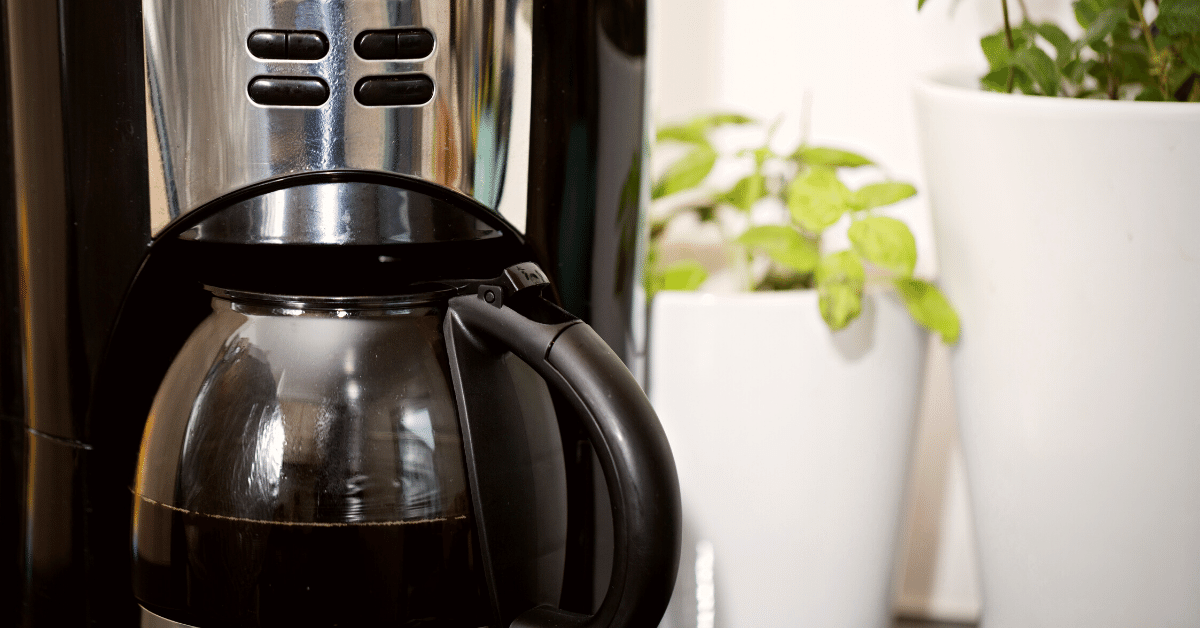
Using a standard drip machine without measuring? You’re probably eyeballing “two scoops for a pot.” Most of those little scoops hold more than people think. And different scoops hold different amounts. A flat scoop of Kirkland grounds might be 9 grams, but a heaping scoop could be 14. That’s a massive difference when you’re looking at final flavor.
Brew time by method:
- Drip machine — 4 to 5 minutes from the moment water hits grounds to the moment the last drop falls. If it’s taking longer, your grind is too fine. If it’s faster than 3 minutes, it’s too coarse.
- French press — 4 minutes, no more. I use a timer. At 3:45, I stir the top layer to break the crust, then let it rest one more minute before pressing. Push the plunger down slowly. This is the most common place people over-extract without realizing it.
- Pour-over — 3 to 4 minutes total. This varies based on grind size and pouring technique, but if you’re consistently taking 5+ minutes, your grind is too fine.
- Espresso — 25 to 30 seconds from the moment you start the machine to the moment the shot stops flowing.
I dropped my coffee ratio from 1:14 to 1:16 and it completely fixed a bitterness problem I was having. I was using slightly more coffee than I needed, and it was pushing the extraction too far. Most people are shocked how much water they actually need to use relative to the coffee. It seems like a lot. But that’s the ratio that balances extraction.
Try This Right Now
Here’s what I want you to do. Go get a fresh bag of Kirkland beans if you don’t have one, or use the one you have. Do this test exactly:
- Grind only what you need — about 20-25 grams of whole beans — to a medium consistency, like sand.
- Boil water, then wait 30 seconds.
- Use a 1:16 ratio. If you’re grinding 20 grams of coffee, use 320 grams of water (about 11 ounces).
- Brew in a French press for exactly 4 minutes, or in a drip machine until the water stops flowing.
- Drink it black, no sugar, no cream. Just taste it.
If that cup tastes good — if it’s balanced, slightly sweet, not bitter — you now know exactly what your problem was. It was in your process, not in the beans or the roaster. You can fix it and never think about bitter Kirkland coffee again.
Your beans are fine. They really are.