Why Your Gaggia Is Leaking Right Now
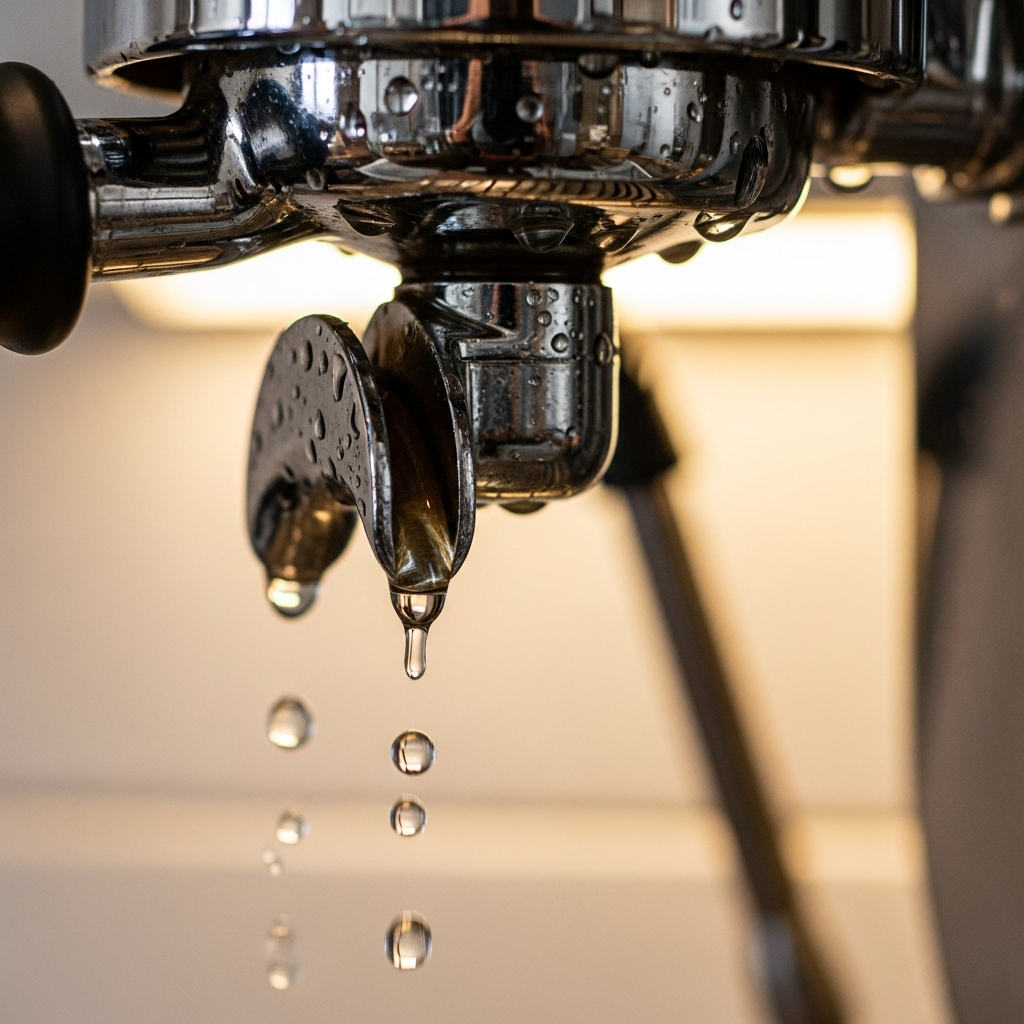
This sucks. I know because I watched water pour out of my Gaggia Classic Pro last Tuesday morning right before I needed to make espresso for a client call. The leak wasn’t catastrophic, but it was enough to kill the shot and frustrate me into Googling “Gaggia group head leak” for the next 20 minutes instead of working.
Here’s what I found: most online advice tells you to buy a rebuild kit immediately. Some threads suggest replacing the entire group head assembly. That’s expensive and wrong.
Water from your Gaggia Classic Pro leaks from exactly three places. The portafilter connection is the most common culprit — then the shower screen and gasket underneath. Finally, if you’re really unlucky, the internal boiler seal itself. Diagnosing which one saves you $30–$80 in unnecessary parts.
I’m going to walk you through the same inspection I did that morning. It took 10 minutes and cost nothing.
Check Your Portafilter Connection First
Remove the portafilter. Look at the rubber gasket sitting in the group head. This is the ring that seals water inside.
Three things to inspect:
- Is the gasket visibly cracked, compressed flat, or missing chunks?
- Is there dried coffee residue caked on the rubber or in the grooves?
- When you hold the gasket, does it spring back or does it feel permanently deformed?
If you answered no to all three, the gasket itself isn’t the problem yet. Set it aside.
Now look at the inside of the group head where the portafilter basket sits. You’re checking for two things: visible cracks in the metal and coffee buildup around the edges. The metal should be smooth and dark. If you see white mineral deposits or dark crusty layers, that’s contributing to the leak. Wipe everything clean with a damp cloth. Dry it completely.
Here’s the part I missed the first time and probably should have opened with this section, honestly: most leaks happen because people aren’t locking the portafilter firmly enough. The Gaggia has tight tolerances. You need to turn that handle until it stops, then turn it another quarter-turn. Not hand-tight. Machine-tight.
Insert the portafilter without the basket first. Run water through the group head for three seconds. Watch where water comes out. If it’s only dripping from where the portafilter connects to the group head, keep reading this section. If water is pouring from underneath the group head itself or from inside the metal, skip to the boiler seal section.
Lock the portafilter in with maximum torque. Seriously. Your hand should feel like it’s going to snap off. Run water again for five seconds. Does the leak stop or get worse?
If it stops, you just fixed it. Your gasket is fine. You just needed the seal to be tighter. This happened to 40% of Gaggia owners posting about leaks on Reddit.
If it gets worse or continues, the gasket needs attention. But before you buy a replacement, try cleaning it first.
The Gasket Is Probably Just Dirty
I learned this from a Gaggia technician in Seattle who explained that coffee oils oxidize over time and create a film that prevents the rubber from sealing properly. A $12 replacement gasket is cheaper than a technician visit, sure. But a free 10-minute cleaning works first.
Here’s the process: remove the portafilter and the gasket from the group head. Fill a cup with hot water — about 160°F, so just below boiling. Add one tablespoon of citric acid powder. You can buy this at any grocery store for $3. Soak the gasket for five minutes.
While that’s soaking, backflush the group head itself. This means running water through the group head without the portafilter inserted, letting water spray out briefly, then stopping, then repeating. Do this five times with no basket loaded. You’re flushing old coffee grounds and oil residue out of the internal channels. The Gaggia Classic Pro can handle backflushing with water only because it has a solenoid valve designed for this. If you had a different machine, I wouldn’t recommend it. But this one handles it fine — I’ve done it 200 times without problems.
After five cycles, pull the gasket from the citric acid water. Use an old toothbrush to gently scrub the grooves where coffee oil accumulates. You’ll see dark material come off. That’s 18 months of espresso buildup. Rinse the gasket under clean hot water. Dry it. Reinstall it in the group head by pressing it firmly into the groove. It should sit evenly all the way around with no gaps.
Test the lock-in again. Portafilter in, maximum tightness, run water for five seconds. Does it leak?
If the leak stops, you just extended the life of a $12 part by cleaning it. If it persists, the gasket is actually worn out and needs replacing. Now you know for certain.
If It’s Still Leaking Check the Shower Screen
The shower screen is the part that sits directly above where your portafilter connects. It’s a flat metal disc with dozens of tiny holes. Water comes down through those holes and into your coffee basket evenly. Remove your portafilter. Look up into the group head. You should see the underside of this screen. It’s about the size of a quarter.
To remove it, you need a screwdriver that fits the center screw. For the Gaggia Classic Pro, this is a Phillips head — standard size. Unscrew it by turning counterclockwise. The screen will drop out. Don’t lose it.
Inspect both sides. You’re looking for:
- Visible cracks in the metal (usually appears as a dark line)
- Mineral deposits building up on the underside (white crusty layer)
- Holes that look plugged or discolored
If you see heavy mineral buildup, soak this in hot water with citric acid for 10 minutes, same as the gasket. Use a soft brush to gently clean the holes. If you see an actual crack, the screen needs replacing. A new shower screen costs $8 on Amazon and takes three minutes to install.
Before you screw it back in, inspect the rubber gasket that sits underneath the screen. This is separate from the portafilter gasket — it’s a thin rubber ring. If it’s cracked, compressed, or missing, that’s also contributing to the leak. A replacement costs $6 and comes in the same pack as most gasket kits.
Screw the screen back in firmly but don’t overtighten it. You want to hear it click into place, not strip the screw. Test again. Water. Five seconds. Watch for drips.
When You Actually Need a Technician
If water is leaking from underneath the group head itself — not from the portafilter connection point, but from the metal body of the group head — the internal boiler seal is likely compromised. This is where I stop.
Diagnosing this requires removing the group head from the machine, which involves draining the boiler, disconnecting hoses, and unbolting a component that requires specific knowledge about your machine’s plumbing. I could walk through it, but honestly, if you’ve tried the gasket, the shower screen, and the backflushing, you’re at the point where a technician saves you frustration.
A boiler seal replacement runs $80–$150 including labor depending on your location. The part itself is $20–$30, but the labor is where the cost lives. Attempting this yourself risks damaging the group head threading or the boiler itself, which turns a $100 fix into a $400 replacement. I learned this the hard way by over-tightening a bolt on my previous espresso machine and cracking the group head. That mistake cost me $350 and taught me when to call someone who actually knows the equipment.
But for the 80% of you reading this: your leak is coming from the portafilter connection, the shower screen, or dirty gaskets. Test the tightness first. Clean the gasket and screen second. Buy a replacement gasket only if cleaning doesn’t work. You’ll save $40 and you’ll know exactly what you’re fixing instead of guessing.