Jura E8 vs ENA 8: Which Compact Super-Automatic Is Worth Your Money?
By Jason Michael | Last updated: January 2026
Both the Jura E8 and ENA 8 sit in that awkward middle ground—too expensive to impulse buy, not expensive enough to be the “just get the best” choice. After spending time with both machines, I can tell you they’re more different than Jura’s marketing suggests.
Here’s the short version: The E8 makes better coffee. The ENA 8 takes up less space. Everything else is details.
Check current availability: Shop the Jura E8 on Amazon or shop the Jura ENA 8 on Amazon. Compare the exact generation, warranty, and included accessories before buying.
Quick Comparison
| Feature | Jura E8 | Jura ENA 8 |
|---|---|---|
| Price (2026) | ~$2,200 | ~$1,800 |
| Dimensions | 11″ W x 13.8″ H x 17.5″ D | 10.7″ W x 12.7″ H x 17.5″ D |
| Weight | 22 lbs | 20 lbs |
| Water Tank | 64 oz (1.9L) | 37 oz (1.1L) |
| Bean Hopper | 10 oz (280g) | 4.4 oz (125g) |
| Grinder | Aroma G3 (steel) | Aroma G3 (steel) |
| Brewing Unit | Variable (5-16g) | Fixed (10g) |
| Specialty Drinks | 17 programmed | 10 programmed |
| Milk System | Fine foam technology | Fine foam frother |
| Display | 2.8″ color touchscreen | 2.8″ color touchscreen |
The Machines at a Glance
Jura E8
The E8 is Jura’s mid-range workhorse. It’s been around for years (updated periodically) and represents the sweet spot between their entry-level machines and the professional Z-line. Most coffee enthusiasts consider it the best value in Jura’s lineup if you can stomach the price.
What makes it special is the variable brewing unit. You can adjust how much coffee the machine uses per shot from 5 to 16 grams. More coffee = stronger extraction. This level of control is usually reserved for machines costing $3,000+.
Jura ENA 8
The ENA 8 is Jura’s compact option—designed for smaller kitchens, offices, or anyone who doesn’t want a massive appliance dominating their counter. It’s about an inch shorter and narrower than the E8, with proportionally smaller tanks.
The tradeoff is a fixed brewing unit. You get 10 grams of coffee per shot, period. You can adjust grind size and water volume, but not coffee dose. For many people this is fine. For coffee nerds, it’s limiting.
Espresso Quality: E8 Wins
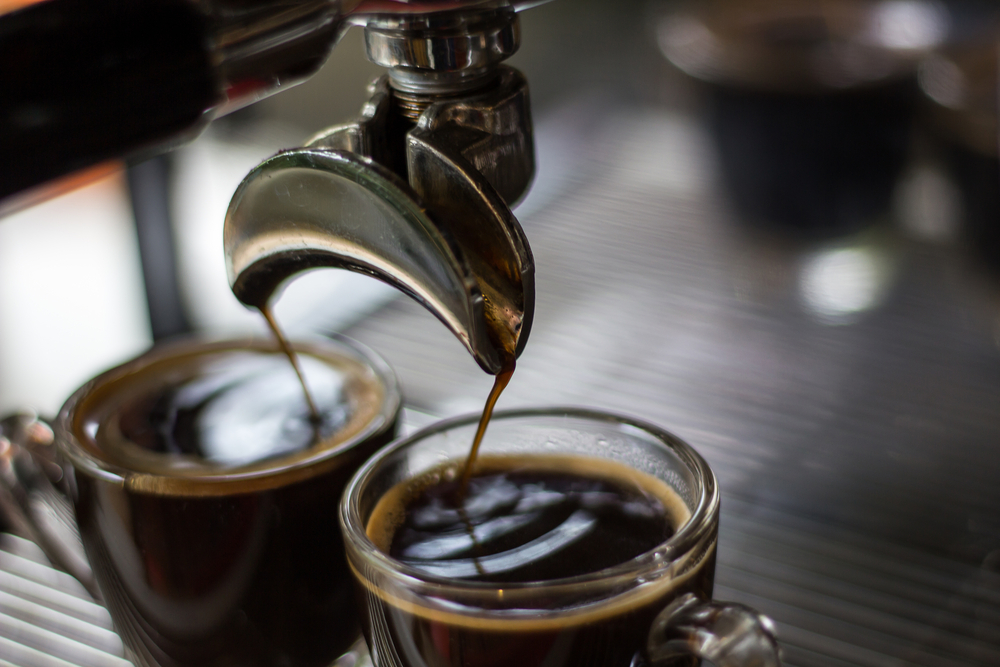
Let me be direct: the E8 pulls better espresso shots. The variable brewing unit is a real advantage, not marketing fluff.
Here’s why it matters. Different beans extract optimally at different doses. A light roast Ethiopian might want 14-16 grams to get enough body. A dark roast Italian blend might taste over-extracted at anything above 12 grams. The E8 lets you dial this in. The ENA 8 doesn’t.
That said, the ENA 8 still makes good espresso by any reasonable standard. The fixed 10-gram dose works well for most medium roasts—which is what most people drink anyway. If you’re not the type to obsess over extraction ratios, you won’t feel like you’re missing out.
Both machines use Jura’s Aroma G3 grinder, which is legitimately good. Steel burrs, relatively quiet, consistent particle size. The grinder isn’t the differentiator here.
Milk Drinks: Basically a Tie
Both machines have Jura’s fine foam technology for automatic milk frothing. You connect a tube to a milk container (or use Jura’s optional milk cooler), press a button, and get textured milk dispensed directly into your cup.
The foam quality is identical between machines. Both produce dense, velvety microfoam suitable for latte art if you’re careful. Neither matches what a skilled barista can do with a steam wand, but for automatic machines, they’re among the best.
The E8 has more programmed milk drink options (17 vs 10), but this is mostly marketing. Both can make lattes, cappuccinos, flat whites, and macchiatos. The E8 just has more variations pre-programmed—things like “latte macchiato double” that you could replicate on the ENA 8 by pressing buttons twice.
Daily Living: Size and Capacity Differences
This is where your lifestyle matters more than specs.
Water Tank
The E8’s 64oz tank is nearly double the ENA 8’s 37oz. In practice:
- E8: Refill every 3-4 days for a 2-person household
- ENA 8: Refill every 1-2 days for the same usage
If refilling a water tank annoys you, the E8 wins. If you don’t mind the minor inconvenience, the ENA 8’s smaller footprint might be worth it.
Bean Hopper
This is a bigger deal than it sounds. The ENA 8’s 4.4oz hopper holds maybe a week’s worth of beans for a moderate drinker. The E8’s 10oz hopper holds about 2.5 weeks.
More importantly, smaller hoppers mean beans sit exposed to air for less time before being used—actually better for freshness. Some E8 owners intentionally don’t fill the hopper completely for this reason.
Counter Space
The ENA 8 is about 1 inch narrower and 1 inch shorter. Doesn’t sound like much until you’re trying to fit it under kitchen cabinets or next to other appliances. That inch matters in tight spaces.
User Interface and Programming
Both machines have identical 2.8″ color touchscreens. The interface is clean, responsive, and easy to navigate. You can save multiple user profiles with personalized drink settings.
Where the E8 pulls ahead: more granular customization options. You can adjust coffee strength, water volume, milk foam amount, milk temperature, and extraction time. The ENA 8 has fewer variables to tweak because of that fixed brewing unit.
Both connect to Jura’s J.O.E. smartphone app (learn more in our complete Jura machines guide) for remote brewing and maintenance tracking. The app is fine—not essential, but nice for checking when you need to descale or change filters.
Maintenance: Same Story
Jura machines are low-maintenance compared to semi-automatic espresso setups, but they’re not maintenance-free.
Both machines require:
- Daily: Empty drip tray, rinse milk system
- Weekly: Clean brewing unit (removable on both), wipe exterior
- Monthly: Run cleaning tablets through the system
- Every 2-3 months: Descale (more frequent with hard water)
- Annually: Replace water filter
Neither machine has any maintenance advantage over the other. Same cleaning tablets, same filters, same procedures.
Reliability and Longevity
Both machines are built on similar platforms with Jura’s standard components. Based on owner reports and repair data, expect 5-8 years of regular use before major repairs become likely.
Common failure points on both: brew group seals (replaceable), grinder burrs (wear item), and control board issues (expensive repair). Jura repairs are notoriously pricey—often 30-40% of the machine’s value—so factor that into your long-term cost calculations.
One reliability note: simpler is generally better. The ENA 8’s fixed brewing unit has fewer moving parts than the E8’s variable unit, which could theoretically mean fewer failure points. I haven’t seen data showing a meaningful difference, but it’s worth considering.
Who Should Buy the Jura E8?
- Households with 2+ regular coffee drinkers
- People who want maximum control over their espresso
- Anyone who finds frequent refilling annoying
- Coffee enthusiasts who switch between different bean types
- Those with adequate counter space
Who Should Buy the Jura ENA 8?
- Solo coffee drinkers or occasional couples
- Small kitchens, apartments, or offices
- People who want “good coffee” without obsessing over settings
- Budget-conscious buyers (it’s $400 cheaper)
- Those prioritizing aesthetics and compact design
What About the ENA 4?
Jura also makes the ENA 4, which is even smaller and cheaper (~$1,000). It’s worth considering if your primary use is straight espresso or americanos. But it lacks automatic milk frothing—you’d need a separate frother for lattes. For most people wanting milk drinks, the ENA 8 is the minimum.
Best Beans for Either Machine
Super-automatic machines like these work best with medium roasts. Avoid:
- Very light roasts (under-extract, sour shots)
- Very oily dark roasts (clog the grinder over time)
- Flavored beans (oils and additives damage internal parts)
Good options: Lavazza Super Crema, Illy Classico, Kirkland Colombian Supremo, or any medium roast labeled “espresso blend” without visible oil on the beans.
The Verdict
The E8 is the better coffee machine. The ENA 8 is the better fit for limited space or lighter use.
If you drink 3+ cups daily, entertain guests, or genuinely care about dialing in your espresso—get the E8. The variable brewing unit and larger capacity justify the $400 premium.
If you want excellent coffee with minimal fuss, have limited counter space, or drink 1-2 cups daily—the ENA 8 delivers 90% of the experience in a more practical package.
Either way, you’re getting a legitimately good super-automatic. The “wrong” choice between these two still makes great coffee.
Related: Best Coffee Beans for Jura Machines | Jura Z6 vs Z8: Worth the Upgrade?