K-Cup pods usually carry a best-by or best-if-used-by date rather than a universal safety expiration date. An intact pod stored in a cool, dry place may still be usable after that date, but its coffee can taste flatter and less aromatic. Discard a pod that is punctured, leaking, swollen, wet, moldy, contaminated or has an unusual odor. Follow the package instructions for cocoa, latte and other pods containing ingredients beyond plain coffee.
The printed date and package condition matter more than a generic “K-Cups last X years” rule. Manufacturers choose dates for their own formulations and packaging. If the label says use by, provides special storage directions or the producer has issued a recall, follow that information.
Do K-Cups Expire?
Plain coffee pods are shelf-stable because the roasted coffee is enclosed in a small barrier package. The foil lid and plastic pod limit oxygen, moisture and light—the main factors that accelerate staling. That protection does not stop quality loss forever, and it fails once the seal is damaged.
In the United States, the FDA explains that “Best if Used By” is intended to identify peak flavor or quality, not automatically the date a packaged food becomes unsafe. The agency advises consumers to examine products past that date for spoilage or noticeable changes and contact the manufacturer when uncertain.
That does not mean every old pod is safe. Storage history, packaging integrity and ingredients vary. There is no reliable home test that can prove an unknown pod is free of contamination.
Best-By Date vs Expiration Date
| Label | Typical meaning | What to do |
|---|---|---|
| Best By / Best If Used By | Manufacturer’s expected peak quality | Inspect the seal and contents; expect flavor decline after the date |
| Use By | Manufacturer’s recommended final date for best quality; wording is not nationally uniform for most foods | Follow the producer’s instructions and ask the producer if uncertain |
| Lot or production code | Identifies a manufacturing batch | Use it when checking recalls or contacting customer service |
FDA notes that, except for infant formula, federal law generally does not require quality-based dates on packaged foods and there is no single nationally uniform wording system. Read the exact pod box rather than assuming every date has the same meaning.
See the FDA’s current explanation of food date labels.
How Long Do K-Cups Last?
Use the date printed on the box as the manufacturer-specific quality target. Do not add an arbitrary number of months or years. Plain black-coffee pods, flavored coffee, tea, cocoa, cider and latte mixes do not contain the same ingredients and may age differently.
After the best-by date, likely quality changes include:
- weaker aroma when the pod is brewed;
- flat, papery or stale flavor;
- less distinct roast or origin character;
- poorer performance if moisture entered the pod;
- changes in powdered milk, sweetener or flavor components in specialty pods.
If you cannot determine how a pod was stored, replacing it is the cautious choice. A bargain is not worthwhile when packaging has been exposed to heat, humidity, pests or physical damage.
When Should You Throw a Pod Away?
Do not brew a pod when:
- the foil lid is punctured, torn, loose or partly separated;
- the plastic cup is cracked, warped, swollen or leaking;
- the pod or box became wet;
- you see mold, insects, residue or unusual discoloration;
- the grounds or powder smell rancid, musty or otherwise abnormal;
- the product is included in a recall;
- the label requires storage conditions that were not maintained;
- you cannot identify the product or its ingredients.
Do not taste a visibly suspect pod to decide whether it is safe. If a pod bursts during brewing, stop the machine, discard the beverage and clean the brewer according to its manual.
How to Read the Date on a K-Cup Box
- Look on the outer carton and individual pod for a printed date or code.
- Identify whether it says Best By, Best If Used By, Use By or something else.
- Keep the carton until the pods are used; it contains ingredients, manufacturer contact information and lot data.
- If the code is unclear, contact the brand rather than guessing its format.
- Check official recall notices using the brand and lot number when you have a safety concern.
Best Way to Store K-Cups
Keep them cool and dry
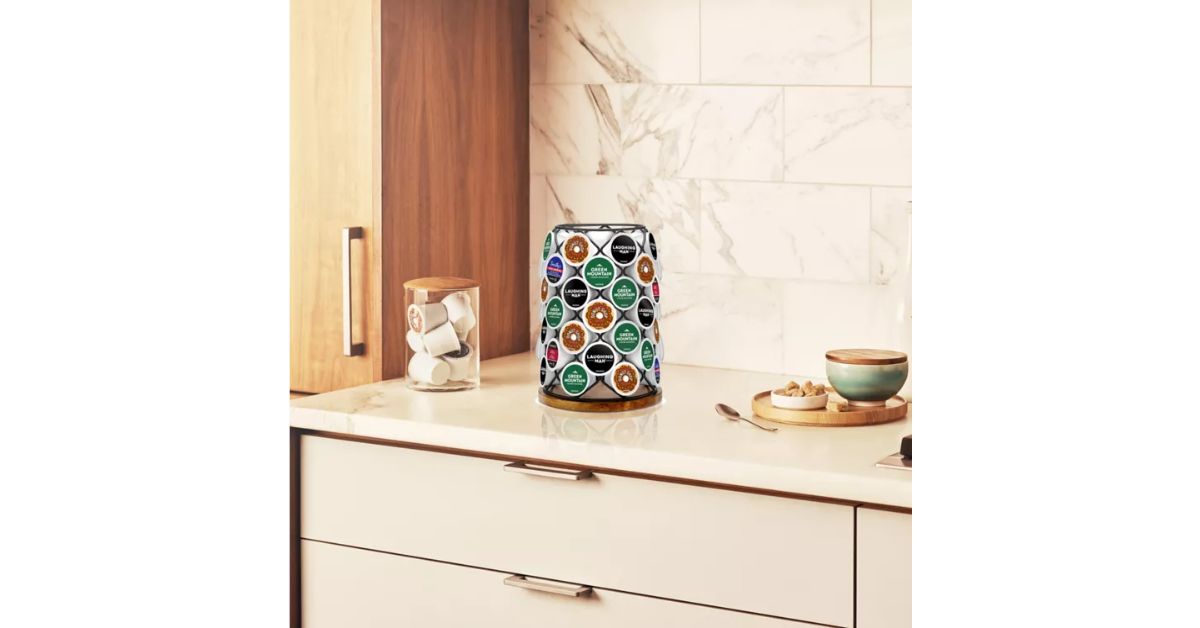
Store pods in a pantry or cabinet away from the stove, dishwasher, sink, direct sunlight and other sources of heat or humidity. Normal indoor temperatures are more important than buying a decorative pod carousel.
Keep the original box
The box protects pods from light and physical damage and preserves the date, ingredient list and lot code. If you transfer pods to a container, move the label information with them.
Use oldest pods first
Arrange pods by best-by date and place newer purchases behind older stock. This first-in, first-out habit prevents forgotten boxes from aging for years.
Do not puncture pods in advance
The factory seal is the pod’s protection. Once punctured, coffee is exposed to oxygen and humidity and should be brewed immediately rather than stored.
Usually skip the refrigerator and freezer
Sealed pods are designed for pantry storage unless the manufacturer says otherwise. Refrigeration is unnecessary and moving cold pods through humid air can create condensation on packaging. Never freeze a pod to compensate for a damaged seal.
Can You Brew a K-Cup After Its Best-By Date?
You may decide to brew a plain coffee pod past a quality date when its seal is fully intact, it was stored correctly, no recall applies and there are no signs of damage or spoilage. Expect diminished flavor and use your judgment.
Be more conservative with pods containing milk powder, creamer or multiple ingredients and with products intended for someone at higher risk of foodborne illness. Follow the package and contact the manufacturer for product-specific guidance.
The FDA’s food-storage guidance notes that a quality date is not automatically a safety date but advises discarding food that looks questionable.
Why Old K-Cups Taste Stale
Roasting creates volatile aroma compounds that gradually escape or oxidize. A sealed pod slows this process but cannot reverse it. Heat accelerates reactions, oxygen changes coffee oils and humidity damages grounds and powdered ingredients.
A pod can therefore be intact yet produce disappointing coffee. Our guide to how coffee loses freshness explains the difference between staling and obvious spoilage.
K-Cup Expiration FAQ
Can expired K-Cups make you sick?
A date alone does not establish safety, but damaged or improperly stored pods can be contaminated. Discard pods with broken seals, moisture, swelling, mold, pests or abnormal odor. When uncertain, do not brew them.
Do tea and hot-chocolate pods last as long as coffee?
Do not assume so. Their ingredients and manufacturer dates differ. Hot-chocolate and latte pods may contain milk-derived powders or other components that require product-specific guidance.
Can you use a K-Cup if the foil is dented?
A shallow dent is less important than whether the seal is intact. Discard the pod if the foil is punctured, lifting, leaking or no longer tightly bonded to the rim.
Should you refrigerate K-Cups?
Normally no. Store sealed pods in a cool, dry cabinet unless the package says otherwise. Refrigeration adds no clear benefit and can expose packaging to condensation.
Where is the expiration date?
Look on the outer carton and the side or foil of individual pods. Brands use different placements and code formats; customer service can decode an unclear lot or date.
Bottom Line
Treat the printed best-by date as the maker’s quality target, not permission to ignore package condition. Keep pods sealed, cool and dry; rotate older stock forward; and discard anything damaged, wet, swollen, moldy or unusual. Plain coffee pods may remain usable after a quality date, but there is no responsible one-size-fits-all promise that every K-Cup stays safe or tastes good for years.