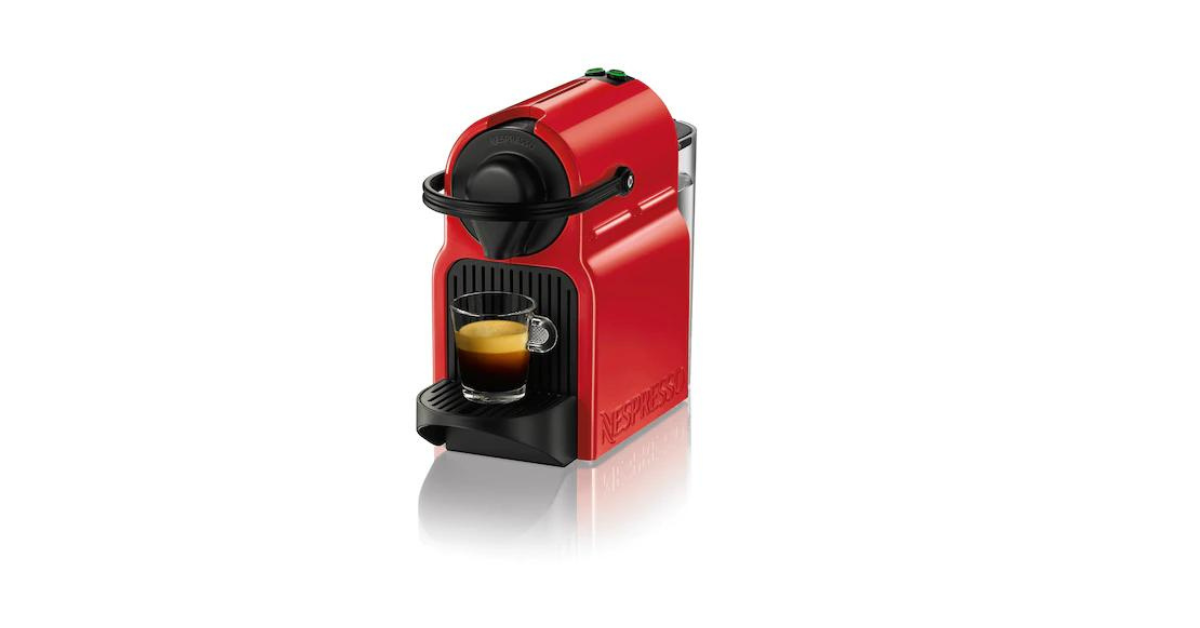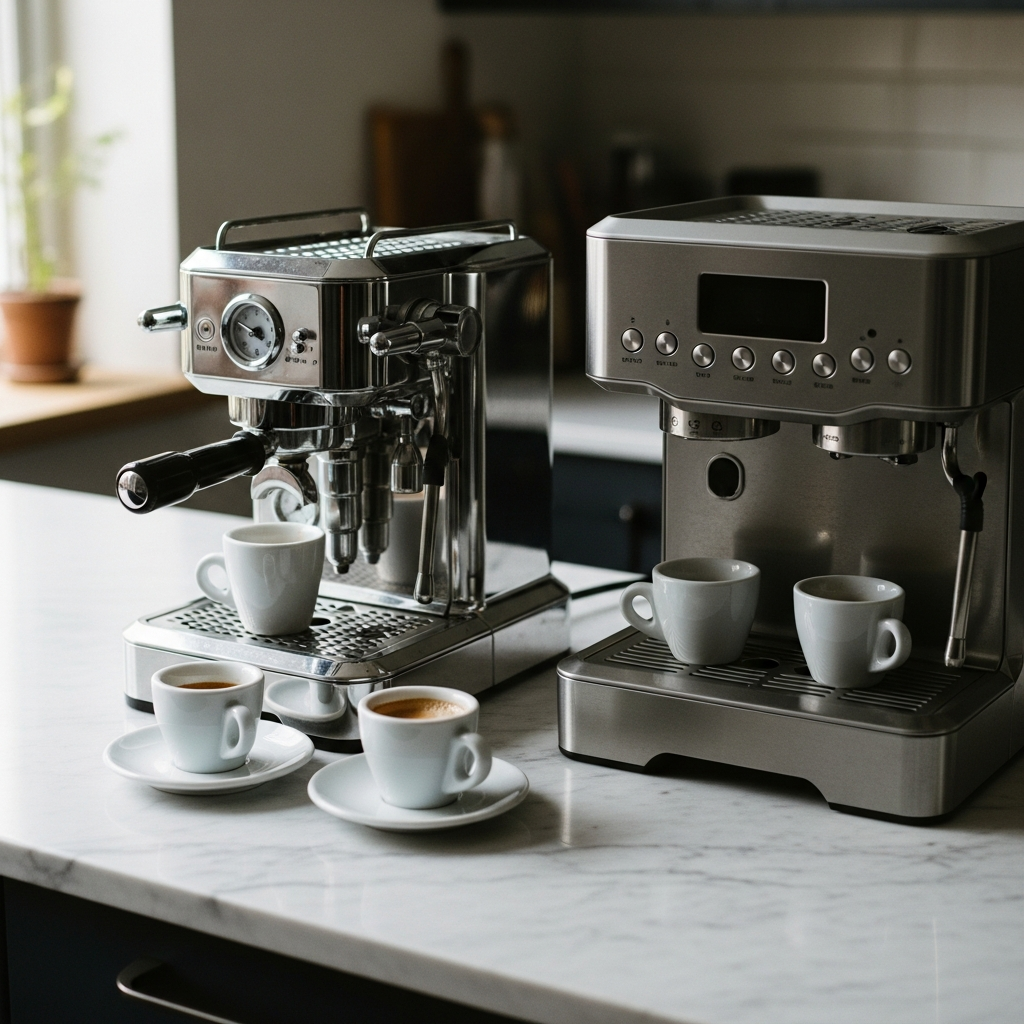
The DeLonghi vs Breville debate has gotten complicated with all the fanboy opinions flying around on both sides. As someone who currently has a Breville Barista Express and a DeLonghi La Specialista Maestro sitting side by side on my counter — and I’ve been using both daily for months — I learned everything there is to know about how these two brands actually compare. Today, I’ll share it all with you.
The answer has changed a lot since we published our original Breville vs DeLonghi comparison, so here’s a completely fresh look at where both brands stand in 2026. Short version: the right choice depends entirely on what kind of espresso experience you want. One brand is built for people who want to learn the craft. The other is built for people who want great espresso without the learning curve.
DeLonghi vs Breville: Brand Philosophy in 2026
Before getting into specific models, it helps to understand what each company is actually trying to do. They’re solving different problems.
Breville (Sage in Europe and Australia) is an Australian company designing espresso machines for home baristas who want control. Manual grind adjustment, dose control, tamping feedback, PID temperature management. Steeper learning curve, but the ceiling is higher — a skilled Breville user can match or beat cafe espresso at home. I’ve done it. Took a few weeks of dialing in, but it happened.
DeLonghi is Italian, with a broader portfolio that includes everything from space heaters to super-automatic coffee machines. Their espresso machines prioritize convenience — automatic dosing, guided workflows, one-touch recipes, self-cleaning. Gentler curve, consistently good results (if not always exceptional).
Neither approach is wrong. But buying a Breville when you want push-button simplicity — or a DeLonghi when you want barista-level control — will leave you frustrated.
Entry-Level ($200-$400): Best for Beginners
DeLonghi Stilosa (EC260BK) — ~$120
DeLonghi dominates this tier because Breville basically doesn’t compete here. The Stilosa is a basic 15-bar pump machine with a manual steam wand. No grinder, no PID, no frills. It’s a solid first espresso machine if you want to learn without a big financial commitment. Plastic housing, metal portafilter. Uses a pressurized basket that forgives grind inconsistency.
Breville Bambino (BES450) — ~$300
Breville’s entry point, and it punches above its price. Genuine 9-bar extraction (not 15-bar marketing pressure), 3-second heat-up from the thermojet system, and automatic steam on the Bambino Plus (BES500). No built-in grinder though — you’ll need to add $100-200 for a separate one. Build quality is noticeably better than the Stilosa. Brushed stainless steel housing.
DeLonghi La Specialista Arte (EC9155MB) — ~$400
DeLonghi’s entry into all-in-one territory with a built-in grinder and their Sensor Grinding Technology that auto-adjusts dose. Good package for the price. Grinder isn’t as adjustable as Breville’s though, and the build leans more plastic in spots like the portafilter handle and hopper.
Winner at Entry Level: Depends
Under $200, DeLonghi wins by default — they own this space. At $300-400 it’s a toss-up: the Bambino plus a separate grinder gets you better espresso but costs more total. The La Specialista Arte is easier out of the box.
Mid-Range ($400-$800): The Sweet Spot
This is where both brands bring their best sellers, and where the decision gets genuinely hard.
Breville Barista Express (BES870XL) — ~$600
Best-selling home espresso machine on the planet, and I get why. Built-in conical burr grinder with 18 settings, dose control, pressure gauge for real-time feedback, manual steam wand. The 54mm portafilter is smaller than commercial 58mm, but it produces excellent espresso. Stainless steel housing, sturdy, looks great on the counter. This is the machine that converted me from pod coffee to real espresso.
If you run into issues, our detailed troubleshooting guide covers the 10 most common problems.
Breville Barista Express Impress (BES878) — ~$700
The updated Barista Express with one killer addition: an assisted tamping system that applies consistent 22-pound pressure and tells you when dose is correct. Eliminates the biggest variable in home espresso — inconsistent tamping. Also adds a small LCD for shot timing. Everything else carries over from the BES870. If buying new in 2026, the extra $100 for the BES878 is worth it.
DeLonghi La Specialista Maestro (EC9665M) — ~$750
DeLonghi’s flagship semi-auto with Sensor Grinding, Smart Tamping Station, and LatteCrema automatic milk frothing. The LatteCrema system is legitimately impressive — consistently good microfoam without any technique. Just put the tube in milk and press a button. Flat burrs (vs Breville’s conical) with 8 grind settings. Bigger than the Barista Express — measure your counter space.
Winner at Mid-Range: Breville Barista Express Impress (BES878)
For espresso-focused users who want to develop their skills, the BES878 is the better machine. More grind adjustability, better feedback from the gauge, superior build. DeLonghi’s Maestro wins for anyone who wants great milk drinks with minimal effort — LatteCrema is genuinely good. But for straight espresso quality, Breville takes this tier.
Premium ($800+): Serious Home Barista Territory
Breville Barista Pro (BES878BSS) — ~$850
ThermoJet heating gets to brew temp in 3 seconds (vs 30+ on the Barista Express). Full LCD with shot timer, 30 grind settings, digital temp control. That fast heat-up genuinely changes the morning routine. Quieter grinder too, and extraction quality bumps up from more precise temperature management.
Breville Barista Touch (BES880) — ~$1,000
Full-color touchscreen with customizable drink presets and automatic milk texturing. Save profiles for different family members. Adjust grind, dose, brew temp, milk temp and texture — save it all to a button. Most user-friendly premium machine from either brand.
DeLonghi La Specialista Opera (EC9555M) — ~$1,100
DeLonghi’s top semi-auto features Cold Extraction Technology for cold brew-style espresso, Smart Tamping, and a large TFT display. Best build quality DeLonghi makes — more metal, better finish, heavier. The Cold Extraction feature is unique and works well for cold coffee drinks. For traditional hot espresso though, it doesn’t meaningfully outperform the Brevilles at this price.
Breville Oracle Touch (BES990) — ~$2,500
If budget is no object, this is it. Dual boiler (brew and steam simultaneously), automatic grinding, dosing, and tamping, touchscreen with saved profiles, commercial-grade PID. Closest thing to a commercial machine designed for home use. DeLonghi has nothing competing directly at this level in the semi-auto space.
Winner at Premium: Breville
Breville dominates here with more options, better build, and more advanced technology. The gap widens as price goes up. DeLonghi’s strength at this tier is their super-automatics (Dinamica Plus, Eletta Explore), but those are a different category — push-button convenience machines rather than semi-autos.
Head-to-Head: Key Categories
Build Quality
Winner: Breville. More stainless steel, heavier feel, tighter manufacturing tolerances. DeLonghi uses more plastic in structural spots, and I’ve seen plastic portafilter handles crack on La Specialista models. Breville’s housing and components feel like they’ll last.
Grinder Quality
Winner: Breville. Their conical burr grinders offer 16-30 settings (model dependent) with more consistent particle size. The Barista Express internal and external adjustment system effectively gives you hundreds of micro-settings. DeLonghi grinders are adequate but less adjustable — 8-13 settings on most models.
Steam Performance
Winner: Tie. Both produce good pressure. Breville gives more manual control with traditional wands (great for latte art). DeLonghi’s LatteCrema auto-system makes consistent microfoam without technique. Want to learn latte art? Breville. Want consistently frothed milk without practice? DeLonghi.
Ease of Cleaning
Winner: DeLonghi (slightly). More automated cleaning programs, less manual intervention. Breville needs more hands-on maintenance — backflushing, grinder cleaning, shower screen removal. Flip side: Breville machines are easier to access and repair when you do need to. For Breville maintenance details, see our Breville descaling guide. For DeLonghi, our DeLonghi descaling guide.
Reliability
Winner: Breville (slightly). Based on user reports, repair forums, and long-term reviews, Brevilles tend to last longer before needing major work. Most common failure on both brands is scale buildup — preventable with regular descaling. Breville’s customer service also rates higher, with faster response and more generous warranty support.
Value for Money
Winner: Depends on budget. Under $300, DeLonghi has more options and better value. At $400-800, it’s very close. Above $800, Breville delivers better value per dollar because their premium features (dual boilers, PID, advanced grinders) show up at lower price points than DeLonghi’s.
Who Should Buy DeLonghi?
Go DeLonghi if you want push-button milk drinks without learning latte art, prefer a lower learning curve, are on a tight budget under $300, want a super-automatic that grinds, brews, and froths with one touch, or value automated cleaning. For a deeper look at specific models, read our DeLonghi La Specialista review.
Who Should Buy Breville?
Go Breville if you want to learn the craft, value build quality and long-term durability, want the most adjustable grinder in a home machine, plan to develop latte art skills, or are willing to invest in a premium machine that’ll last years.
When to Contact Support
Both brands offer 2-year warranties for manufacturing defects. Breville: 1-866-273-8455. DeLonghi: 1-800-322-3848. Keep your receipt and register the machine — both require proof of purchase for claims. If problems come up, our DeLonghi troubleshooting guide and Breville troubleshooting guide can help you diagnose before calling.
Final Verdict
In 2026, Breville remains the better choice for most home espresso enthusiasts. Superior build, more precise grinders, and a higher ceiling for espresso quality. DeLonghi wins for convenience-focused coffee drinkers who want great results with minimal effort, especially at lower price points.
I’m apparently the kind of person who needs both on the counter — Breville for my morning ritual when I want to dial in a perfect shot, DeLonghi for busy afternoons when I just want a quick latte without thinking about grind settings. Both serve their purpose.
Still on the fence? Our guide to the best espresso machines with built-in grinders ranks the top options from both brands side by side with real-world testing notes.