“`html
Kirkland Signature Colombian — The Pour-Over Sweet Spot
I spent six months cycling through every coffee bean option Costco stocks, grinding them on my Baratza Encore and brewing them through a Hario V60. The Kirkland Signature Colombian won out by a landslide — and it’s not even close to the most expensive option on the shelf.
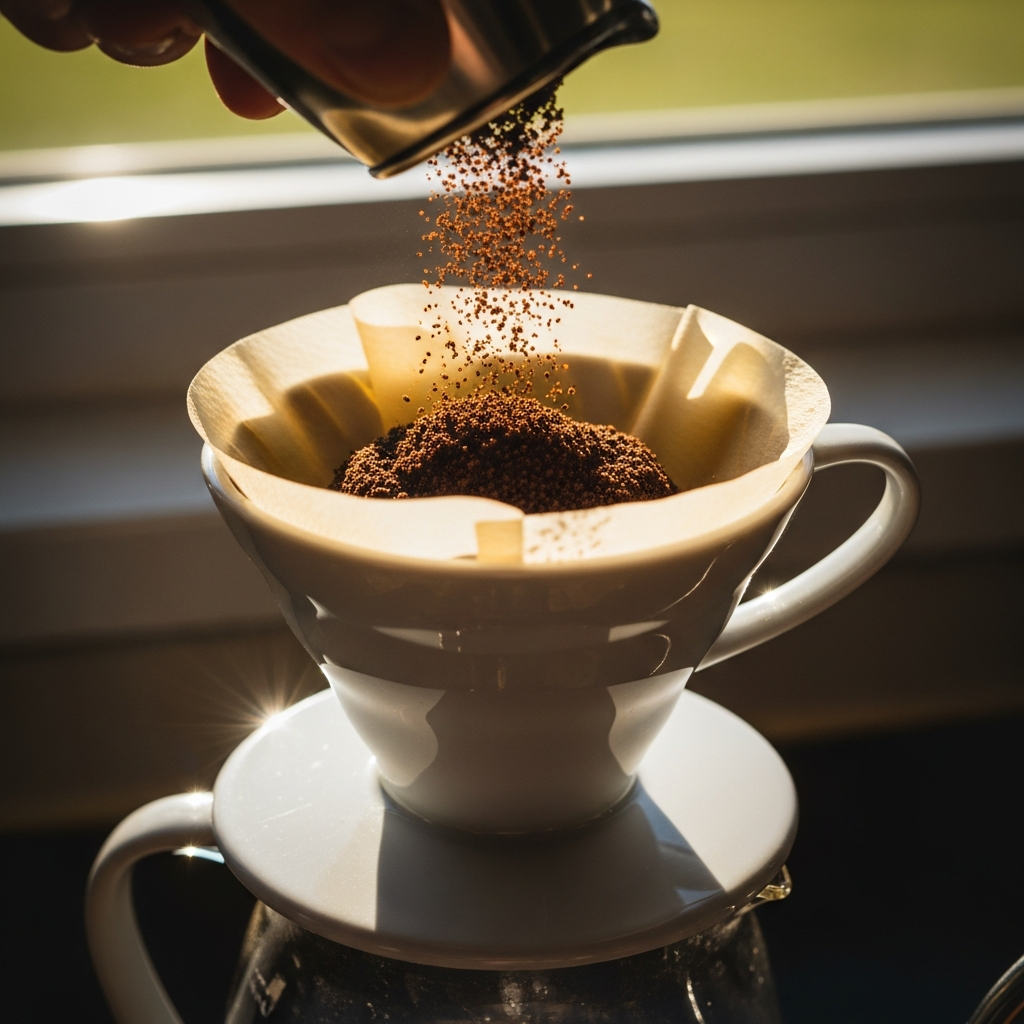
Here’s what makes it work for pour-over specifically. Pour-over brewing demands medium-coarse grounds with consistent particle size. Too fine, and water clogs in the filter bed. Too coarse, and you get under-extraction — weak, sour coffee that tastes like cardboard. The Kirkland Colombian, when freshly ground, delivers that Goldilocks grind profile naturally. The beans are medium-roasted, which means they’re forgiving. They won’t choke your Chemex or V60.
The tasting profile matters for this method. Pour-over highlights clarity and brightness — it’s the brewing style that extracts acidity in a *good* way. Colombian origin gives you fruit notes (mild citrus, sometimes plum), moderate body, and a clean finish. You’re not getting a $25/pound specialty roast complexity, but for $7.99 a pound, you’re getting transparency. The water flows through evenly. The coffee tastes like coffee, not ash.
Roast date transparency at Costco is actually solid. Look at the back of the bag — you’ll see a printed roast date, not a vague “best by” stamp. Kirkland Colombian typically rotates in fresh every four to six weeks. Buy it within two weeks of that roast date if possible. Whole beans stay good in an airtight container for six to eight weeks with minimal degradation in flavor.
Cost-per-ounce is where Costco wins. At $7.99 a pound, you’re paying roughly 50 cents per ounce. Whole Foods’ equivalent (their house-brand medium roast) runs $12.99 to $16.99 a pound. You’re saving $5 per pound minimum, and the quality difference for pour-over brewing? Negligible. Probably should have opened with this section, honestly — the value proposition is the real story.
Why Most Costco Beans Fail at Pour-Over
Not every Costco coffee bean works for pour-over. I learned this the hard way after buying three pounds of Kirkland Signature Dark Roast Italian Roast, convinced that “Italian” meant espresso-only.
Dark roasts present two problems. First, they’re over-roasted. The beans develop an oily surface, which looks appealing on a retail shelf but creates inconsistent grind size when you process them. Some particles shatter to fine powder; others stay chunky. Second, dark roasts sacrifice the clarity that pour-over demands. You wanted brightness and acidity — instead you get a flat, burnt-sugar profile that tastes identical whether you’re using a $2 drip machine or an $80 Hario V60.
The Starbucks-brand beans that Costco carries seasonally? Skip them for pour-over. They’re roasted specifically for espresso machines and French press — brewing methods that tolerate body over clarity. When you pour water through a Starbucks bean at pour-over settings, you get over-extraction and bitterness. The fine, dark grounds clog Chemex filters. I watched a colleague’s cone dripper back up completely because the Starbucks beans ground so unevenly.
Lighter roasts from smaller Costco suppliers (these rotate, so availability varies) often fail in a different way: insufficient body. They’re delicate and bright, which sounds ideal. But in a pour-over setup, they can taste thin and hollow if your bloom phase is rushed or your water temperature is slightly off. You’re fighting the coffee instead of working with it.
The Colombian middle-ground absorbs brewing imprecision. Your water is 195°F instead of 200°F? The coffee still tastes good. You extended the bloom phase by five seconds? No disaster. Medium roasts at Costco are built for people with grinders and dripper cones, not espresso enthusiasts or specialty roasters.
Costco’s Rotating Stock — How to Navigate It
Kirkland Colombian runs year-round at most Costco locations, but the supply isn’t infinite. Seasonal origins rotate in — Ethiopian is common spring through summer, Brazilian appears in fall, and Peruvian pops up randomly. You can’t count on finding the exact same bean twice.
Here’s the framework I use: check the roast date in-store before you buy. Look at the back label. If it’s printed within the last two weeks and the bag is sealed with no visible defects (moisture, damage to the package), grab it. Avoid bins that sit uncovered or warehouses where the coffee has been out on the shelf with visible dust accumulation — humidity and oxidation destroy pour-over quality fast.
Kirkland coffee typically ranges $6 to $9 per pound depending on origin and seasonal demand. Colombian stays at the lower end. Ethiopian and other single-origins run $8 to $9. Whole Foods charges $14 to $18 per pound for similar origins, and specialty roasters charge $16 to $22. You’re not paying for premium roasting here — you’re paying for commodity pricing and Kirkland’s volume advantage.
Track the stock. If you find Colombian that you like, consider buying three to four pounds at once. You can store whole beans properly (I’ll get into this), and knowing you have a reliable backup for six weeks removes decision fatigue. When your preferred origin disappears, you’ll have time to experiment with the next rotation without panic-buying whatever’s left.
Storage and Freshness — Why It Matters More at Costco
Costco sells coffee by the pound. Two pounds of whole beans is roughly the amount that fits in two standard coffee canisters. Most people who buy in bulk don’t have a plan for storage, and stale coffee is the biggest reason pour-over tastes flat.
Here’s the reality: fresh beans are essential for pour-over. Espresso can mask stale coffee because the machine extracts fast and focuses on body. Pour-over relies on clarity and brightness — qualities that disappear within two to three weeks of opening the bag if you leave the beans exposed to air. Oxygen oxidizes the oils and breaks down the volatile compounds that create flavor.
Buy an airtight container. Oxo makes one for $12 to $15 that holds about a pound and a half. Transfer your Costco beans immediately after opening. Keep it in a dark pantry or cabinet — not on the counter. Not in direct sunlight. Light degrades the beans nearly as fast as air does. I made this mistake for months, keeping my beans in a clear glass jar on a shelf. The coffee tasted okay, but when I switched to an opaque airtight container in the pantry, the same beans tasted noticeably brighter.
Freezer storage works too, but it’s not necessary for whole beans if your pantry stays cool. Only freeze if you’re buying five pounds at once and know you won’t use it within eight weeks. When you freeze, use an airtight container and don’t open it until you’re ready to grind. Condensation from freezing and thawing ruins beans.
Visual freshness check: when you open a new bag, the beans should look matte to slightly glossy, depending on roast level. Dark roasts will have visible oil. Colombian medium roast will look dull. If the beans look shiny or wet, they’re too old — the oils have oxidized and turned rancid. If they look perfectly matte and dull even on a fresh medium roast, they’ve been stored poorly.
Timeline: optimal pour-over brewing happens 5 to 14 days after the roast date. The CO2 has mostly vented (which helps with grind consistency), but the volatile aromatics are still present. You can brew competently from 2 to 6 weeks post-roast if stored properly. Beyond 8 weeks, even in perfect conditions, the coffee tastes flat and cardboard-like. Costco’s beans, stored right in an airtight container, give you roughly six weeks of usable window.
The Pour-Over Grind Test — Your At-Home Check
You already own a grinder if you’re serious about pour-over. Use it as your quality-control tool. This test takes 30 seconds and tells you if the beans will actually work for your setup.
Grind a quarter-ounce (about one tablespoon of whole beans) on your medium-coarse setting. The result should look like sand — uniform, consistent particles roughly the size of sea salt granules. Pick up a pinch between your fingers. Feel for texture: it should feel gritty, not powdery. If you’re getting mostly fine dust with a few chunks, your beans were stored poorly or roasted too dark. Return them.
Pour test: brew a small pour-over (four to six ounces of water). Watch the water flow through the grounds. It should pour smoothly without backing up or stalling. If water pools on top or drains extremely slowly, your grind is too fine. If it rushes through in under two minutes and tastes weak, you’re too coarse. The Kirkland Colombian grinds consistently enough that this test usually passes on the first try — that’s why it’s the recommendation.
This grind consistency is why Costco’s rotating stock matters. A poorly stored batch of Ethiopian will grind unevenly. A dark roast will shatter into powder. The Colombian, within its two-week freshness window and stored properly, delivers predictable results every single time. You’re not fighting the coffee. You’re just brewing.
“`