Why Costco Bulk Coffee Goes Stale Fast
You opened that 2lb bag of Costco French press coffee yesterday. It smells fine. But the first cup tasted flat. Chalky, almost. One-dimensional—like someone removed all the brightness and left behind bitter cardboard. Now you’re stuck wondering if you wasted money or if something’s actually wrong.
Here’s what nobody tells you about bulk coffee at warehouse clubs: size doesn’t equal freshness. It’s actually the opposite.
As someone who’s bought coffee beans from Costco, grocery stores, and specialty roasters for the past seven years, I learned everything there is to know about why bulk bags disappoint. Every time I grabbed a 2-3lb bag, the same pattern showed up. Cheaper per ounce, sure. But that convenience comes with a hidden cost nobody mentions. Those massive bags sit on warehouse shelves longer than smaller packages. The roasters and Costco optimize for pricing and shelf stability, not peak flavor at three weeks in. They roast darker specifically—darker roasts stay stable longer during storage and transit. Medium roasts, which have complexity and brightness, fade fast. Costco picked the format that survives warehouse conditions, not the format that tastes best when you’re actually brewing it.
Then there’s the packaging itself. Those kraft bags with the valve seal aren’t designed for your kitchen the way specialty coffee bags are. Once you open one, oxygen rushes in constantly. Every time you grab a scoop, you’re introducing fresh air to the remaining beans. The valve lets CO2 escape during shipping but doesn’t create an airtight seal for home storage.
Stale coffee isn’t imaginary—it’s a real chemical process. Fresh beans have volatile aromatic compounds. That’s the stuff that makes coffee smell rich and taste complex. Those compounds break down when exposed to oxygen, light, and heat. After two weeks, you’ve lost maybe 30% of those aromatics. After four weeks, you’re at 60% loss. After six weeks, you’re drinking what’s basically flavored hot water. That chalky, one-dimensional taste you’re experiencing? Your palate isn’t broken. The coffee is.
Check the Roast Date First Thing
Before you change anything else, you need to know how old these beans actually are.
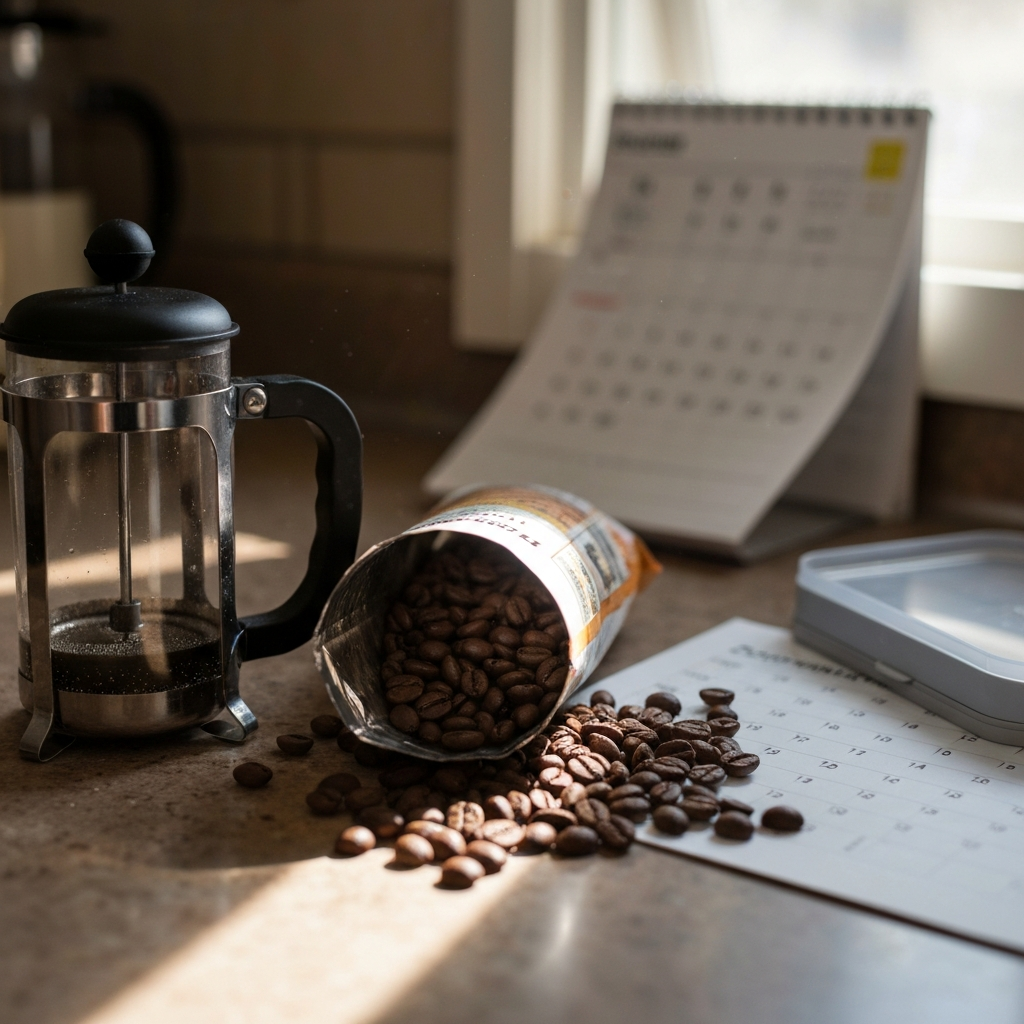
On the back of Costco coffee bags, you’ll find a printed date. Look for the line that says “Roasted on” or sometimes just a date stamp. This is different from the “Best by” date. The roast date is what matters. That “Best by” date is a legal label—it protects Costco. The roast date tells you the actual truth.
Here’s the acceptable window: anything roasted within the last 10-14 days is ideal. 14-21 days is still good. 21-28 days is passable but you’re entering the decline zone. Anything over 30 days old, and you’re genuinely drinking stale coffee. That’s not a preference thing. That’s chemistry.
Probably should have opened with this section, honestly. I once bought a 3lb bag of Costco beans without checking the roast date. They were 47 days old. I spent two weeks experimenting with grind size, water temperature, and brew time before my wife finally said, “Did you check when they were roasted?” She was right. I was trying to fix a storage problem when the real issue was that I’d bought old coffee from the start.
If your bag is less than 21 days old, the staleness isn’t a roast date problem—move to the storage section. If it’s older than 30 days, that’s likely your culprit. The beans were already past peak when you bought them. Write down the date you bought it, show a photo to customer service, and ask for a refund or exchange. Costco handles this without argument.
Storage Kills Costco Coffee Faster Than You Think
Let’s assume the roast date is reasonable. The coffee’s still tasting flat. Now we’re looking at what you did after opening it.
Most Costco coffee mistakes happen in the first 72 hours. You open the bag. It’s a big bag. You leave it open on the counter to grab coffee each morning. Every single time you open it, oxygen pours in and stale air sits inside until you seal it again. If you’re opening it five times a day, that’s five oxygen exposure events before breakfast.
The second mistake is location. That spot on your counter next to the window? Sunlight degrades coffee oils and accelerates the oxidation process. The spot above your stove? Heat does the same thing, faster. The fridge? If you’re storing an open bag in the fridge without an airtight container, moisture from the appliance seeps in and makes beans brittle and flavorless. I learned this the hard way. I kept a bag in a Costco storage container in the fridge for two weeks and the beans absorbed condensation. They tasted like wet cardboard.
Here’s the right way to store a Costco coffee bag after opening:
- Use an airtight container. Oxo containers work well. So do mason jars with tight lids. The container costs $8-15. Cheaper than replacing stale coffee.
- Keep only one week’s worth in the container. The rest stays in the original sealed bag.
- Store that sealed bag in a cool, dark place. Pantry. Cabinet. Closet. Anywhere that stays around 60-70 degrees and doesn’t get direct sunlight.
- Never store coffee in the fridge or freezer unless it’s in a vacuum-sealed container with an airtight lid. Otherwise you’re paying for water damage.
- Transfer the backup bag to your airtight container as you run low.
This approach keeps your morning coffee fresh for 3-4 weeks. The sealed backup bag extends that to 6-8 weeks if you’re careful. Most Costco coffee drinkers don’t do this. They leave the bag open or transfer everything to a container that breathes. Then they wonder why week three tastes dead.
Grind Timing and Water Temperature Matter More Than People Know
If your storage is locked in and your roast date is recent, let’s dive into how you’re actually brewing.
Pre-ground coffee and whole beans are not the same thing. Costco sells both. If you bought pre-ground French press coffee, that’s already working against you. Pre-ground means the roaster ground the beans weeks before packaging. By the time you open the bag, you’re not looking at two weeks of aging. You’re looking at four or five. The surface area exposed to oxygen is massive. It’s already lost most of its aromatics. This is probably why your coffee tastes flat.
If you bought whole beans, grind them right before brewing. Not the night before. Not that morning. Thirty minutes before you brew is ideal. Certainly not longer than one hour. The aromatics start escaping the moment you crack the bean. Ground coffee has a useful window of about two hours in most conditions. After that, you’re drinking oxidized grounds.
Water temperature also matters. French press needs water between 195-205 degrees Fahrenheit. Too cold and you under-extract—the coffee tastes sour and thin. Too hot and you over-extract—it tastes bitter and burnt. Most people use water straight off boil at 212°F and wonder why their French press tastes harsh. Let the water cool for 30 seconds after boiling. Then pour.
Steep time for French press is four minutes. Set a timer. At four minutes, press slowly. Fast pressing introduces air and disrupts extraction.
When It’s Time to Switch
You’ve checked the roast date. It’s over four weeks old. You’ve already opened the bag. It’s been sitting on your counter for two weeks in a non-airtight container.
At that point, it’s not salvageable. No grind timing or water temperature will bring back beans that old and exposed. Cut your losses. Buy a fresh bag. Look at the roast date this time. Transfer it to an airtight container immediately. Grind whole beans fresh.
If you find that Costco’s bulk coffee consistently disappoints you, that’s useful information. Some people prefer smaller bags from specialty roasters where the beans are fresher on average and the roast date is printed clearly. You pay more per ounce but get better coffee. That’s a legitimate choice.
Costco coffee works fine if you follow the rules. Check roast dates. Store it properly. Grind fresh. Most people skip at least one of those steps and blame the beans instead.