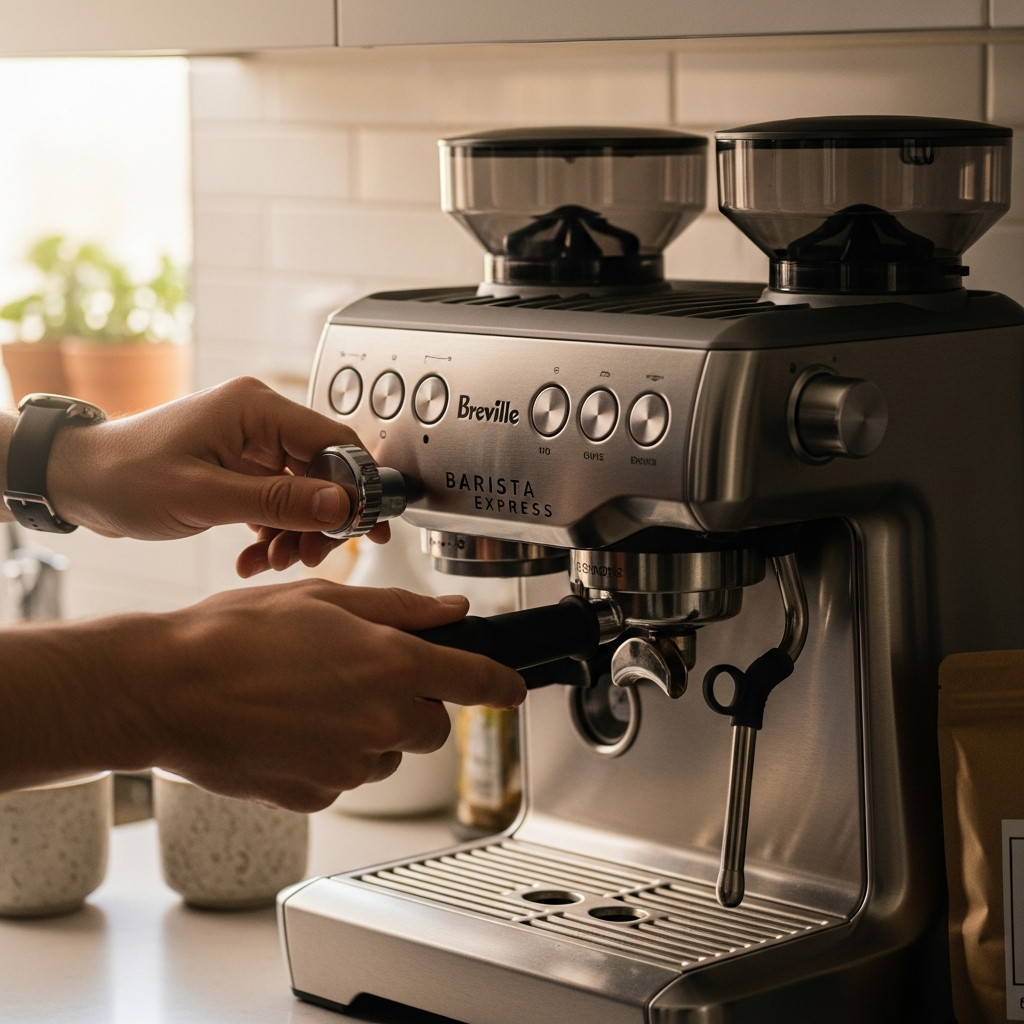
Breville Barista Express troubleshooting has gotten complicated with all the conflicting Reddit threads and YouTube rabbit holes flying around. As someone who’s owned a BES870XL for over three years — and troubleshot nearly every problem on this list multiple times — I learned everything there is to know about fixing this machine. Today, I’ll share it all with you.
The Barista Express is the best-selling home espresso machine in the world for good reason. It grinds, doses, tamps, and brews all in one unit. But even the best machines develop quirks, and when your $700 investment stops cooperating, you need answers fast. Not next week. Now.
This covers the BES870XL, BES870BSS (Black Sesame), BES878BSS (Barista Express Impress), and other variants in the Barista Express family. I’ve organized everything from most common to least common so you can work through them efficiently.
1. Espresso Not Extracting (No Coffee Coming Out)
Number one complaint from Barista Express owners, and I’ve been there more times than I’d like. You lock the portafilter in, hit brew, pump runs — and nothing comes out. Or a few sad drips that take forever.
What’s Happening
Water can’t push through the puck. The pressure gauge usually shows the needle buried in the “over-pressure” zone, past the espresso range on the right.
How to Fix It
Coarsen your grind: This is the fix 90% of the time. Probably should have led with that, honestly. The built-in grinder has both an internal adjustment ring and an external dial. Start by bumping the external dial 2-3 settings coarser. At setting 5? Try 8. Most fresh beans dial in between 5 and 10 on the external dial.
Reduce your dose: The single-wall double basket holds 18-20g. Overfilling to 21-22g leaves no room for the coffee to expand. Weigh your dose — 18g is a solid starting point for the 54mm portafilter.
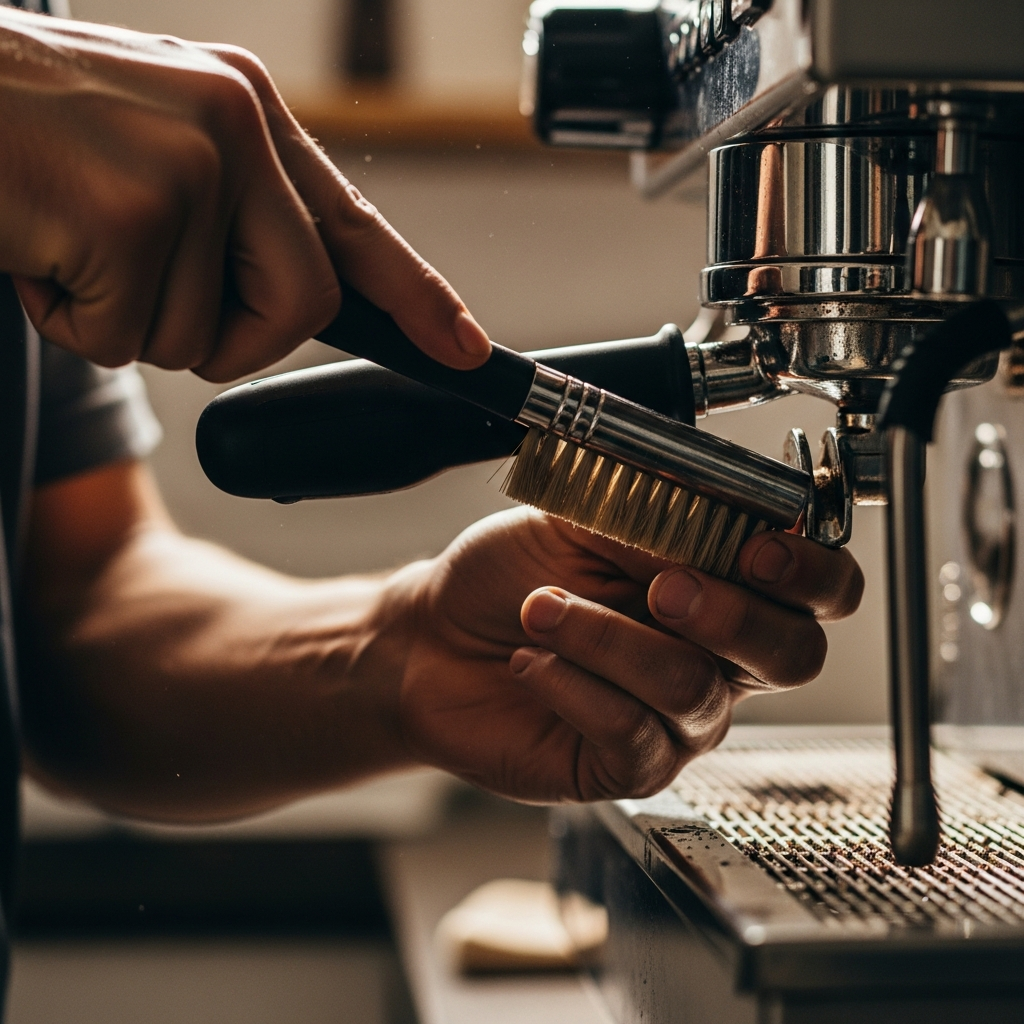
Check the shower screen: Unscrew the Phillips center screw above the group head, pull the screen down. Coffee oils and grounds build up here and restrict flow. Soak in hot water with Cafiza or dish soap, scrub with a soft brush. Do this monthly.
Descale: Mineral buildup inside the boiler and water lines chokes flow over time. Haven’t descaled in 3+ months? This could be it. Our Breville descaling guide walks through the full process.
2. Weak Pressure (Needle in the Low Zone)
The opposite problem. Espresso gushes out too fast, gauge barely moves, and your shot tastes sour and watery. Classic under-extraction.
Understanding the Pressure Gauge
The BES870XL gauge has three zones. Left (low pressure) means water’s flowing too easily through the puck. Middle “Espresso Range” is the target — roughly 9-12 o’clock position. Right (high pressure) means the puck is too dense.
Fair warning though: a lot of experienced baristas find the gauge runs high on the Barista Express because the over-pressure valve is factory-set above 9 bars. Don’t obsess over needle position — a 25-30 second extraction with good flavor matters more than where the gauge points.
How to Fix It
Grind finer: Move the dial 2-3 clicks finer. Stale beans (3-4+ weeks post-roast) may need to go significantly finer — or better yet, get fresh beans.
Increase dose: Add 1-2g more coffee. Going from 17g to 19g can dramatically shift extraction pressure.
Tamp harder and more evenly: About 30 pounds of pressure, straight down. An uneven tamp creates channels — water takes the path of least resistance and your shot suffers. The BES878 Impress has an automatic tamping system that handles this, which is honestly one of its best selling points.
Check bean freshness: Stale beans produce less CO2, meaning less crema and less resistance to water. Over 4 weeks post-roast and they’ll extract faster and taste flat. Our best espresso machines with grinders guide covers how grinder quality affects extraction.
3. Built-In Grinder Jammed or Not Grinding
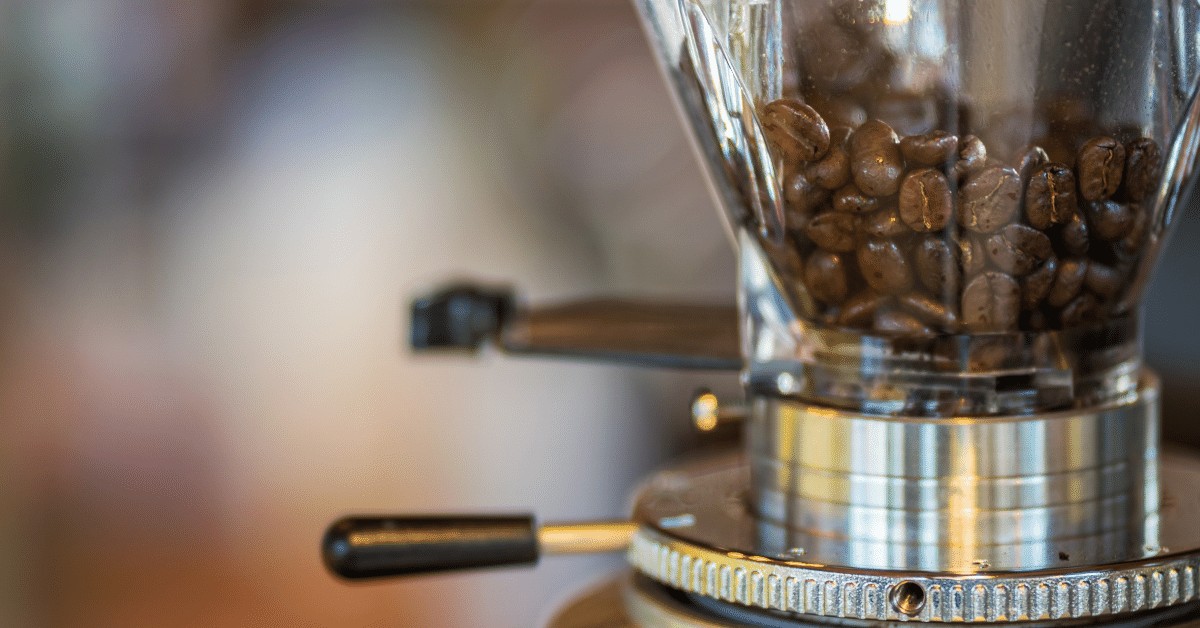
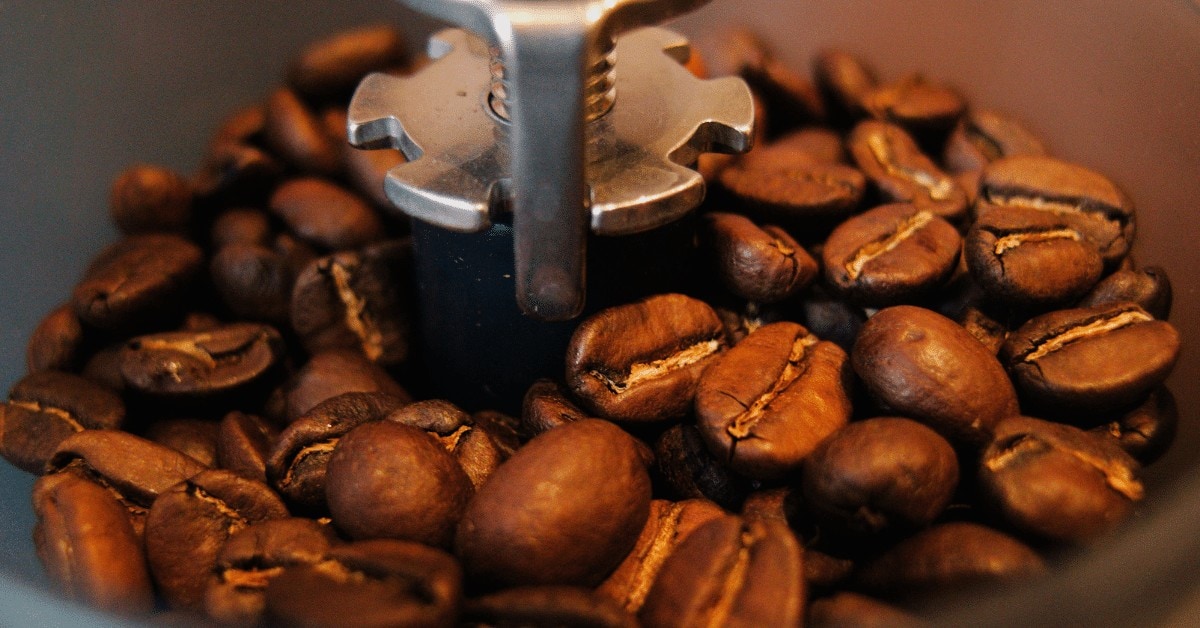
The conical steel burrs can jam from wedged beans, oily beans clogging the chute, or the occasional small stone hiding in a coffee bag (yes, this happens).
How to Fix It
Clear the hopper: Turn it to unlock, lift off, empty all beans. Look inside the burr chamber for anything stuck.
Remove and clean the upper burr: Turn counterclockwise, pull out. Inspect for stuck coffee or oil buildup. Clean with a dry brush — never water on the burrs, it causes rust.
Run grinder cleaning tablets: Breville BCB100 tablets absorb oils from the burrs and chute. Run them through monthly, especially if you use dark or oily roasts. Food-safe, dissolve as they pass through.
Reset the internal ring: Grinder runs but grinds inconsistently? The internal ring may have slipped. With hopper removed, find the numbered ring inside the collar. Set it to “6” (default) and recalibrate from there.
4. Steam Wand Not Frothing Milk Properly
Weak, sputtering steam instead of powerful, consistent pressure. Frustrating when you’re trying to make decent latte art. This usually develops gradually as milk residue builds inside the wand tip.
How to Fix It
Clean the steam tip: Unscrew by hand (let it cool first) and soak in hot water for 15 minutes. Use the cleaning pin that came with the machine — or a paperclip — to clear each of the four holes. Dried milk protein plugs these up over time.
Purge before and after: Always blast steam 2-3 seconds before putting the wand in milk (clears condensation) and 3-5 seconds after (blasts out residue). Wipe with a damp cloth immediately after every use. Every. Single. Time.
Check the steam thermostat: Cleaning doesn’t help and steam is genuinely weak? The thermal fuse near the steam boiler may have failed. Breville part SP0020513. If you’re under warranty, call Breville first.
Wait for full pressure: The steam light needs to stop flashing and stay solid before the machine is ready. Start steaming while it’s still blinking? You won’t have full pressure.
5. Machine Leaking Water
Where the water’s coming from tells you the fix.
How to Fix It
Leaking from the group head during brewing: Group head gasket is worn out. Replace every 1-2 years with regular use. Part BES860/08.9. I use aftermarket silicone gaskets now — they outlast the stock rubber ones.
Leaking from the portafilter: Make sure it’s fully locked at the 6 o’clock position. Won’t tighten? Check the gasket — swollen or deformed gaskets prevent proper seal.
Leaking from the bottom: Internal hose connection likely loose or cracked. Unplug, remove bottom panel (4 Phillips screws), inspect silicone tubing connections. White mineral deposits around joints = where water has been seeping.
Water tank dripping: Tank sits on a valve mechanism. Dirty or worn rubber seal on the tank bottom won’t seat right. Clean both the valve seal and machine’s receiving socket with a damp cloth.
6. Error Lights and Display Issues
The Barista Express communicates errors through button lights. Knowing what the patterns mean saves you a service call.
Common Light Patterns
1 Cup and 2 Cup flashing: Cleaning cycle needed. Insert the rubber cleaning disc, add a Breville cleaning tablet (BEC250), lock the portafilter in, press both buttons simultaneously. Machine runs an automatic backflush.
All lights flashing rapidly: Water tank is empty or not seated. Remove, fill to MAX, reseat firmly.
Power button flashing: Machine heating up. Wait for it to go steady. If it keeps flashing forever, the heating element or thermostat may have failed.
CLEAN/DESCALE on LCD (BES878 and newer): Maintenance overdue. Follow on-screen prompts or check our Breville descaling guide.
Factory Reset
Machine acting erratic? Press and hold PROGRAM for 3 seconds until you hear a beep. Resets all programmed shot volumes to factory defaults. Won’t reset grinder settings though.
7. No Crema on Espresso
That golden-brown layer on top of a good espresso? It’s produced by CO2 escaping from freshly roasted coffee under pressure. Flat, dark shots with no crema usually come down to a few things.
How to Fix It
Use fresher beans: #1 reason for no crema. Best window is 7-21 days after roasting. Past 4 weeks, CO2 has largely escaped and you’ll get minimal crema no matter what. Check the roast date on your bag — if there isn’t one, the beans are probably too old.
Stop using pre-ground: Pre-ground coffee has already lost most of its CO2 by the time you open the bag. One of the biggest perks of the Barista Express is the built-in grinder — use it. Grinding fresh before each shot makes a dramatic difference.
Switch to single-wall baskets: The machine ships with both single-wall (non-pressurized) and dual-wall (pressurized) baskets. Dual-wall creates fake “crema” by forcing espresso through a tiny hole — it’s foam, not real crema. Use the single-wall baskets for the real thing.
Adjust grind and dose: Fresh beans but still no crema? Grind finer and make sure you’re dosing 18-19g. Under-dosing or going too coarse produces thin, crema-free shots.
8. Channeling (Uneven Extraction)
Water finds weak spots in the puck and rushes through those channels instead of flowing evenly. You’ll see blonde, watery streams on one side of the spout while the other side is dark. Result: a shot that’s simultaneously sour and bitter. Worst of both worlds.
How to Fix It
Distribute before tamping: After grinding into the portafilter, use a WDT tool or straightened paperclip to stir and break up clumps in the basket. Single most effective anti-channeling technique. Changed my shots overnight.
Tamp level: Angled tamp = thin side and thick side = guaranteed channels. Press straight down, consistent pressure. The BES878 Impress has a built-in system that ensures level tamping every time.
Don’t tap the portafilter: Tapping the side after tamping (common habit) can crack the puck and create channels. Coffee on the rim? Brush it off gently instead.
Check shower screen: Clogged or uneven screen directs water at specific spots instead of distributing evenly. Clean or replace if corroded or visibly uneven.
9. Water Not Heating (Lukewarm Espresso)
Lukewarm shots or unusually long heat-up time. The Barista Express uses a stainless steel thermocoil that heats water on demand — not a traditional boiler.
How to Fix It
Run a blank shot first: Before your first espresso of the day, run water through without coffee. Heats the group head and portafilter. Cold metal absorbs heat from the water, dropping brew temp by as much as 10 degrees F.
Preheat the cup: Run hot water from the spout into your cup first. Brewing into cold ceramic drops the temperature of your espresso more than you’d think.
Check temperature setting: On the BES870XL, press and hold PROGRAM, then use 1 CUP to cycle through temp settings. Default is middle. If someone changed it to the lowest setting, shots will be noticeably cooler.
Descale: Heavy scale insulates the thermocoil, blocking heat transfer. Machine taking longer than 30-40 seconds to reach brew temp? Descaling usually fixes it.
Thermocoil failure: None of the above works and it never reaches proper temperature? The thermocoil may have failed. This is a big repair — replacements cost $80-120 for the part alone and require disassembly. Outside warranty, it’s a judgment call between repair and buying new.
10. Display Errors and Electrical Issues (BES878 and Newer)
The newer Barista Express Impress (BES878) and similar LCD models show specific error messages.
Common Display Messages
“DESCALE”: Brew cycle counter triggered the alert. Time-based, not a sensor reading. You can delay it, but don’t ignore it forever.
“CLEAN ME”: Cleaning cycle counter. Run a full backflush with a cleaning tablet.
Blank or flickering display: Power cycle — unplug 30 seconds. Display still blank? Control board or LCD ribbon cable may be faulty. Breville part numbers vary by production run — call support with your serial number.
Won’t turn on: Check the outlet with another device. Inspect the power cord. The Barista Express has an internal thermal fuse that trips on overheating — it resets after the machine cools completely (30-60 minutes unplugged).
When to Contact Breville Support
Most problems are solvable at home with cleaning, descaling, or grind adjustments. But call Breville if the pump runs but makes loud clicking with no water flow even after descaling. Or if the machine leaks internally after checking all visible connections. Or the heating element never reaches temp after descaling. Or any electrical weirdness — burning smells, sparks, tripping breakers.
Their 2-year warranty (1 year for refurbs) covers defects, and their support team is responsive. They’ll often send replacement parts free. Call 1-866-273-8455, Monday through Friday. Have your model number (bottom of the machine) and purchase date ready.
Preventive Maintenance Schedule
Most Barista Express problems are preventable. Here’s what I do — and it’s kept my machine running strong for three years.
After every use: Purge and wipe the steam wand. Run a blank water shot through the group head. Empty the drip tray when the indicator pops up.
Weekly: Backflush with the cleaning disc and tablet. Clean the drip tray and tank with warm soapy water.
Monthly: Remove and clean the shower screen. Run grinder cleaning tablets. Soak portafilter baskets in Cafiza.
Every 2-3 months: Descale (more often with hard water). Replace the water filter if your model uses one.
Annually: Inspect and replace the group head gasket if it’s hardened or cracked. Consider replacing the shower screen if corroded.
Final Thoughts
That’s what makes the Barista Express endearing to us home baristas — it can produce cafe-quality espresso for years if you treat it right. Ninety percent of problems come down to three things: grind size, cleanliness, and bean freshness. Master those three and you’ll rarely need to troubleshoot anything serious.
If you’re weighing the Breville against other options, check our Breville vs DeLonghi comparison or our DeLonghi espresso machine troubleshooting guide for the other side of the coin. Looking for your first machine with a grinder? Our best espresso machines with grinders guide covers all the top picks.
Useful Breville Maintenance Supplies
Useful options include Breville cleaning tablets, Breville replacement water filters, and the Breville Barista Express.