As an Amazon Associate, we earn from qualifying purchases. Costco and Amazon availability and prices can differ.
Quick answer: Kirkland Pacific Bold is our best overall Costco K-Cup for a rich dark roast. Choose Kirkland House Blend for a smoother medium roast, or Kirkland Decaf when you want lower caffeine.
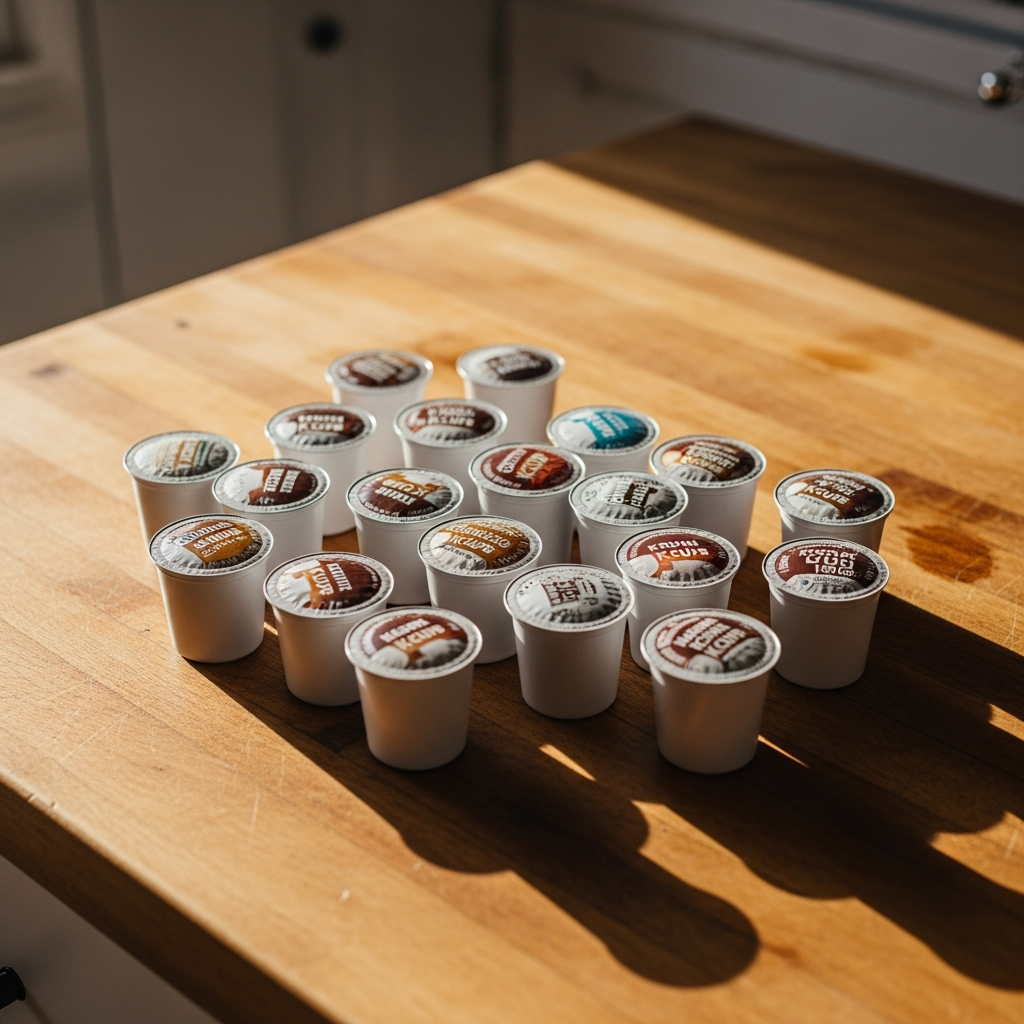
You’re standing in the coffee aisle at Costco with a flat-cart, and there’s a wall of K-cup boxes. The Kirkland Signature Pacific Bold in the massive 120-count box. A couple of Starbucks options. Green Mountain. Maybe some Caribou. And a few rotating seasonal brands that weren’t there last month.
The question isn’t whether Costco has good coffee pods — it does. The question is which ones are actually worth the pantry real estate and what you’re really getting for the price difference.
I’ve made enough of these Costco runs with a Keurig in the kitchen that I have strong opinions at this point. Here’s what holds up.
Quick Comparison: Costco K-Cups Ranked
| Pod | Count | Price | Per Cup | Roast | Rating |
|---|---|---|---|---|---|
| Kirkland Pacific Bold | 120 | ~$38 | $0.32 | Dark | ★★★★½ |
| Kirkland House Blend | 120 | ~$38 | $0.32 | Medium | ★★★★ |
| Kirkland Decaf | 120 | ~$39 | $0.33 | Medium | ★★★½ |
| Starbucks Pike Place | 72 | ~$42 | $0.58 | Medium | ★★★★ |
| Caribou Blend | 80 | ~$44 | $0.55 | Medium | ★★★½ |
Prices based on current Costco warehouse pricing — these fluctuate slightly by region and season.
Best Overall: Kirkland Signature Pacific Bold
This isn’t a close call. Kirkland Signature Pacific Bold Dark Roast is the best K-cup at Costco, and the price is almost secondary to that point.
At ~$0.32 per pod, you’re getting a dark, rich cup with low acidity and real body. It doesn’t taste like gas station coffee. It doesn’t taste like it was sitting in a warehouse for eight months before landing on the shelf. It’s coffee I’d actually brew every morning without quietly wishing I’d made a different choice.
The reason it’s good is worth knowing: Kirkland K-cups are manufactured by Keurig Dr Pepper under a private label deal. The Pacific Bold is widely understood to be Kirkland’s version of Green Mountain Dark Magic — same roast profile, same manufacturer, different box. If you’ve bought Green Mountain Dark Magic at the grocery store and thought “this is my everyday coffee,” you’re going to save about $0.30 per cup by switching to Pacific Bold at Costco. Same stuff, less money.
A 120-count box runs $37–42 at most locations. One cup a day gets you four months. Two cups a day, two months. Either way, you buy it once and stop thinking about it for a while — which is kind of the whole point of Costco.
One practical note: Costco occasionally runs the Pacific Bold in variety packs or slightly different counts. The 120-count is the standard. If you see a different size, just check the per-unit math before you grab it.
Best Medium Roast: Kirkland House Blend
Not everyone wants a dark roast first thing in the morning. Some days call for something that doesn’t arrive like a punch. The Kirkland Signature House Blend is the answer — clean, balanced, nothing aggressive about it.
It’s not exciting coffee, and that’s entirely fine. If you share a Keurig with people who have different roast preferences — one person wants bold, another doesn’t — the House Blend is the diplomatic pod. Smooth cup, slightly nutty, nobody’s complaining.
Same price as the Pacific Bold (~$0.32/cup), so you’re not paying extra for the milder roast. If your household is split, just buy one box of each. At Costco pricing, that combination still costs less per cup than buying either one at a grocery store.
The House Blend tracks to Green Mountain Breakfast Blend in terms of flavor profile — same manufacturer, essentially the same coffee, fraction of the retail price.
Best Decaf: Kirkland Signature Decaf
Most decaf K-cups are a letdown. They come out thin, or there’s a faint chemical edge that lingers — the kind of thing that makes you wonder what exactly was used to remove the caffeine. The Kirkland Signature Decaf mostly clears both of those hurdles.
It’s Swiss Water Process decaffeinated, which is the key detail. Swiss Water uses osmosis with a water-and-coffee extract to pull out caffeine — no chemical solvents, which is what leaves that off-note in cheaper decaf. The result is a cleaner cup that tastes like coffee someone decided to make decaf, not like “decaf” in the pejorative sense.
It drinks like a light-medium roast. Good for evening cups, or if you’ve been told to cut back on caffeine but don’t want to give up the ritual entirely.
At ~$0.33/cup, it’s by far the best-priced decent decaf pod you’ll find anywhere. Grocery store decaf options worth drinking run $0.60–0.80 per pod.
Best Value Per Cup — The Real Math
The strongest argument for Kirkland K-cups isn’t about flavor debates — it’s just arithmetic. Here’s what the numbers look like if you’re drinking two cups a day for a year:
| Source | Brand | Per Cup | Annual Cost (2 cups/day) |
|---|---|---|---|
| Costco | Kirkland Pacific Bold | $0.32 | $234 |
| Costco | Starbucks K-Cup | $0.58 | $424 |
| Grocery store | Green Mountain | $0.65 | $475 |
| Grocery store | Dunkin’ Original Blend | $0.60 | $438 |
| Grocery store | Starbucks K-Cup | $0.75 | $548 |
Two-cup-a-day household, switching from grocery-store K-cups to Kirkland: you’re saving $200–300 a year on coffee that drinks the same. That’s a real number.
Even Costco’s name-brand prices beat grocery stores on the same product. If you have a brand you won’t give up, you should still be buying it at Costco. The markup difference between Costco and a regular grocery store on Starbucks pods alone is significant enough to matter.
Non-Kirkland Pods at Costco Worth Buying
Kirkland is the default for a reason, but a few name brands at Costco are worth picking up when you want variety.
Starbucks at Costco: Costco regularly carries Starbucks Pike Place Roast and House Blend in 72-count packs, usually $42–44. That works out to ~$0.58/pod — not Kirkland pricing, but $0.17–0.25 cheaper per cup than the same pods at Target or a grocery store. If Starbucks is your brand and you won’t budge, buy it here.
Caribou Coffee: Rotates in and out of Costco, but worth grabbing when it’s there. Caribou is a legitimate specialty roaster with a real fan base, particularly in the Midwest and Pacific Northwest. At Costco pricing, it’s a good deal for a quality regional brand that doesn’t get the same national attention as Starbucks.
Newman’s Own Organics: Some locations carry Newman’s Own Fair Trade Organic pods. More expensive than Kirkland (~$0.50–0.55/cup), but it’s the only consistently available certified organic option at Costco-level pricing. If organic certification is a priority for you, this is your move.
What to skip: the seasonal flavored variety packs — pumpkin spice, hazelnut, cinnamon, the holiday rotation. The flavoring compounds in those pods have a tendency to coat the inside of your Keurig and bleed into the taste of whatever you brew next. Not worth it unless you’re buying them specifically for a party and not running them through your daily machine.
How Long Do Bulk K-Cups Stay Fresh?
Buying 120 pods at once raises a fair question: are these going to go stale before you work through them?
Short answer: no, not at a normal usage rate. K-cups have a “best by” date on the box, usually 12–18 months from roast. But the nitrogen-sealed pod means the coffee inside isn’t actually oxidizing until you pierce the foil lid. The “best by” date is about peak flavor, not a safety deadline.
At two cups a day, a 120-count box is gone in 60 days. At one cup a day, four months. Either pace is well within any reasonable freshness window. I’ve been through enough of these boxes to say they’re still drinking fine near the end of the count.
Storage tips that actually matter:
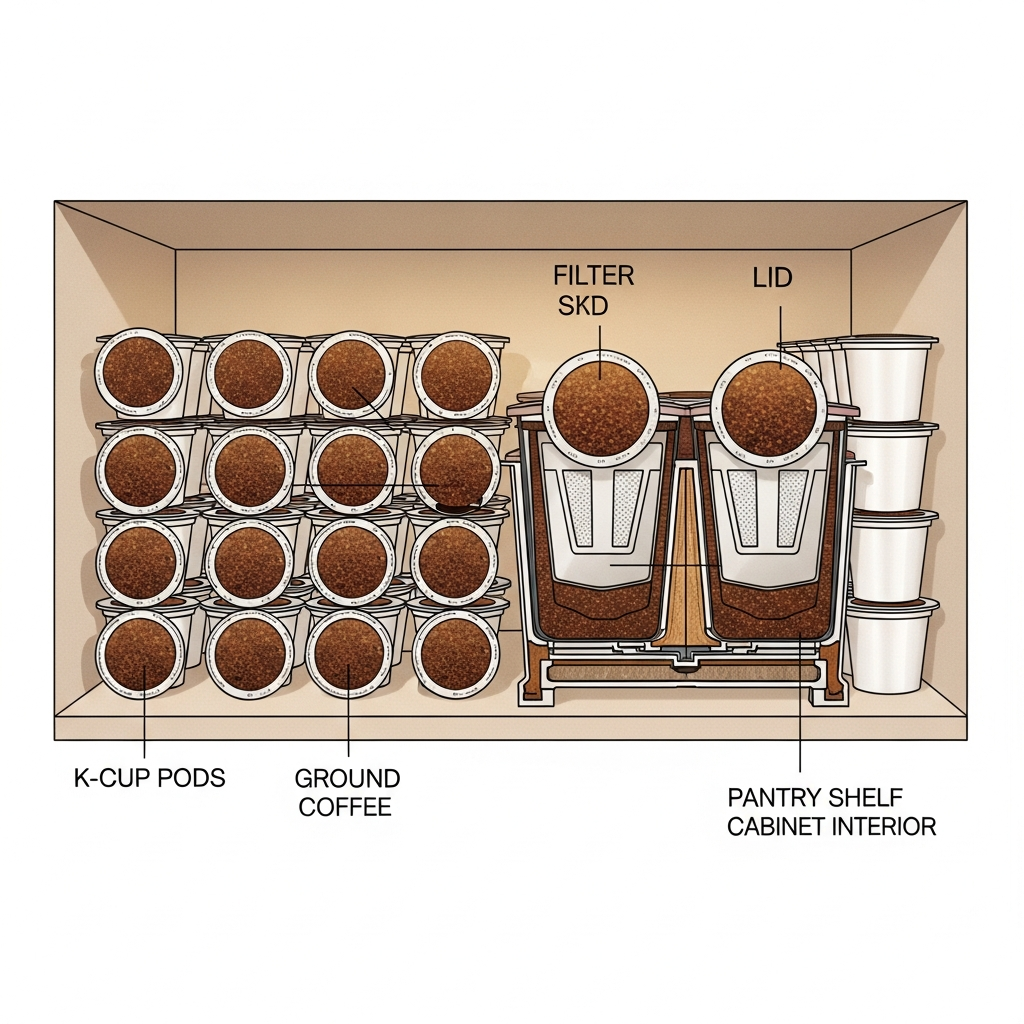
- Keep them away from direct sunlight — UV degrades the flavor compounds faster than you’d think
- Don’t store them near the stove or dishwasher — heat and humidity are the actual enemies here
- A cabinet shelf is fine. No special container needed, no vacuum sealing
- The original Costco box is adequate storage — just close the flap
The one scenario where bulk buying can backfire: you own a Keurig but barely use it. One or two cups a week from a 120-count box is an 18-month supply. In that case, grab smaller boxes from a grocery store until you’re in a regular daily-use phase, then switch to Costco.
Are Kirkland K-Cups the Same as a Name Brand?
People ask this all the time. The answer is yes, pretty much.
Kirkland Signature K-cups are manufactured by Keurig Dr Pepper under a private label arrangement. That’s the same company behind Green Mountain, The Original Donut Shop, Donut House, and a long list of other K-cup brands. When you buy Kirkland pods, you’re buying Keurig Dr Pepper’s product at Costco’s negotiated price rather than the retail markup version.
The Pacific Bold tracks to Green Mountain Dark Magic. The House Blend tracks to Breakfast Blend. Run them side by side — most people can’t find a meaningful difference in richness, body, or finish.
It’s the classic Kirkland model. Kirkland batteries are Duracell. Kirkland olive oil comes from many of the same producers as higher-priced branded alternatives. Kirkland K-cups are no different — same manufacturer, different label, fraction of the cost.
If you’re buying Green Mountain at a grocery store because you think it’s meaningfully better than the Kirkland version, run your own comparison first. The Kirkland box is sitting there at Costco for half the per-cup price, and it’s coming from the same facility.
The only legitimate exception: you have a specific sensory preference for a pod that doesn’t have a Kirkland equivalent — some specialty roast profile, a particular flavor note you’re attached to. That’s a real reason to buy non-Kirkland. Brand loyalty without a taste preference isn’t.
Bottom Line
Kirkland Signature Pacific Bold is the right pick for most Keurig households shopping at Costco. Dark, quality cup, $0.32 per pod — comparable quality to pods that cost twice as much at a grocery store. If you need medium roast or decaf, the House Blend and Decaf hit the same value mark.
Even if you have a brand you won’t leave, Costco pricing on Starbucks and Caribou is better than grocery-store pricing for the same pods. There’s no scenario where buying K-cups at a regular grocery store beats Costco. And if you want to move beyond pods, see our Costco whole bean coffee ranking — the bulk pricing gap is too consistent.
Load up the flat-cart and grab the Pacific Bold.