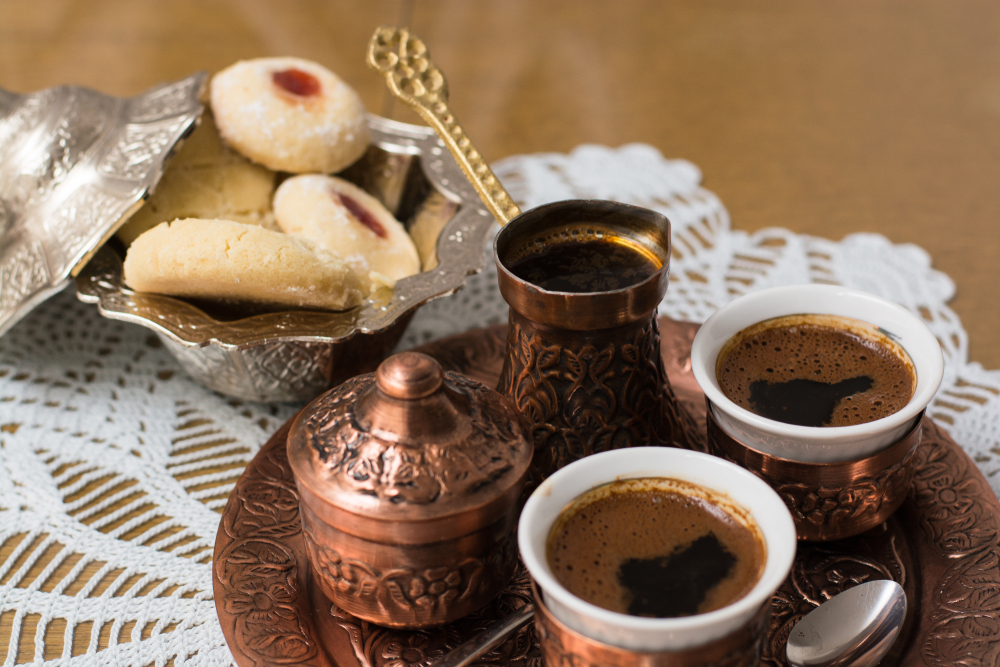
Turkish coffee is an unfiltered coffee made by slowly heating water and powder-fine coffee in a small long-handled pot called a cezve. The drink is served in a small cup with its grounds, which settle at the bottom. It tastes concentrated and aromatic, with a full body and a layer of foam when brewed carefully.
| Grind | Powder-fine, finer than espresso |
|---|---|
| Coffee | About 7 g per 60–75 ml water |
| Filter | None; grounds settle in the cup |
| Brewer | Cezve or ibrik |
| Serving | Small fincan/demitasse, often with water |
| Sugar | Added before brewing, if wanted |
What Makes Turkish Coffee Different?
Turkish coffee describes a preparation method, not a coffee-bean species. The defining features are the exceptionally fine grind, no paper or metal filtration, slow heating in a cezve, and service with the grounds still in the cup.
- Powder-fine coffee: the particles are finer than a normal espresso grind and suspend during brewing.
- No filtration: the grounds are poured with the liquid, then sink as the cup rests.
- Foam matters: low, controlled heat encourages a stable foam before the coffee boils over.
- Sugar is brewed in: you choose the sweetness before heating because stirring the finished cup disturbs the settled grounds.
- Small serving: the cup is concentrated, but its small volume makes it different from a large mug of drip coffee.
What Does Turkish Coffee Taste Like?
Expect a dense, intense cup with more texture than filtered coffee. Medium-roast coffees often produce cocoa, nut, spice, and caramel notes, but the bean and roast determine the actual flavor. Unsweetened Turkish coffee can taste assertive; sugar rounds the bitterness without changing the brewing method.
Cardamom is common in some regional coffee traditions and can be added if you enjoy it, but it is not required for a drink to be Turkish coffee.
How to Make Turkish Coffee
For one small cup, start with 60–75 ml room-temperature water and about 7 g powder-fine coffee. Use a cezve sized close to the number of servings; an oversized pot makes foam harder to manage.
Ingredients
- 60–75 ml room-temperature water
- About 7 g Turkish-ground coffee
- Sugar to taste, added before brewing
- Pinch of ground cardamom, optional
Method
- Measure with the serving cup. Add one cup of water per serving to the cezve.
- Add coffee and sugar. Stir thoroughly before placing the pot over heat. Do not keep stirring during brewing.
- Heat slowly. Use low heat and watch the surface. The process usually takes roughly three minutes for a small pot.
- Stop the rise. As the foam expands toward the rim, remove the cezve before it boils over. You can spoon some foam into each cup.
- Finish gently. Return the pot briefly to low heat for a second rise if desired, again stopping before a rolling boil.
- Pour and rest. Pour slowly so each cup receives foam, then wait a minute for the grounds to settle.
This method follows guidance from Go Türkiye and Türkiye’s Ministry of Culture and Tourism. Family and regional techniques vary, particularly in the number of rises and how foam is distributed.
Common Problems and Fixes
| Problem | Likely cause | Fix |
|---|---|---|
| No foam | Heat too high, stale coffee, or oversized cezve | Use fresh coffee, low heat, and a correctly sized pot |
| Harsh or burned taste | Rolling boil or prolonged heating | Remove the pot as the foam rises |
| Grounds throughout every sip | Cup was stirred or not rested | Wait about a minute and stop before the final sediment |
| Weak flavor | Too little coffee or coarse grind | Use about 7 g per small cup and a powder-fine grind |
| Pot overflows | Unattended heat or pot too full | Leave headroom and watch continuously |
How to Order the Sweetness
Sweetness is traditionally chosen before brewing. Useful Turkish terms include:
- Sade: no sugar
- Az şekerli: lightly sweetened
- Orta: medium sweet
- Şekerli: sweet
The exact sugar amount differs by household and cup size, so the terms describe preferences rather than universal gram standards.
How to Serve and Drink It
- Serve in a small fincan or demitasse, often with a glass of water and Turkish delight.
- Let the cup rest briefly so the grounds settle.
- Sip slowly rather than drinking it like an espresso shot.
- Stop when you reach the thick sediment at the bottom; the grounds are not meant to be swallowed.
Turkish Coffee vs Espresso
| Turkish coffee | Espresso | |
|---|---|---|
| Brewing | Slow heating in a cezve | Hot water forced through a puck |
| Filter | Unfiltered | Metal basket retains grounds |
| Grind | Powder-fine | Fine, but usually coarser |
| Texture | Dense with settling sediment | Concentrated liquid with crema |
| Sugar | Often added before brewing | Usually added after brewing |
Both are concentrated, small servings, but Turkish coffee is not a type of espresso and does not require pressure.
History and Cultural Importance
Coffee culture became established in the Ottoman world in the 16th century, including coffeehouses in Istanbul. The documented history is more useful than repeating the popular Kaldi-and-goats origin legend as fact.
UNESCO inscribed Turkish coffee culture and tradition on its Representative List of the Intangible Cultural Heritage of Humanity in 2013. UNESCO describes it as a symbol of hospitality, friendship, refinement, and shared conversation. Coffee also appears in engagement ceremonies, holidays, literature, music, and the practice of interpreting grounds left in the cup.
Turkish, Greek, Bosnian, and Arabic Coffee
Closely related unfiltered coffee traditions exist across Türkiye, Greece, the Balkans, the Eastern Mediterranean, and the Arab world. Names, roast preferences, spices, vessel shapes, foam techniques, and serving customs vary. It is more accurate to recognize the shared method and regional identities than to claim every preparation is interchangeable.
For a nearby tradition, read what makes Bosnian coffee distinct. You can also compare this method with our guide to coffee brewing methods and learn why moka pot coffee is not espresso.
Turkish Coffee Recipe
Equipment
- cezve (special brass or copper pot)
- a small cup (60-75 ml)
- a stove or gas burner
Ingredients
- extra-fine coffee grounds (~7g of coffee per serving)
- water (60-75 ml per serving)
- sugar (optional)
- cardamom
Instructions
- Add coffee grounds and water to cezve. If you option to use sugar and/or cardamom, add it at this point too.
- Place it on the stove and mix the grounds into the water after half a minute.
- Wait for the foam to form, and when it reaches the rim of the cezve (before boiling), remove it from the stove.
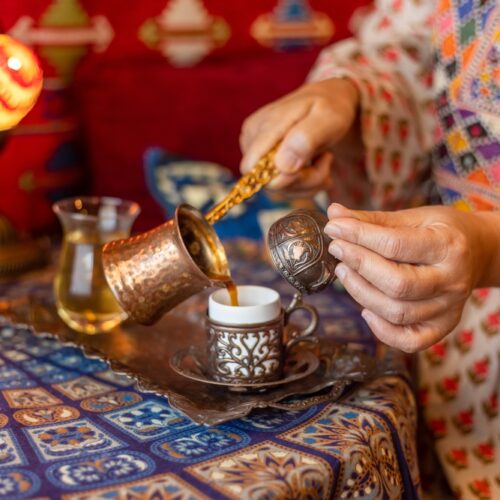
- Quickly pour the coffee into the cup.
- Let to cup sit for a while while the grounds settle on the bottom.
- Serve it along with a glass of water and a Locum (Turkish delight).