Nespresso pump problems have gotten complicated with all the conflicting fixes flying around online. As someone who’s dealt with this exact issue twice — once on my Original-line Pixie and once on my Vertuo Next — I learned everything there is to know about why these machines stop pumping water. Today, I’ll share it all with you.
You press brew, the motor whirs, and… nothing. Or maybe a few pathetic drops. Frustrating doesn’t begin to cover it, especially before your first cup of the morning. But here’s the good news: a Nespresso that won’t pump is almost always fixable at home. Air lock in the pump, scale buildup, blocked needle, or a tank seal issue — that covers about 95% of cases. I’ve got seven fixes below, easiest to hardest. Start with #1 — it works roughly 60% of the time.
1. Release the Air Lock (Most Common Fix)
Air lock. Far and away the most common reason a Nespresso stops pumping. Happens when air gets trapped in the internal tubing — usually because the tank ran bone-dry during a brew, or you pulled the tank off and put it back while the machine was still on.
With air in the pump, it can’t create suction to pull water. Motor runs, nothing comes out.
How to fix it:
- Fill the tank completely with fresh water. Seat it firmly.
- Turn on, let it heat up fully (solid green light).
- Open the head — do NOT put in a capsule.
- Close the head, hit brew. You’re running water through empty.
- First attempt might produce nothing. Maybe some sputtering. That’s the air pocket trying to work its way out.
- Repeat 3-5 times. By the second or third try, water should start flowing.
- Once it’s flowing consistently, you’re good. Pop in a capsule and brew normally.
Still stuck after 5 tries? Try lifting the tank off the machine while the pump is running (you’ll hear it clicking), then firmly push the tank back into position while it’s still going. The sudden reseating can break the air lock. Had to do this on my Pixie — worked on the second attempt.
2. Descale the Machine
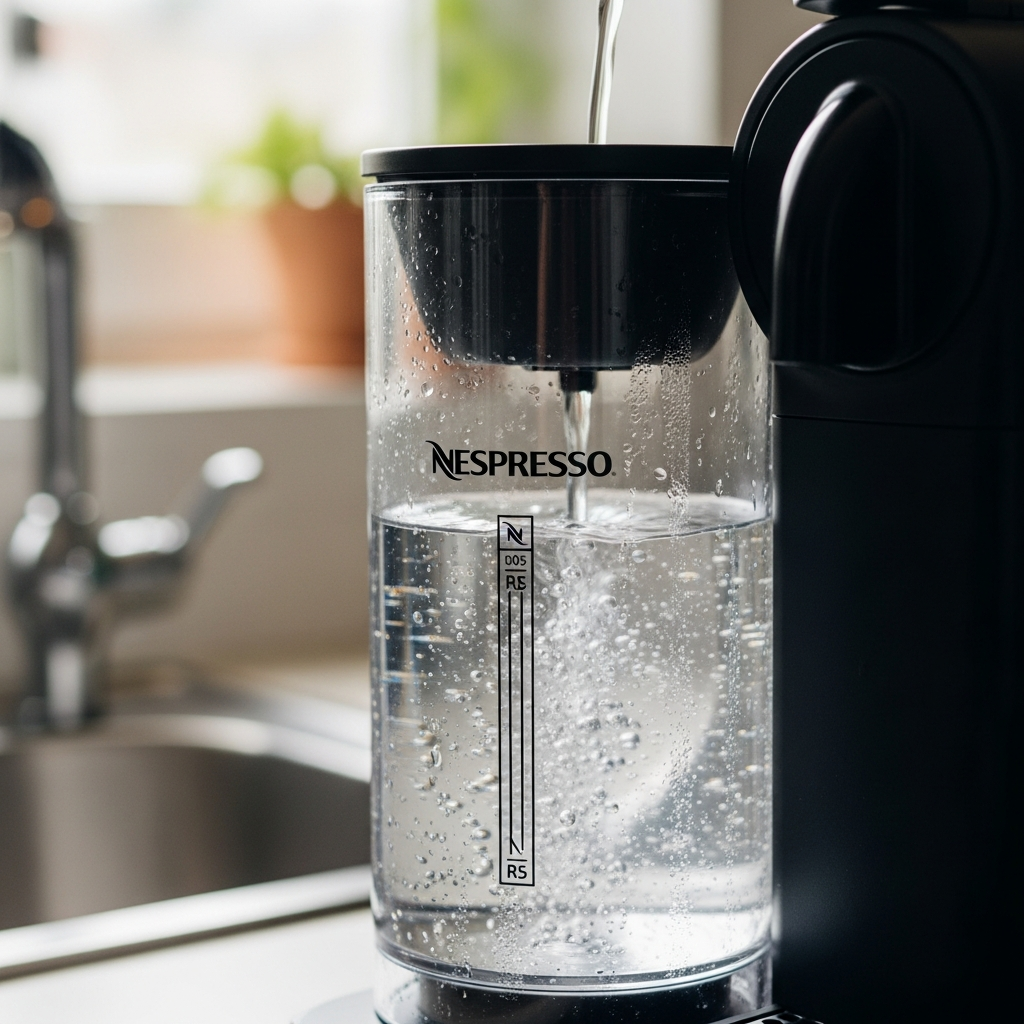
Air lock fix didn’t do it? Mineral scale is your next suspect. It accumulates inside the thermoblock and tubing over time, gradually narrowing the water pathway until the pump can’t push through at sufficient pressure.
Especially common if you’re running unfiltered tap in a hard-water area. And that’s most of the US, honestly — particularly the Southwest and Midwest.
The fix:
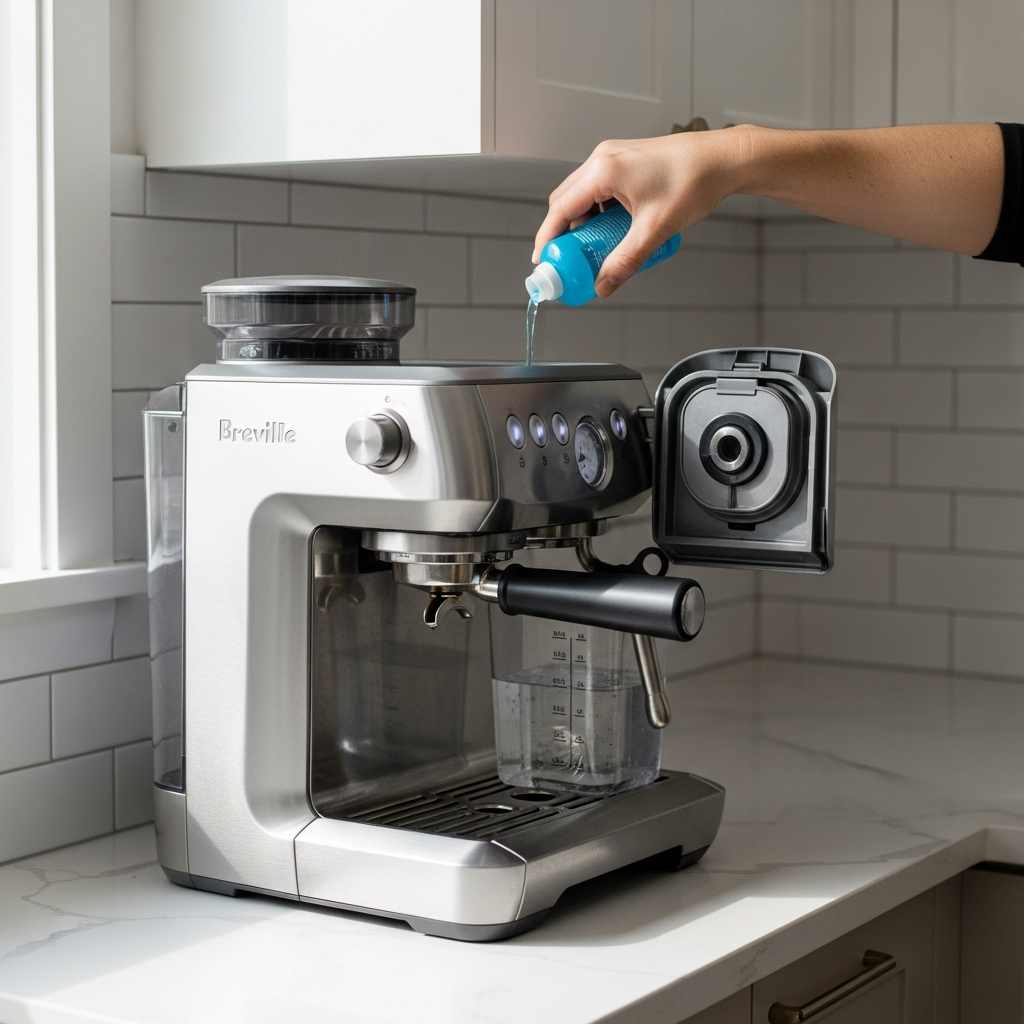
- Get Nespresso’s official descaling solution or mix 50/50 white vinegar and water.
- Fill the tank with the solution.
- Enter descaling mode (varies by model — our complete descaling guide has every model’s procedure).
- Run the full cycle. Solution dissolves the mineral deposits blocking the flow.
- Severe scale? Let the solution sit in the machine 15-20 minutes before finishing the cycle. Some folks run the solution through twice for really bad buildup.
- Always follow up with at least two full tanks of fresh water to flush it all out.
Pro tip that saved me once: Machine so scaled that even the solution won’t pump through? Fill the tank with hot (not boiling) water mixed with the solution, let it sit 30 minutes before attempting the cycle. The pre-soak breaks up the worst of it so the pump can start moving liquid again.
Our Nespresso cleaning cycle guide has more on maintaining internals.
3. Clean the Needle (Original Line Machines)
Original-line Nespresso owners (Pixie, CitiZ, Essenza Mini, Essenza Plus, Lattissima, Creatista) — there’s a needle that punctures the capsule foil during brewing. Coffee grounds and oils build up around it over time and can partially or fully block it.
Vertuo machines don’t have a traditional needle — they use a different extraction method. If you’ve got a Vertuo, skip to fix #4.
How to clean the needle:
- Turn off and unplug. Safety first.
- Open the lever, expose the capsule chamber.
- Look inside the top — you’ll see the needle that punctures the foil.
- Use a straightened paper clip or the Nespresso cleaning tool (some models include one) to gently clear compacted coffee from around the needle.
- Be careful not to bend it. Gentle pressure, circular motion.
- Run 2-3 water-only cycles (no capsule) to flush loosened debris.
Badly clogged? Soak the removable brew chamber parts in warm water with a drop of dish soap for 15 minutes, then scrub gently with a soft toothbrush.
4. Check the Water Tank Seal and Valve
Every Nespresso tank has a small silicone valve at the bottom controlling water flow into the machine. Stuck, dirty, or misaligned valve means water can’t enter the pump even though the tank is full.
How to check and fix:
- Remove the tank.
- Look at the bottom. Small circular valve or nozzle — silicone disc or spring-loaded pin depending on model.
- Press it gently. Should move freely. Stuck? Work it back and forth.
- Rinse the entire tank bottom under running water, especially the valve area.
- Check the machine’s receiving port too. Clear any debris or mineral buildup.
- Reattach firmly. Vertuo Plus — push straight back, don’t angle. Vertuo Next — slide in from the side until it clicks.
I’ve noticed specifically on the Vertuo Next that the tank connection can loosen over time, letting air in and preventing proper suction. Make sure there’s zero wobble.
5. Prime the Pump Manually
Machine been sitting unused for weeks or months? The pump may have dried out and lost its prime. Different from an air lock — the pump seals themselves have dried and can’t create suction even with water present.
How to prime:
- Fill the tank to max with room-temperature water (not cold — cold water is harder for a dry pump to move).
- Turn on, let it try to heat.
- No capsule. Press brew. Let the pump run 10-15 seconds even if nothing comes out.
- Wait 30 seconds. Try again.
- While the pump is running, gently tap the sides and bottom of the machine with your palm. Sounds weird, I know. But the vibration loosens the pump internals and helps things start moving. Well-known trick in Nespresso circles.
- Repeat this 8-10 times. Most pumps eventually catch and start flowing.
Don’t run the pump more than 20 seconds at a time. Running it dry for too long overheats and damages it.
6. Unclog the Internal Tubing
Rare, but it happens. A chunk of scale or foreign object physically blocking the tubing. More common in older machines (3+ years) that haven’t been descaled regularly.
Signs of a physical blockage:
- Pump runs and sounds strained (louder than normal)
- Maybe a tiny trickle instead of nothing at all
- Descaling doesn’t improve the flow
How to try clearing it:
- Run a strong descaling solution — double concentration, or straight undiluted vinegar.
- Start the cycle. If even a trickle is moving, let the full cycle run.
- After the first cycle, let the solution sit 30-60 minutes before running a second.
- Still nothing passes after multiple attempts? The blockage is too severe for chemicals. You’re looking at either professional service or replacement at that point.
7. Check for a Faulty Pump Motor
Tried all six fixes above and still nothing? The pump motor itself may have failed. Least common cause, but it does happen, particularly on machines that are 3-5 years old.
Signs of a dead pump:
- No sound at all when you hit brew (motor should at least hum or click)
- Burning smell from the machine
- Machine heats up fine (green light) but pressing brew produces nothing — no sound, no water, no error light
A failed pump isn’t a DIY fix for most people. Nespresso uses ULKA or Fluid-o-Tech pumps, and replacing them means partially disassembling the machine. Under warranty (2 years from purchase)? Call Nespresso for a free repair or replacement. Out of warranty, you’ll need to weigh repair cost versus a new machine — parts run $20-40 online, but the labor (or your time) adds up.
When to Contact Nespresso Support
Call them (1-877-964-6299 or via the app) if:
- None of the seven fixes restored flow
- Machine makes grinding, clicking, or buzzing when trying to pump
- You smell something burning
- Machine is under 2 years old and still on warranty
- Water leaks from the bottom while the pump runs (cracked internal hose — needs professional repair)
For a broader list of problems, visit our complete Nespresso troubleshooting hub.
Preventing Pump Problems
After dealing with pump issues on two different machines, I changed my habits. Here’s what I do now:
- Never let the tank run dry during a brew. This is how air locks happen. Refill before it drops to the bottom third.
- Descale on schedule. Every 3 months or 300 capsules. Put it on your calendar. Scale is cumulative — once it’s bad enough to block the pump, you’re in trouble.
- Use filtered water. A $25 Brita pitcher makes a massive difference, especially with hard water.
- Run a water cycle weekly. Once a week, brew without a capsule. Flushes residue from the internal lines.
- Storing for more than 2 weeks? Run water-only cycles before your last use to flush the lines. Empty the tank completely. When you come back, prime the pump using fix #5.
Wrapping Up
In most cases, a Nespresso that won’t pump is totally fixable at home. Start with the air lock fix — it works more than half the time. No luck? Descaling and cleaning the water valve are your next best bets. Only about 5-10% of pump problems turn out to be actual hardware failures, and even then, Nespresso’s warranty is pretty generous. The key is acting quickly. A partially scaled or air-locked machine gets worse if you keep forcing brews through it. Fix it now, not later.