“`html
Costco’s Kenya AA is the current best buy
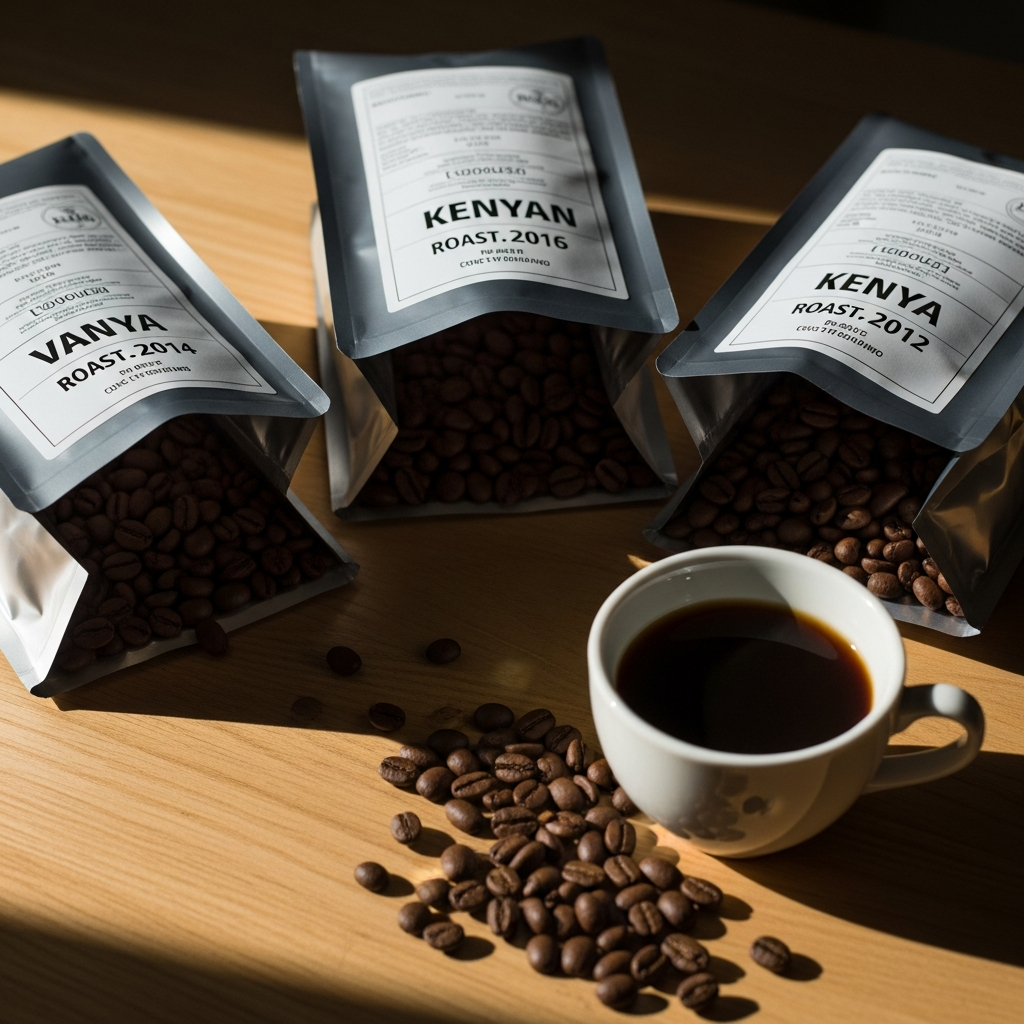
Last week I grabbed three bags of their Kenyan coffee—here’s what actually made the cut. The best Kenyan coffee beans at Costco right now is their house brand whole bean Kenya AA, currently running $9.99 per pound (as of this writing). That’s roughly half what you’d pay for Starbucks Reserve Kenya AA at $18.99 for the same weight. The flavor gap? It’s nowhere near proportional to the price difference.
Kenya AA beans—the AA is a screen size grading system, meaning larger, denser beans—deliver what the origin does best: brightness and complexity. These beans have a naturally higher acidity that reads as clean, not sharp. You get berry notes (black currant, sometimes blueberry) paired with a subtle stone fruit edge. The roast at Costco sits right in the middle-to-light territory, which is where Kenya AA thrives.
Here’s the detail competitors miss entirely: roast dates. Costco rotates their coffee stock weekly, and the date stamp matters more than most people realize. I’ve pulled bags from the shelf that were roasted 5 days prior; I’ve also grabbed bags roasted 18 days back. Fresher roasts (under 10 days) hit harder on the brightness—the acidity is more vibrant. By day 20, you start losing some of that pop, though the beans don’t become bad, just softer. If you’re shopping at Costco, ask the warehouse staff when that pallet hit the floor, or check the roast date on the back of the bag. The staff can usually tell you if they just rotated the coffee section.
Versus Starbucks Reserve Kenya at the same price point, Costco’s version has more origin character. Starbucks applies a heavier roast profile to their reserves, which mellows the acidity and adds body—it’s their house style. Costco’s Kenya AA respects the bean itself. You taste Kenya first, Costco roasting second. That’s the trade-off I’d make every time at under $10 per pound.
Kenya Peaberry if you want more punch
Costco sometimes stocks a Kenya Peaberry option. Peaberries are single seeds instead of the typical flat-sided pair—they’re denser, smaller, and roast more evenly. You get about 10–15% of a coffee harvest as peaberries, so they’re slightly harder to source.
Peaberry commands a price bump, usually $11.99 to $12.99 per pound at Costco (versus $9.99 for AA). The flavor is earthier, with a heavier body than the AA. Where AA sings with berry brightness, Peaberry leans into cocoa and dried fruit—less acid snap, more chocolate-forward sweetness. It’s genuinely different, not just a minor variation.
The real question: is Peaberry always there? No. Costco’s inventory rotates by region and season. I’ve watched their Kenya selection vanish completely for 3–4 weeks, then reappear in October. If you find Peaberry in stock, grab it now. You can’t assume it’ll be there next visit. I made the mistake of assuming I’d buy it “next week” last January—it didn’t come back until November.
Why pick Peaberry over their other African option? Costco sometimes carries Ethiopian Yirgacheffe in the same price range. Both are excellent. The difference: Yirgacheffe hits higher on floral and spice notes; Peaberry is straightforward chocolate and fruit. If you want your Kenyan coffee to taste like coffee (classic, clean, low confusion), Peaberry delivers that. Yirgacheffe is more experimental.
Skip the pre-ground bags—here’s why
Probably should have opened with this section, honestly. Costco’s pre-ground Kenya coffee is a trap.
Here’s the math: pre-ground beans lose roughly 40% of their brightness and volatile aromatics within 2 weeks of opening. The larger surface area exposed to air speeds up oxidation. A whole bean Kenya AA stays fresh for 6+ weeks in an airtight container. Pre-ground at Costco? You’re buying a ticking clock. Yes, it’s convenient. No, it’s not worth what you lose in cup quality.
I tested this myself. Same Kenya AA lot, whole bean versus pre-ground. Day 1: identical brightness. Day 5: whole bean still sharp and clear, pre-ground noticeably softer. Day 14: pre-ground tastes flat, whole bean still has acidity bite. The whole bean won by a mile.
Grind at home with a burr grinder—conical or flat burr, doesn’t matter much for Kenyan beans, but burr is non-negotiable. Blade grinders produce inconsistent particle sizes, which means some grounds over-extract (bitter) and some under-extract (sour). Burr grinders give you uniformity. Set your grinder to medium-fine for pour over, medium for drip. For espresso? You’re looking at espresso-fine, but honestly, Kenya AA shines in filter methods. The acidity and brightness are the whole point—espresso pulls drag them underground.
Timing your Costco coffee run
Costco’s Kenyan coffee inventory peaks October through March. That’s harvest season in East Africa, and it takes 3–4 months for beans to travel, clear customs, and hit warehouse shelves. Fall and winter are your window for the freshest roasts and consistent stock.
Summer inventory gets thin. I’ve walked into Costco in July and found zero Kenya options. Instead they load up on lighter African roasts (sometimes Ethiopian, sometimes West African beans) and double down on house blends. If you’re a Kenya devotee, buy heavier in fall. A two-month supply costs under $40 (four 1-pound bags). Store whole beans in airtight containers in a cool, dark cupboard, and they’ll hold quality through mid-spring.
Price variance is real. Seasonal drops happen—I’ve seen Kenya AA dip to $8.99 in January during inventory clearing. But Costco doesn’t advertise these. Your move: shop the middle of the month, when new pallets hit the floor and stock rotates. End-of-month shopping at Costco often means picking over picked-over bags.
Subscription strategy: buying monthly beats quarterly for Kenyan coffee. Four one-pound bags per month ensures you’re always drinking within 4 weeks of roast. Quarterly bulk buying—twelve bags at once—means your later purchases are 10+ weeks from roast date. The cost difference is negligible, but the flavor difference is real.
Best brew method for Kenyan beans
Kenya AA demands filter brewing. Pour over, Chemex, Aeropress, even drip—all work. The goal is extraction temperature between 195–205°F and a brew time of 3–4 minutes. Those conditions unlock what makes Kenya special: the brightness.
If you’re using a pour-over cone (Melitta, Hario, etc.), use a medium-fine grind and a 1:16 coffee-to-water ratio. That’s 25 grams of coffee to 400 milliliters of water. Pour slowly over 3.5 minutes, and you’ll extract the berry notes and acidity without pulling anything bitter. The origin’s character—that clean, crisp finish—comes through clean.
Chemex is slightly different. Grind a touch coarser (medium) because the Chemex filters are thick. Same 1:16 ratio, but the brewing time stretches to 4–5 minutes due to the filter thickness slowing water passage. Chemex emphasizes clarity, so Kenya AA is a natural pairing. You taste nothing but the bean.
Espresso is a poor fit. Kenya AA’s acidity becomes sharp and one-dimensional under espresso pressure. The brightness that’s elegant in a filter cup becomes harsh in a 9-bar shot. Save Kenya for filter, use darker beans (Sumatran, Brazilian) for espresso.
Water matters as much as method. Soft water with low mineral content extracts Kenya AA cleanly. Mineral-heavy water can mute acidity (not ideal here). If your tap water is hard, grab a simple carbon filter pitcher or use filtered water. At Costco prices, the extra cost is negligible.
“`