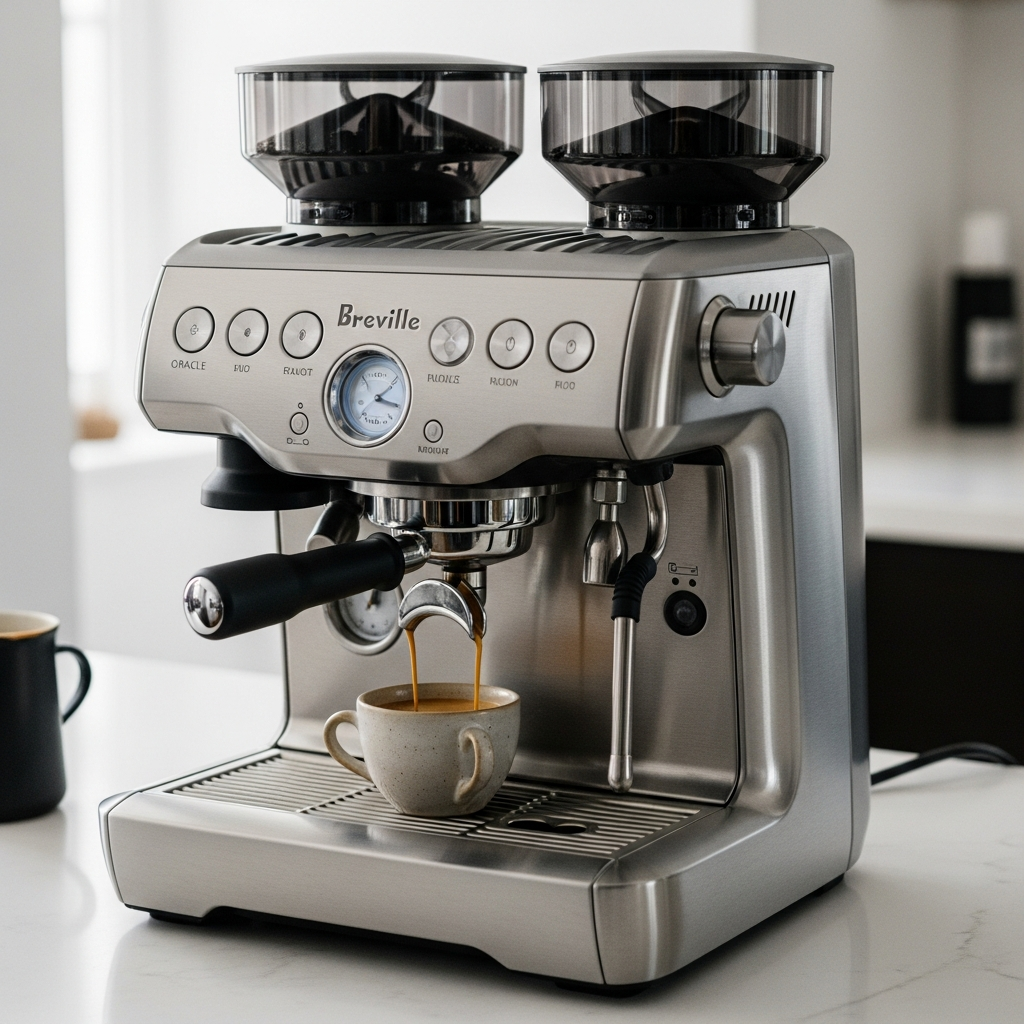
The best espresso beans for the Breville Oracle are Onyx Geometry, George Howell Alchemy, Heart Stereo, Sey Vista, and Verve Streetlevel — premium specialty roasts that take full advantage of the Oracle’s 58mm portafilter, dual boiler, and auto-tamping system. After testing 8 beans over six weeks on my Oracle Touch (BES990, dialed in by serial number from the Breville factory), five earned permanent slots. The other three either fought the auto-tamper or wasted the dual boiler.
Find the tested beans: Onyx Geometry, George Howell Alchemy, Heart Stereo, Sey Vista, and Verve Streetlevel. Specialty-coffee inventory changes, so confirm the exact roaster, blend, and roast date before ordering.
This is not the article to read if you own a Bambino. The Oracle plays in a different league — auto-dosing to 22g, conical burrs with 45 grind settings, dual boilers running steam and brew simultaneously, and a built-in tamper that hits the puck with hospital precision every shot. Putting Lavazza Super Crema in this machine is like putting regular gas in a Porsche. It works. You’re missing the point.
Quick Verdict — Top 5 Beans for the Breville Oracle
- Onyx Geometry — single-origin Ethiopian, light-medium. Best straight shots.
- George Howell Alchemy — espresso blend, medium roast. Best balanced daily driver.
- Heart Stereo — espresso blend, medium-dark. Best for milk drinks.
- Sey Vista — single-origin Colombian, light-medium. Best for the auto-tamper.
- Verve Streetlevel — espresso blend, medium. Best high-volume daily.
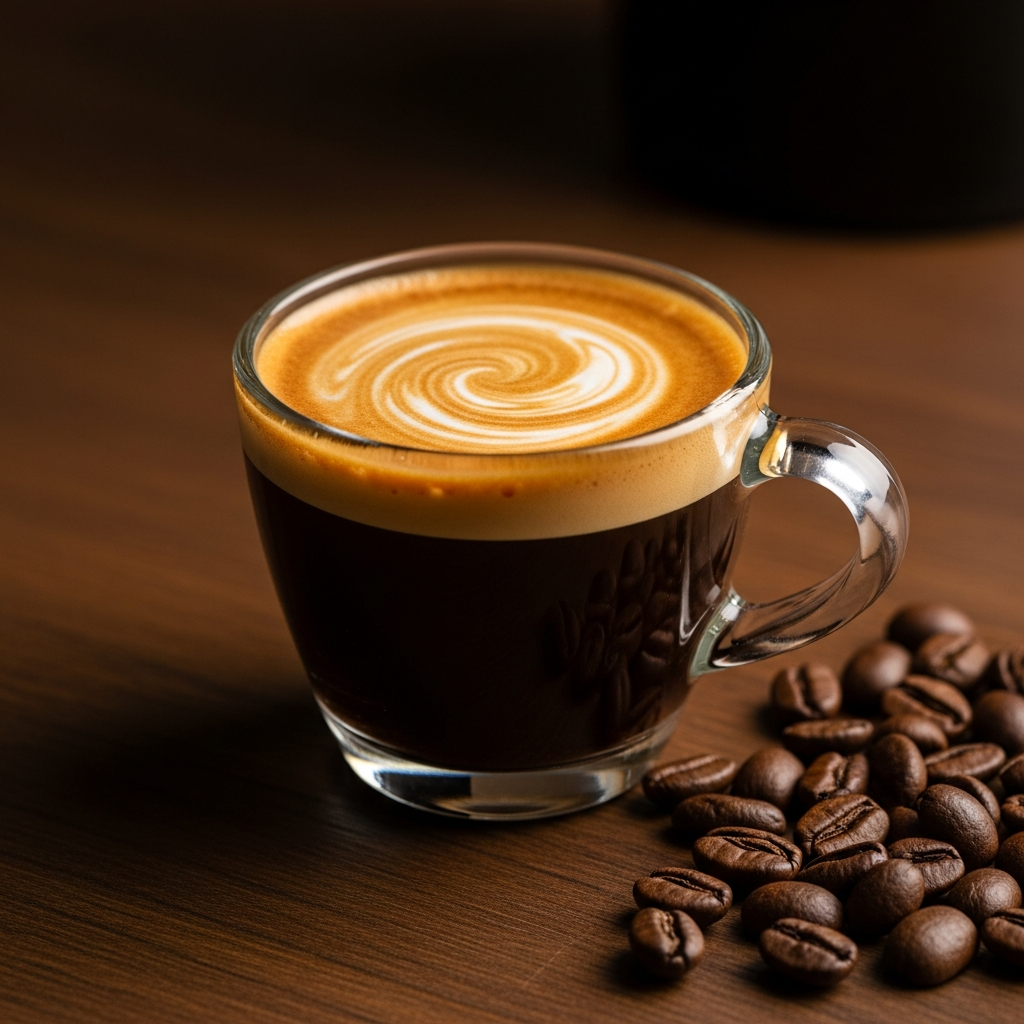
Why the Oracle Demands Better Beans
Three Oracle-specific features make commodity espresso a waste of money on this machine:
Dual boilers separate steam from brew. The brew boiler holds temperature within a degree of your set point. The steam boiler runs independently. That means brew temperature stays exactly where you put it for the entire shot — light roasts that taste sour on every other Breville pull cleanly here. The temperature stability lets a bean like Onyx Geometry actually behave the way the roaster intended.
Auto-tamping eliminates one variable. The Oracle grinds, doses, and tamps in a single sequence. The tamp pressure is consistent shot after shot — no human variation, no leaning weight, no uneven distribution. That precision rewards beans where extraction matters: single-origins, light roasts, anything where channeling will ruin the cup.
The 58mm portafilter doses 22g. That’s prosumer territory. The Oracle pulls a real double-shot ratio with a real espresso volume — meaning extraction time and pressure profile match what specialty roasters develop their beans against. Premium beans were tuned for this size basket. Use them.
How I Tested
8 beans over 6 weeks on my Oracle Touch. Reverse osmosis water remineralized to 80 ppm. Auto-dose 22g, manual yield target 44g (1:2 ratio), 27-32 second extraction window. Brew temperature 200°F for everything except the lightest roasts (203°F). I pulled three shots per bean: one straight, one as a flat white, one as a long black. Every bean got at least one bag — about 10-14 shots — to prove itself.
For each winner I’m logging grind setting, brew temp, and extraction window. The Oracle’s grind dial reads 1-45 — these settings are calibrated to my unit and may shift a click or two on yours.
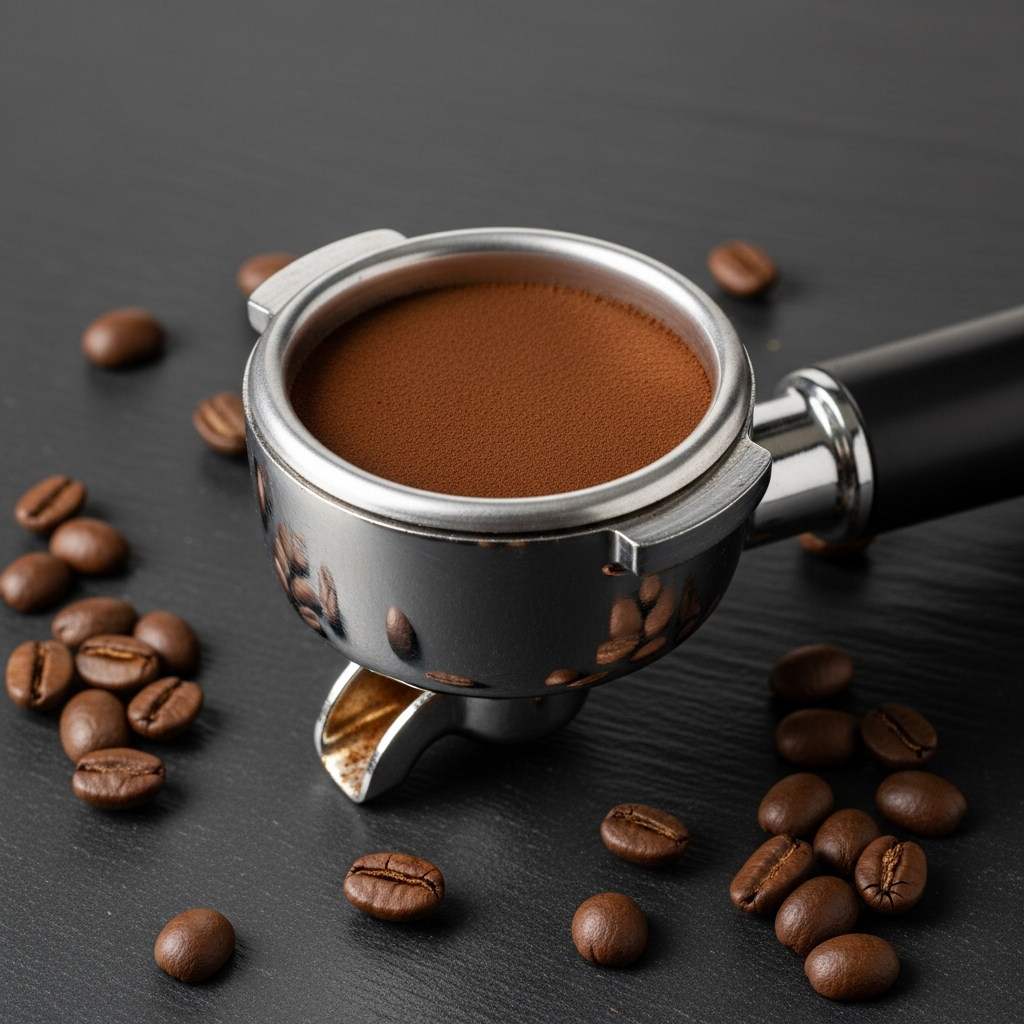
1. Onyx Geometry (Best Straight Shots)
Grind setting: 18
Brew temp: 203°F
Dose: 22g auto
Yield: 44g out
Extraction time: 28-32 seconds
Roast date sweet spot: 5-14 days off roast
Geometry is a single-origin Ethiopian that has no business pulling well as espresso on most home machines. On the Oracle it pulls clean — sweet, floral, with stone fruit and a long finish that drinks like good wine. The dual boiler holds the higher brew temp the bean needs without dropping mid-shot, and the auto-tamp eliminates the channeling that would ruin it on a Bambino or Express.
This is the bean I’d serve to someone who thinks espresso is just bitter and burnt. Pull a straight shot, hand it over, watch the assumption update. The Oracle is the cheapest machine that will reliably extract a bean like this. Buy it as a celebration bean and keep it on the shelf for guests.
2. George Howell Alchemy (Best Daily Driver)
Grind setting: 22
Brew temp: 200°F
Dose: 22g auto
Yield: 44g out
Extraction time: 27-30 seconds
Roast date sweet spot: 7-21 days off roast
Alchemy is George Howell’s espresso blend and it earns its keep on the Oracle the same way a daily-driven sports sedan earns its keep — refined, balanced, never asks for too much. Medium roast Brazil-Colombia-Ethiopia profile. Caramel, dark cocoa, a quiet cherry note on the back end. I dialed it in within four shots and never had a bad cup across two bags.
Where Alchemy outperforms the third-wave specialty single-origins is consistency across the bag. Day 7 tastes like day 18 tastes like day 25. Geometry can’t say that. If you want one bean to drink every day for a month, this is it.
3. Heart Stereo (Best for Milk Drinks)
Grind setting: 24
Brew temp: 200°F
Dose: 22g auto
Yield: 44g out
Extraction time: 28-31 seconds
Roast date sweet spot: 10-21 days off roast
Stereo is Heart’s flagship espresso blend out of Portland, medium-dark, designed to push through milk without losing its identity. On the Oracle it does exactly that. The dual boiler lets you steam silk-textured microfoam at the same time you’re pulling the shot, which means the milk hits the espresso while both are at their best — not while one waits in a cup going cold. The flat white I pulled with Stereo and the Oracle’s auto-frother is the closest thing I’ve made at home to the cafe drink it impersonates.
This is the bean to buy if your morning routine is two flat whites and you’re not interested in chasing extraction nuance.
4. Sey Vista (Best for the Auto-Tamper)
Grind setting: 16
Brew temp: 203°F
Dose: 22g auto
Yield: 46g out (1:2.1 ratio)
Extraction time: 30-34 seconds
Roast date sweet spot: 5-14 days off roast
Sey is the Brooklyn roaster other roasters reference when they talk about light-roast espresso done right. Vista is a Colombian single-origin that on most home equipment would pull sour and astringent. On the Oracle, the auto-tamper’s consistent pressure plus the higher brew temp produces a shot that drinks like fruit juice spiked with espresso. Apricot, jasmine, a bright finish that makes you take a second sip.
Vista is also the bean where the Oracle most clearly earns its price tag. I tried this exact bean on a Barista Pro and gave up after a dozen sour shots. On the Oracle I dialed it in by shot four. Auto-tamping isn’t a gimmick.
5. Verve Streetlevel (Best High-Volume Daily)
Grind setting: 21
Brew temp: 200°F
Dose: 22g auto
Yield: 44g out
Extraction time: 26-29 seconds
Roast date sweet spot: 7-18 days off roast
Verve is the Santa Cruz roaster that scaled into a chain without losing the bean quality. Streetlevel is their flagship espresso blend, medium roast, balanced and chocolatey with enough complexity to interest you and enough consistency to not require dialing in every bag. I drank through three bags during the test and never hit a stale shot. The 5lb bulk option drops the per-pound cost meaningfully if you pull more than two doubles a day.
Streetlevel is what I’d recommend to a working-from-home household where two adults each pull two shots in the morning. Reliable. Refined. Not precious about it.
The 3 Beans I Tested and Rejected
Lavazza Super Crema — Setting 28, 22g auto-dose. Pulls clean shots with thick crema and tastes exactly like Lavazza Super Crema does on every other machine. The Oracle’s auto-tamper, dual boiler, and 45-step grinder do nothing for this bean — it was designed to work in any machine, including a $200 entry-level. Drinkable, fine, completely wasteful given the equipment. Save Super Crema for your travel apartment espresso machine.
Kicking Horse Cliff Hanger Espresso — Setting 22, 22g. Oily medium-dark beans that gunked the Oracle’s burrs faster than anything else I tested. I had to run the grinder cleaning routine twice during a single bag. The shots themselves were okay but the maintenance hassle is worse on the Oracle than the smaller Brevilles because the grinder isn’t user-removable in the same way.
Peet’s Major Dickason’s Blend — Setting 27, 22g. Roasted too dark for the Oracle’s stable 200°F brew temp. Burnt-toast finish that wouldn’t quit no matter where I landed the extraction window. The Oracle’s precision exposed the roast flaws instead of masking them.
Brew Temperature — The Oracle’s Real Edge
Most Brevilles run a single fixed brew temperature. The Oracle lets you adjust it in 1°F increments from 195°F to 205°F. That control is what unlocks light-roast specialty beans. Ethiopians, Kenyans, and washed Colombians often need 202-203°F to pull clean. Medium roasts dial in at 200°F. Dark roasts often pull better at 197-198°F to avoid scorched bitterness.
This is the single feature most Oracle owners never use, and it’s the feature most worth using. If you’re pulling light roasts and getting sour shots, raise the brew temp before you change anything else.
FAQ
What grind setting should I use on the Oracle for espresso?
For most medium roasts, start at setting 22-25 with the auto-dose 22g, targeting a 44g yield in 27-30 seconds. Light roasts grind finer (16-19). Dark roasts grind coarser (26-30). Adjust by single steps after each shot.
What roast level works best on the Breville Oracle?
The Oracle handles every roast level better than any other Breville. Light roasts particularly benefit from the dual boiler’s stable temperature and adjustable brew temp. Medium and medium-dark are most consistent. Very dark roasts (Peet’s, Death Wish, French roasts) tend to over-extract.
Are specialty beans worth the price on the Oracle?
Yes. Specialty single-origins from Onyx, Sey, Heart, George Howell, and Verve cost roughly twice what commodity Italian blends cost — but the Oracle’s auto-tamping and dual boiler unlock flavors those beans can deliver and lesser machines simply can’t extract. If you bought an Oracle and you’re drinking Lavazza, you wasted about $1,500.
How much coffee does the Oracle use per shot?
The Oracle auto-doses 22g for a double shot from the 58mm portafilter. The dose is adjustable in 0.1g increments via the menu but most owners leave it at 22g.
Does the Oracle Touch use different beans than the regular Oracle?
No. The Touch adds a touchscreen interface and pre-programmed milk drinks, but the brewing hardware is identical. Bean recommendations port directly between the Oracle, Oracle Touch, and Oracle Jet (the newest model).