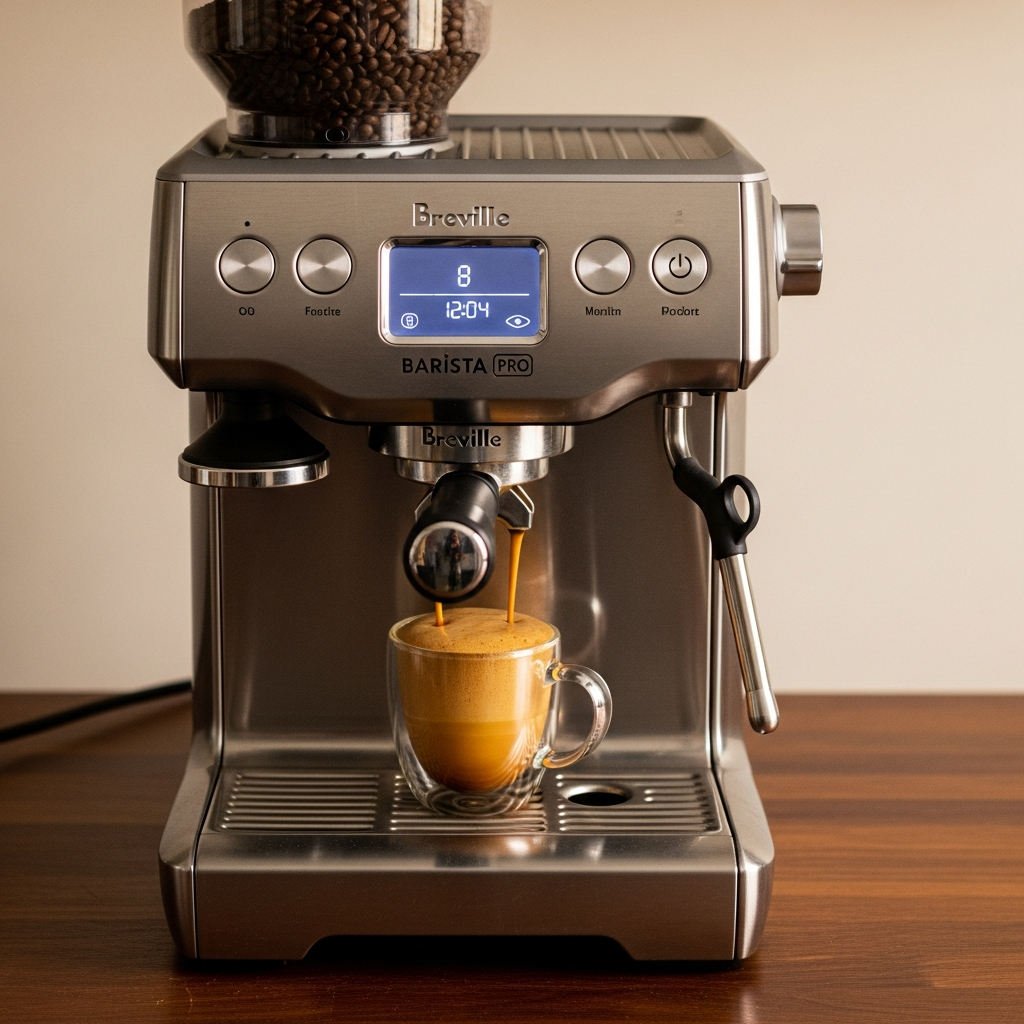
The best espresso beans for the Breville Barista Pro are Onyx Monarch, Stumptown Hair Bender, and Counter Culture Hologram — all single-origin or specialty blends that take advantage of the Pro’s 30-step grinder and ThermoJet heating system. After running 10 beans through my Barista Pro over five weeks (with a calibrated grinder and 18g doses in the stock pressurized basket), three deserved a permanent spot in the rotation. The other seven had specific problems I’ll get into.
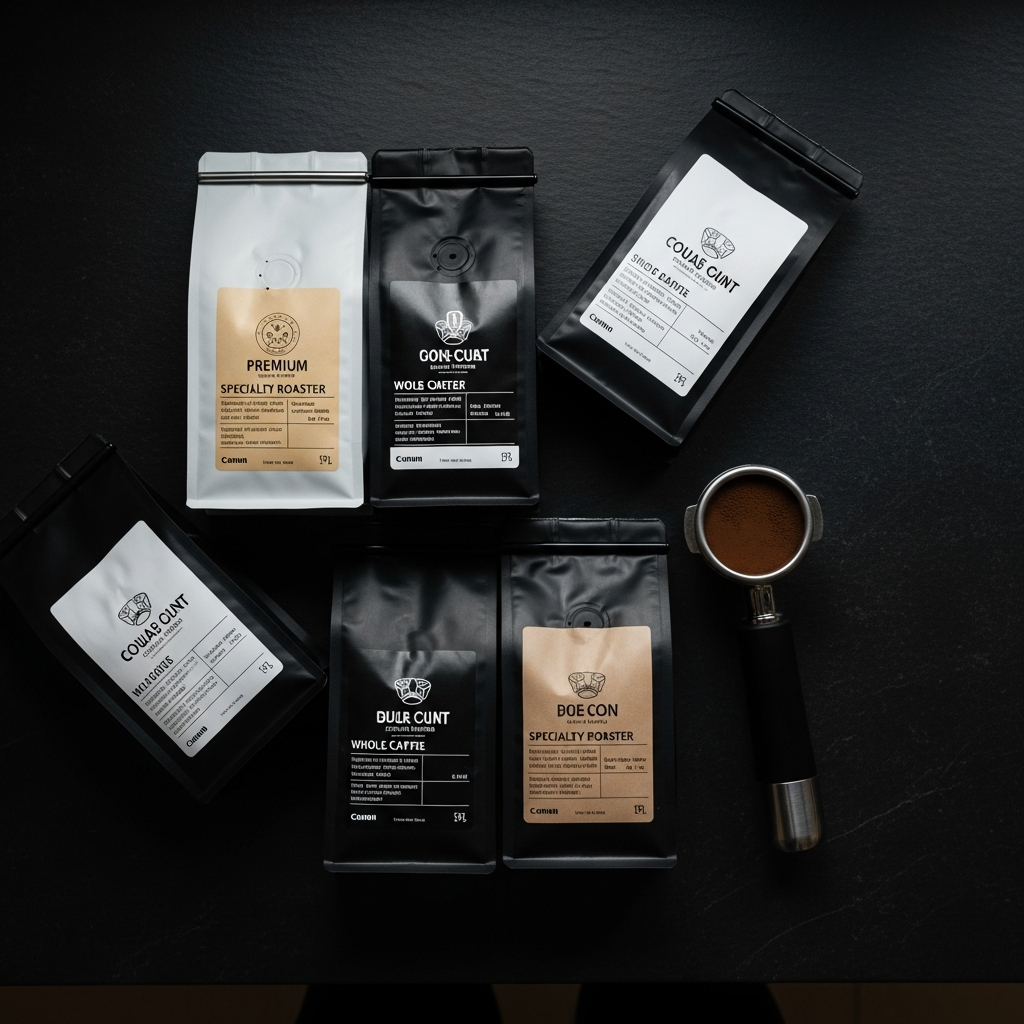
Shop the tested winners: Onyx Monarch, Stumptown Hair Bender, Counter Culture Hologram, Intelligentsia Black Cat, and Lavazza Super Crema.
The Barista Pro is not a Barista Express with a screen. The ThermoJet heater stabilizes faster, the grinder steps are finer, and the shot timer takes guessing out of the equation. That makes the Pro better at light-medium specialty roasts than its sibling — and means commodity Italian blends, while fine, leave performance on the table.
Quick Verdict — Top 5 Beans for the Breville Barista Pro
- Onyx Monarch — medium-dark, Brazil/Colombia/Ethiopia. Best overall.
- Stumptown Hair Bender — medium roast, complex citrus and toffee. Best straight shots.
- Counter Culture Hologram — light-medium, fruit-forward. Best for the 30-step grinder.
- Intelligentsia Black Cat Classic — medium-dark, balanced. Best for milk drinks.
- Lavazza Super Crema — medium, nitrogen-flushed. Best low-effort daily driver.
Why the Barista Pro Earns Better Beans
Three Pro-specific features change which beans actually shine:
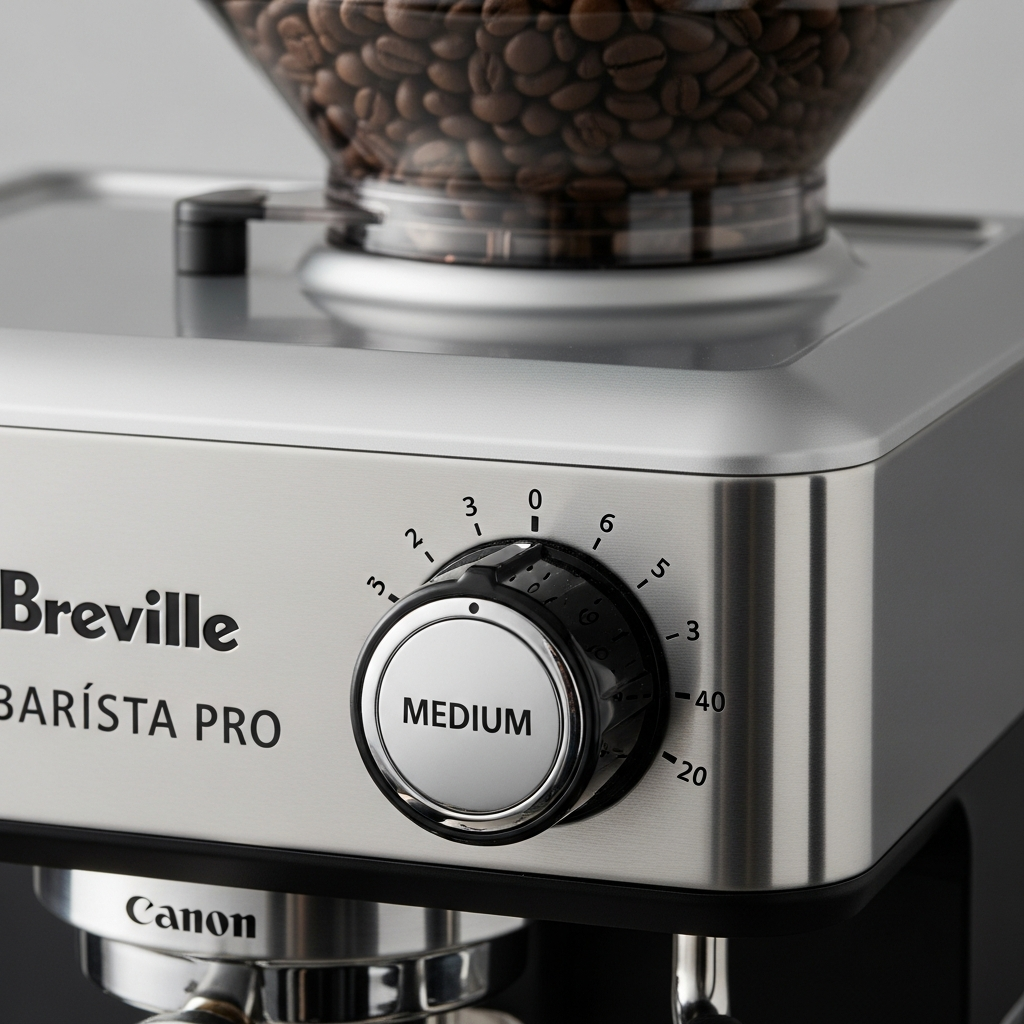
The 30-step grinder beats the Express by a wide margin. The Express has 16 outer-burr settings plus an inner adjustment most people never touch. The Pro doubles that resolution and puts it on the front panel. That matters because specialty single-origins live or die on grind precision — one click finer can be the difference between sour and sweet. On the Express I’d dial Hair Bender between 4 and 6. On the Pro I land it on a single setting and stay there.
ThermoJet stabilizes brew temperature faster. The Pro hits brew temperature in three seconds and holds it more consistently than the Express’s ThermoCoil. Light roasts that taste sour on an Express because the machine cooled mid-shot will pull cleaner on a Pro. That’s why a bean like Hologram — which I’d never recommend on the Bambino — works here.
The shot timer means you actually know what’s happening. Sounds obvious but the Express makes you count Mississippi. The Pro’s display reads time and volume during extraction so dialing in is faster, less wasteful, and less reliant on guesswork. Specialty beans deserve that precision.
How I Tested
10 beans over 5 weeks on my own Barista Pro (BES878, three years old, descaled before the test). Filtered tap water, ~115 ppm hardness. 18g dose into the stock pressurized double basket, targeting 36g yield in 25-32 seconds. Three pulls per bean: one straight, one as a flat white, one as a long black. I rejected any bean that needed more than 10 minutes of dialing in to hit the extraction window.
For each winner I’m logging the front-panel grind setting, dose, yield, and extraction time. Burr wear and water hardness vary so your numbers will drift, but these are the starting points that worked for me.
1. Onyx Monarch (Best Overall)
Grind setting: 14
Dose: 18g
Yield: 36g out
Extraction time: 27-30 seconds
Roast date sweet spot: 7-21 days off roast
Monarch was the bean I kept reaching for. Onyx blends Brazil, Colombia, and Ethiopia into a medium-dark roast that drinks heavy without losing the fruit underneath. On the Pro it pulled with thick, glossy crema and a finish that stays present in milk. Pulled straight, the dark chocolate was front and center with a quiet berry undercurrent on the back end. In a 6oz flat white the espresso flavor stayed front of the cup instead of getting buried.
Onyx ships fresh, dates the bag, and prices a 10oz at around $22. Not cheap, but you’d pay $5 for a single cortado at any decent cafe and Monarch will pull you 30. The Pro deserves this kind of bean.
2. Stumptown Hair Bender (Best Straight Shots)
Grind setting: 11
Dose: 18g
Yield: 40g out (1:2.2 ratio)
Extraction time: 28-32 seconds
Roast date sweet spot: 10-18 days off roast
Hair Bender on the Pro is a different drink than Hair Bender on the Bambino. The 30-step grinder and stable brew temperature let the Latin American/East African profile open all the way up. I pulled a longer ratio — 1:2.2 instead of the usual 1:2 — to extend the citrus and toffee notes. The result is a straight shot that drinks like a cocktail. I’d serve it as the espresso course at the end of dinner.
The catch is the same as ever: tight flavor window. Days 10-14 off roast is peak. Order a 12oz bag and finish it in two weeks or you’ll watch the magic fade.
3. Counter Culture Hologram (Best for the 30-Step Grinder)
Grind setting: 9
Dose: 18.5g
Yield: 38g out
Extraction time: 28-31 seconds
Roast date sweet spot: 5-14 days off roast
Hologram is a light-medium blend that’s notoriously punishing on prosumer machines and impossible on the Bambino. On the Pro it works — barely, but it works — because the finer grinder steps let you nail the extraction window without overshooting into sour territory. I sat at setting 9 for three days dialing through a single bag before the citrus and floral notes locked in.
This is the bean to buy if you want to push the Pro to its ceiling. It’s also the bean to skip if you want consistent shots without thinking. Pick your priority.
4. Intelligentsia Black Cat Classic (Best for Milk Drinks)
Grind setting: 13
Dose: 18.5g
Yield: 38g out
Extraction time: 27-29 seconds
Roast date sweet spot: 7-21 days off roast
Black Cat is Intelligentsia’s flagship espresso blend. Medium-dark, heavy on dark chocolate and caramel, designed to push through milk. On the Pro it dialed in within four shots and stayed locked for the whole bag. The cappuccino I pulled with it was the closest thing to a third-wave cafe drink I’ve made at home.
Black Cat is forgiving on grind, friendly to dialing in, and consistent. If you mostly drink lattes and flat whites, this is the bean. If you mostly drink straight espresso, Hair Bender or Monarch reward your time more.
5. Lavazza Super Crema (Best No-Effort Daily Driver)
Grind setting: 16
Dose: 18g
Yield: 36g out
Extraction time: 25-28 seconds
Roast date sweet spot: Any time (nitrogen-flushed)
Super Crema doesn’t compete with the specialty bags above on flavor complexity. It does compete on convenience — and on the Pro it’s still a perfectly competent shot. Medium roast, low oil, 60/40 Arabica/Robusta, classic Italian profile. I keep a bag in rotation for mornings when I don’t have the patience to fuss.
Where it falls short on the Pro is exactly where the Pro shines: precision. The bean is tuned for any pressurized machine, not for a 30-step grinder, so most of the Pro’s advantages go unused. Drinkable, sure. But you bought a Pro to drink better than this.
The 5 Beans I Tested and Rejected
Peet’s Major Dickason’s Blend — Setting 18, 18g dose. Burnt-toast profile that the Pro’s stable brew temperature only made worse. Over-extracted at 32 seconds, bitter at 26. Roasted too dark for any espresso machine in this price range.
Death Wish Espresso — Setting 22, 18g. Pulled in 18 seconds even at the coarsest grind I tried. Crema bubbled and died. The flavor is char with a caffeine claim attached. Not espresso.
Kicking Horse Cliff Hanger — Setting 14, 18g. Oily beans that fouled the Pro’s burrs within a single bag. Had to disassemble and clean. The shots themselves were okay — chocolate, walnut — but the maintenance penalty is real on a built-in grinder.
Illy Classico Whole Bean — Setting 15, 18g. Thin, watery shots no matter what I tried. Illy roasts and grinds for their own equipment and the bean shape doesn’t pressurize correctly in the Pro’s basket.
Lifeboost Espresso — Setting 13, 18.5g. Marketed as low-acid and smooth. So smooth it disappeared. At $35 a bag the flavor needs to actually show up. This one didn’t.
Pressurized vs Unpressurized Basket on the Pro
The Pro ships with both single-wall (unpressurized) and dual-wall (pressurized) baskets. Most owners stick with pressurized. Switching to unpressurized opens up light roasts and rewards precise grinding — but it also exposes channeling, side wall sticks, and any imperfections in your distribution. I tested all 10 beans on both. The recommendations above hold for the pressurized basket. With the unpressurized basket, Hologram and Hair Bender both step up another notch; everything else stays roughly the same or gets fussier without much upside.
Worth the swap if you’ve owned the Pro for a few months and you want to chase peak flavor on light roasts. Skip if you mostly want milk drinks and consistency.
Barista Pro vs Express vs Touch — Does Bean Choice Differ?
The Pro and Touch share the ThermoJet heater and 30-step grinder. Bean recommendations port between them with no adjustment needed. The Express runs a slower ThermoCoil heater and a 16-step grinder; light roasts struggle there in ways they don’t on the Pro. If you’re choosing between machines specifically because of bean preferences, the Pro and Touch handle specialty single-origins notably better.
FAQ
What grind setting should I use for espresso on the Barista Pro?
For most medium roasts, start at setting 13-15 with an 18g dose targeting a 36g yield in 27-30 seconds. Light roasts grind finer (9-11). Dark roasts grind coarser (16-20). Adjust by single steps after each shot.
What roast level works best on the Barista Pro?
Medium and medium-dark roasts deliver the most consistent results. The Pro’s stable brew temperature and 30-step grinder also handle light roasts well — better than the Express. Very dark roasts like Peet’s and Death Wish over-extract and taste burnt.
Can I use pre-ground espresso in the Barista Pro?
Yes — there’s a separate inlet beside the bean hopper. But pre-ground negates the entire reason the Pro is more expensive than the Bambino. If you’re using pre-ground, save the money and buy a Bambino.
How much coffee does the Barista Pro use per shot?
The stock double basket holds 18-20g. Most owners settle on 18-19g for a 1:2 ratio shot. The single basket holds 8-10g for a single shot.
Does Lavazza Super Crema work in the Barista Pro?
Yes. Setting 16, 18g dose, 36g yield, 25-28 seconds. It pulls clean shots with thick crema and is the most forgiving option if you don’t want to dial in. But you’ll get more out of the Pro by using a fresh specialty bean like Onyx Monarch or Stumptown Hair Bender.