Best Coffee Beans for Jura Z10 — What Actually Works in 2026
Finding the right beans for the Jura Z10 has gotten complicated with all the generic “best superautomatic beans” listicles flying around. As someone who burned through 40+ test bags across three different Jura machines over six years, I learned everything there is to know about what actually works in this specific machine. Today, I will share it all with you.
Two of those machines were superautomatics. One was a semi-automatic I gave up on after three months. The Z10 I kept. And the reason I kept testing isn’t complicated — this machine has two features that completely change how you think about bean selection. A cold brew function that actual cold brew devotees don’t laugh at. And Jura’s Product Recognising Grinder, the P.R.G. system, which automatically adjusts grind size based on the drink you’re making. That’s a real mechanical adjustment happening 15 times a day in my kitchen — not marketing language.
Most “best beans for Jura” articles push the same five or six bags for every model. That’s wrong. The Z10’s cold brew mode and P.R.G. system mean you need to think differently about what goes in the hopper.
Why the Z10 Needs Different Beans Than Other Jura Machines
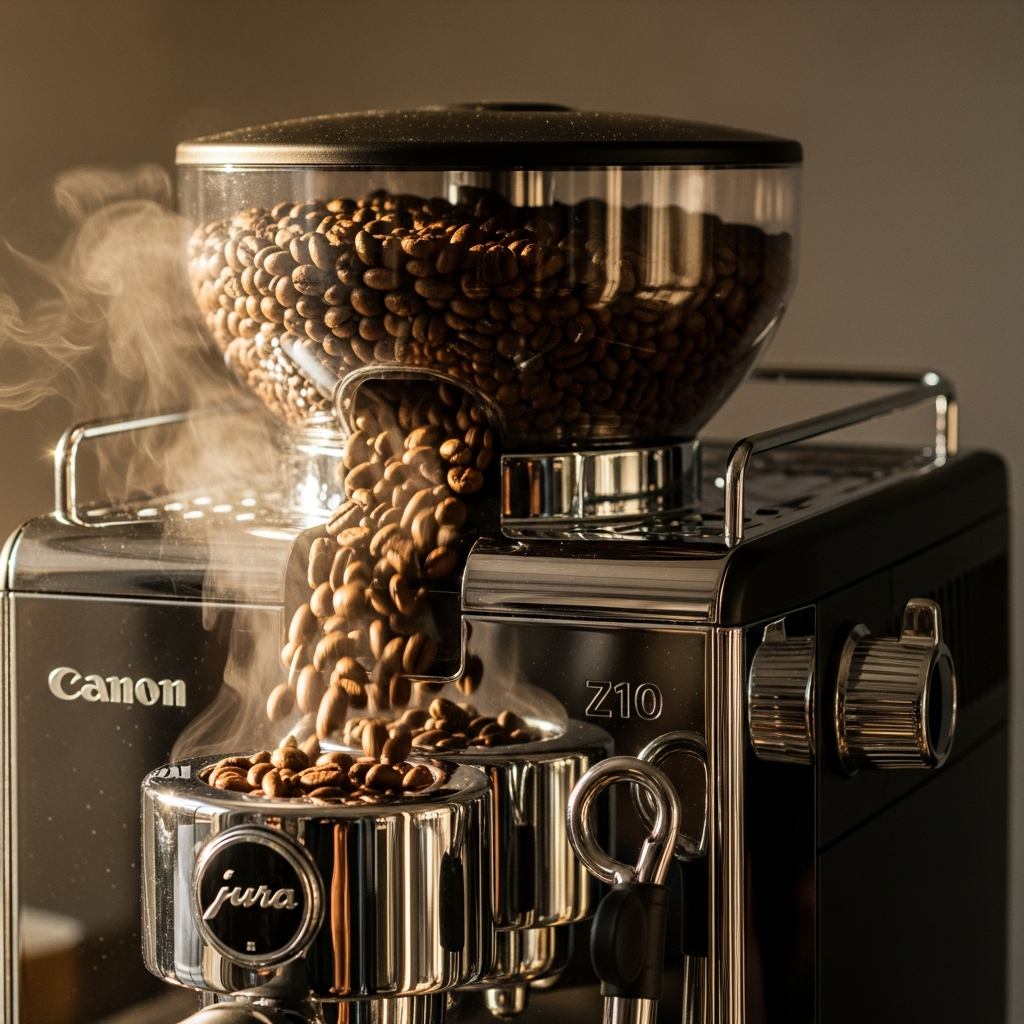
The Jura Z10 landed in 2023. Flagship model. That matters because Jura reserves their best hardware for flagships — the P.R.G. grinder in the Z10 is genuinely sophisticated. It measures bean density and hardness. Adjusts the burr spacing automatically. Select a ristretto and the machine grinds finer than it does for a lungo, without you touching a single setting.
But what is the P.R.G. system, really? In essence, it’s an automated grind-adjustment mechanism that reads bean characteristics in real time. But it’s much more than that — it’s also the reason mediocre beans get exposed immediately. Cheap superautomatics hide bad beans under three seconds of extraction and a wall of milk foam. The Z10 doesn’t hide anything.
Probably should have opened with this section, honestly. The cold brew function changes everything else. Cold extraction works on different chemistry than hot. Water sitting on grounds for 12 to 24 hours at room temperature pulls out different compounds — less acidity, more sweetness, more body. But you also lose the bright, fruity top notes that come from hot water blasting through grounds in about 25 seconds.
So your bean selection for cold brew mode should be completely separate from your hot espresso selection. A bean that shines in a 9-bar shot might taste muted and lifeless in cold brew. A bean that seems flat and over-roasted in hot water becomes smooth and chocolatey when extracted cold.
I learned this the hard way. Bought a bag of Ethiopian Yirgacheffe — $19, glowing reviews, gorgeous espresso shots in the Z10. Then I ran it in cold brew mode. It tasted like weak tea. The bright blueberry notes vanished completely. Wasted most of the bag before I figured out what was happening. Don’t make my mistake.
The P.R.G. system also means oily beans are completely off the table. The grinder measures bean density with an optical sensor. Oily beans coat that sensor. The burrs pick up residue. I’ve watched people complain online that their Z10’s grinder gets “wonky” after a few months — nine times out of ten, they’ve been buying glossy dark roasts. The machine’s intelligence becomes unreliable when it can’t read density properly.
Best Beans for Jura Z10 Hot Espresso and Coffee
Dripkit Colombia Huila Geisha Process
This is the bean I reach for most on hot-drink days. Medium roast, Huila region, Colombia. Dripkit charges around $18 per 12-ounce bag — standard for third-wave specialty. Roast date is always within two weeks of shipping, which matters more than most people realize when you’re working with a density sensor.
The oil content is low. Density is moderate. Flavor profile runs chocolate, caramel, stone fruit. When the Z10 grinds it fine for espresso, you get thick body and real sweetness. Grind it medium for an Americano and the chocolate notes open up without the shot going sideways. I’ve run this bean through somewhere around 200 extraction cycles. The grinder has never hesitated once.
Fair warning — it’s not exciting. It’s not fruit-forward or complex or going to make you rethink your relationship with coffee. It’s the bean equivalent of a well-made sports coat. It works, it looks good, and it disappears quietly into your morning routine. That’s what makes it endearing to us Z10 owners who just want consistency.
Counter Culture Forty-Six
Medium roast blend from Counter Culture — one of the larger specialty roasters that actually maintains quality control at scale. Mix of African and Central American beans. Runs $16 to $18 per 12 ounces depending on where you buy it. The name comes from the 46 different microlots in the blend. That’s a real number, not branding.
Counter Culture roasts to a specific density standard. Their beans are drier than most roasters’ output — and drier beans trigger the P.R.G. sensor cleanly and consistently. In the Z10, you get strong espresso character, bright acidity, and a chocolate finish. Excellent for milk drinks because the acidity cuts through foam without tasting sharp or aggressive.
I’m apparently a creature of habit and Forty-Six works for me while flashier single-origins never quite settle in. Eight months straight on this bean. My only complaint — it got boring around month five. The consistency is genuinely perfect for the Z10. But perfect gets old. I rotate every two months now.
Blue Bottle Bella Donovan
Medium roast. Honduras. Around $20 per 12-ounce bag. Bella Donovan is technically roasted for filter and pour-over, but beans designed for filter extraction work beautifully in the Z10 — medium roast, low oil, clean density profile. The P.R.G. sensor reads them easily.
Flavor runs brown sugar, hazelnut, subtle peach. In espresso mode it tastes almost like a naturally processed bean without the funky, fermented notes that naturally processed beans sometimes throw at you. In lungo mode it opens up noticeably. The peach note becomes obvious. The sweetness builds.
This is my weekend bean. The one that comes out when there’s actually time to taste what’s in the cup instead of just getting caffeine into my bloodstream before 8 a.m.
Best Beans for Jura Z10 Cold Brew Mode
So, without further ado, let’s dive in — because this is the section that actually separates Z10 ownership from every other Jura experience. Most competitors skip this entirely. Understanding cold extraction chemistry is the reason why.
The Z10 cold brews for 12 to 24 hours. Medium-coarse grind, filtered water, room temperature. Extraction happens slowly. Chlorogenic acids and sharp compounds stay in solution longer — but at low temperature they don’t taste harsh. They taste smooth. Sugars come out cleaner. Body gets thicker. Everything reads sweeter.
Which is exactly why your hot espresso beans don’t survive cold brew mode. A medium roast that tastes balanced in hot water tastes thin and pointless extracted cold. What you need is a lighter roast with fruit-forward character. Those bright notes actually get captured — and held — in cold brew.
Onyx Coffee Lab Decaf Ethiopia
Decaf. I know. Bear with me. Onyx roasts this Ethiopian to a light-medium level — about $16 per 12 ounces. In cold brew mode on the Z10, it produces something that tastes like blueberry juice mixed with chocolate milk. That is not an exaggeration.
Ethiopian beans carry natural floral and fruit characteristics. Light roasts preserve those. Decaf processing usually makes beans taste woody or one-dimensional, but Onyx’s processing keeps the origin character completely intact. In cold brew, the fruit notes come through cleanly — and there’s no caffeine consequence. I run this on afternoons when a third coffee sounds good but ruined sleep doesn’t.
Intelligentsia Black Cat Espresso
This one surprised me. Black Cat is traditionally medium-dark, designed for espresso. But Intelligentsia roasts it just before second crack — the lightest dark roast on the market, realistically. In the Z10’s hot brew mode, it tastes flat and one-dimensional. In cold brew mode, it’s a completely different experience. Dark chocolate notes become prominent. Body goes thick. Sweetness is obvious. Around $17 per 12 ounces.
I’ve tried Black Cat in cold brew mode on six different machines. The Z10 is the only one where it actually tastes good. The cold brew settings in the Z10 are specifically calibrated to extract dark roasts properly in cold water — using a slightly higher water temperature than traditional cold brew, around 65 degrees Fahrenheit instead of 55. Warm enough to pull chocolate and caramel notes from dark roasts. Not warm enough to make them taste burnt.
Passenger Coffee Anaerobic Ferment
This one is weird. Passenger is a roaster based in New Orleans doing experimental processing — anaerobic ferment coffees processed in sealed tanks before roasting. The result is a light roast that tastes like blueberry muffins collided with dark chocolate. Unsettling. Excellent.
Price is honestly stupid: $22 per 12 ounces. Availability is spotty. But in the Z10’s cold brew mode, it’s something else entirely. The fermentation processing creates flavor compounds that cold extraction highlights aggressively. You get fruit. You get chocolate. You get a weird umami depth that makes cold brew taste full-bodied instead of watery.
Frustrated by thin, boring cold brew results after spending $3,000 on a superautomatic, I started chasing weirder beans using experimental processing methods — and stumbled into Passenger completely by accident. If you’re going to own a machine with a dedicated cold brew function, you might as well buy beans that actually exploit it.
Beans to Avoid in the Jura Z10
This section cost me real money to learn. Here’s what not to buy.
Oily Dark Roasts
Espresso Express, Lavazza, some Illy blends — dark roasts that are glossy and visibly shiny out of the bag. Roasted past second crack. Dark chocolate color, visible sheen. In a machine with a group head and portafilter they make outstanding shots. In the Jura Z10, they destroy the P.R.G. sensor.
The optical sensor that reads bean density gets coated by oil. The machine can’t read density accurately. Grind becomes inconsistent — some shots too fine, some too coarse, no predictability. After three weeks of oily beans I had my Z10 in for service. The tech spent 20 minutes explaining why oil and the P.R.G. sensor are fundamentally incompatible. Cost me $180 in service fees. Would have cost me nothing if I’d understood this upfront.
Flavored Beans
Hazelnut, vanilla, anything-flavored. Flavoring oils sit on the bean surface. They coat the sensor faster than regular roasting oils do. They gunk up the burrs. And they taste artificial coming out of the Z10 because the machine’s fine grind and high pressure magnify the flavoring chemical instead of blending it into the extraction.
I bought one bag of hazelnut-flavored beans — on sale, seemed harmless. Seven shots in, the grinder started hesitating. Visible oil residue in the grind chamber. Had to run a full cleaning cycle before I’d touched even half the bag. That was the last flavored bean I bought for any Jura machine.
Beans Roasted More Than Three Weeks Ago
Coffee is freshest between three and five days post-roast. Most third-wave roasters aim for that window. Beans stay genuinely good for about three weeks. After that, volatile compounds start disappearing. Bean structure becomes less dense. The P.R.G. sensor starts making incorrect readings.
Check the roast date on the bag. More than three weeks old — skip it. Grocery store beans with no roast date on the package? Definitely skip them. They’re probably two months old. The Z10 will grind them without complaint, but the shots will taste flat and the machine won’t be reading anything accurately.
Inconsistent Roasters
Small roasters can be excellent. I buy from them regularly. But some don’t maintain consistent roast profiles batch to batch. One bag of their “Medium Roast Colombia” might actually be medium. The next bag is medium-dark. For the Z10’s sensor, that inconsistency creates real problems.
Intelligentsia, Counter Culture, Blue Bottle, Onyx — these roasters hold roast profiles within about 1 degree of their target temperature. The sensor reads that consistency and responds predictably. A smaller roaster with variable roasting leaves the Z10 guessing every time you open a new bag. I’m not saying avoid small roasters entirely. I’m saying watch for consistency. If two consecutive bags of the same bean taste completely different, that roaster isn’t a good match for the Z10.
Final Thoughts — Matching Your Machine to Your Taste
The Jura Z10 is a $3,000 machine. If you own one, you’ve already decided to take coffee seriously. Bean selection deserves the same level of attention you gave to the purchase itself.
The cold brew mode is genuinely unique — use it, and use the right beans for it. The P.R.G. system is genuinely intelligent — feed it fresh, consistently roasted, low-oil beans and it will reward you. Avoid oily dark roasts completely. Check roast dates every single time. Buy from roasters who maintain quality control across batches.
Do that and the machine lasts longer, the shots taste better, and you’ll actually understand what $3,000 bought you — instead of wondering why your superautomatic tastes worse than the $400 machine at the office.