Americans drink 400 million cups of coffee daily, and over the centuries, we’ve developed an entire vocabulary to describe our obsession. From military mess halls to hipster cafes, coffee slang reveals as much about cultural history as it does about the drink itself.
Whether you’re confused by coffee shop terminology or just want to sound like a local at your neighborhood cafe, here’s your guide to coffee slang—from timeless classics to 2026’s newest terms.
Classic Coffee Slang Still in Use
Java
Origin: The Indonesian island of Java was one of the first places outside Africa to cultivate coffee commercially. Dutch colonizers exported so much “Java coffee” in the 1600s that the island’s name became synonymous with the drink.
Usage: “I need my morning java before I can function.”
Joe
Origin: Disputed, but the leading theory credits Josephus Daniels, Secretary of the Navy under Woodrow Wilson. In 1914, Daniels banned alcohol aboard Navy ships, making coffee the strongest drink available. Sailors allegedly started calling it “a cup of Joe” in his honor—or mockery.
Usage: “Grab me a cup of joe on your way back.”
Mud
Origin: Refers to cheap, thick, over-brewed coffee—the kind that looks like mud and tastes about as appealing. Often used affectionately for diner coffee or military mess hall brews.
Usage: “This truck stop mud isn’t great, but it’ll keep me awake.”
Rocket Fuel
Origin: Military and trucker slang for extremely strong coffee, the kind that delivers an immediate and powerful caffeine jolt.
Usage: “That cold brew is pure rocket fuel—I couldn’t sleep until 3 AM.”
Cafe and Barista Slang
Shot
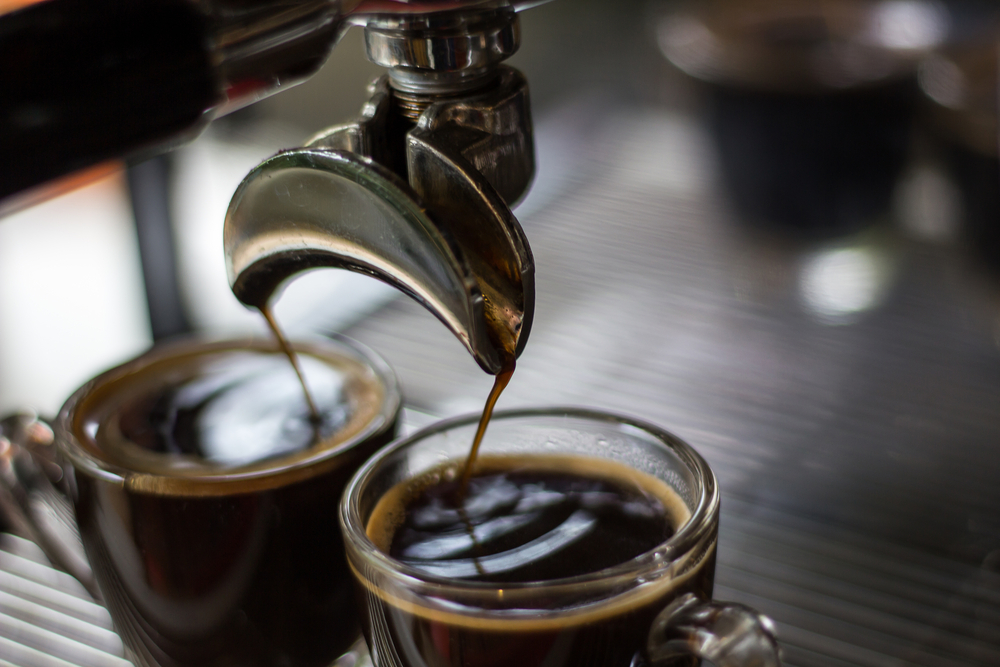
A single serving of espresso (about 1 ounce). “Double shot” or “doppio” means two servings.
Wet / Dry
Describes cappuccino foam levels. “Wet” means more steamed milk, less foam. “Dry” means more foam, less milk.
Bone Dry
A cappuccino with only foam—no steamed milk at all. Just espresso topped with a mountain of milk foam.
Short Pull / Long Pull
Refers to espresso extraction time. A short pull (ristretto) uses less water for a concentrated, sweeter shot. A long pull (lungo) uses more water for a milder, larger serving.
Skinny
Made with nonfat or skim milk instead of whole milk.
Breve
Made with half-and-half instead of milk. Richer and creamier.
Red Eye
Drip coffee with one shot of espresso added. Sometimes called a “shot in the dark.” A “Black Eye” has two shots; a “Dead Eye” or “Green Eye” has three.
Regional Coffee Slang
Regular (New England)
In Boston and throughout New England, ordering coffee “regular” means with cream and sugar—not black. This confuses visitors from other regions where “regular” means plain.
Cuppa (British influence)
Shortened form of “cup of”—borrowed from British tea culture but increasingly applied to coffee, especially in East Coast cities.
Go Juice (Military/Midwest)
Any caffeinated beverage needed to start the day or stay alert during long shifts.
Modern Coffee Slang (2020s)
Third Wave
Refers to the movement treating coffee as an artisanal food product, like wine. Emphasizes single-origin beans, light roasts, and traceability.
Specialty
Coffee scoring 80+ points on the industry’s 100-point scale. The term has become mainstream as a marker of quality.
Single Origin
Coffee from one specific region, farm, or lot—as opposed to blends mixing beans from multiple sources.
Microlot
Coffee from a specific, small section of a single farm. The ultimate in traceability and uniqueness.
Natural / Washed
Processing methods. “Natural” (dry processed) coffees are fruity and funky. “Washed” (wet processed) coffees are cleaner and brighter.
Internet and Meme Coffee Slang
Bean Water
Deliberately reductive term for coffee, popular in meme culture. “Don’t talk to me until I’ve had my bean water.”
Dirt Juice
Similar to “bean water”—ironic slang acknowledging that coffee is essentially hot water filtered through plant matter.
Sad Beige Coffee
Mockery of aesthetically-focused but flavorless coffee drinks, referencing the “sad beige” minimalist trend on social media.
Using Coffee Slang Correctly
Context matters. “Java” and “joe” work anywhere. “Rocket fuel” fits casual settings. “Single origin” and “microlot” belong in specialty coffee conversations.
The key to coffee slang—like coffee itself—is knowing your audience and not overcomplicating what should be enjoyable.
Language evolves with culture. Today’s barista jargon becomes tomorrow’s everyday vocabulary, just as “cappuccino” and “latte” moved from Italian imports to standard American English.