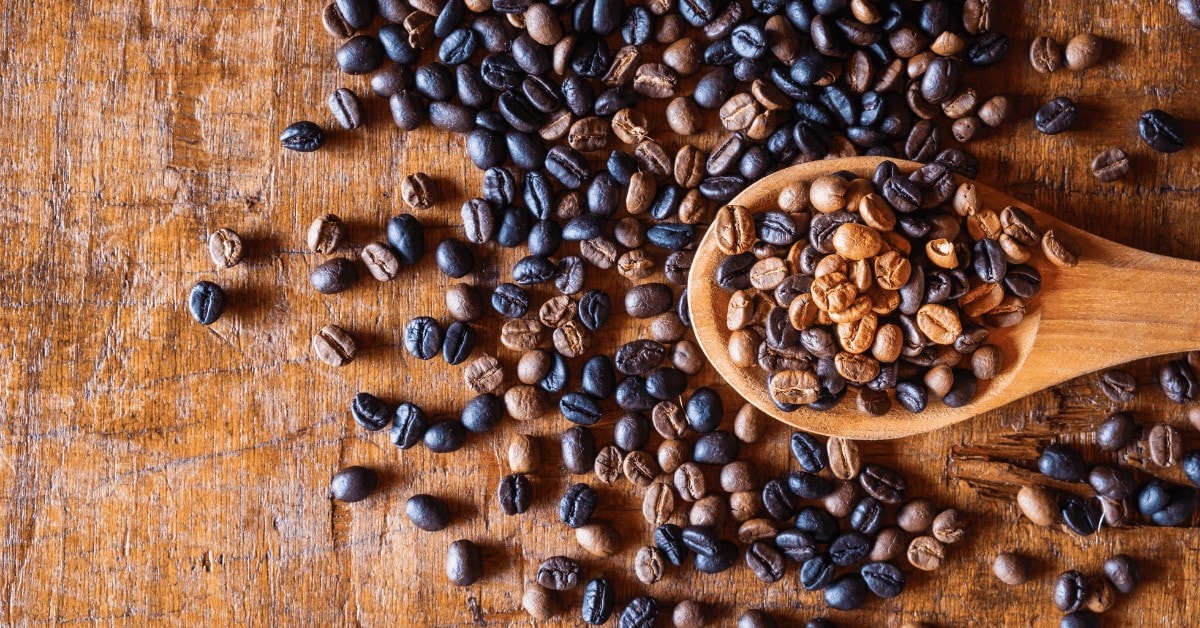
The three broad coffee roast types are light, medium and dark. Light roasts emphasize more origin-specific flavor and brighter acidity; medium roasts balance origin and roast character; dark roasts emphasize deeper toasted, smoky and bitter notes.
Those labels are useful directions, not universal standards. One roaster’s “medium” can be close to another roaster’s “dark,” so compare bean color, tasting notes and the roaster’s description rather than relying on the name alone.
Coffee Roast Types Compared
| Roast | Bean appearance | Typical flavor emphasis | Good starting point for |
|---|---|---|---|
| Light | Light brown, usually dry surface | Fruit, florals, citrus, tea-like or grain notes; brighter acidity | Drinkers who want origin character and clarity |
| Medium | Medium brown, generally non-oily | Balanced sweetness, acidity and roast flavor | A versatile everyday cup across most methods |
| Dark | Dark brown to nearly black; may look oily | Chocolate, toast, spice, smoke and more pronounced bitterness | Bold coffee, milk drinks and people who prefer roast character |
Fast choice: start with medium if you do not know your preference. Move lighter for more fruit and brightness, or darker for more roast flavor and bitterness.
What Does Roast Level Mean?
Roasting transforms green coffee through heat. As roasting progresses, beans lose moisture and mass, expand, darken and develop new aroma and flavor compounds. Roasters control heat, time and development to reach a target flavor—not merely a target color.
Color is the everyday shorthand for roast level, but the Specialty Coffee Association notes that the industry still lacks a single agreed boundary between light, medium and dark. Professionals may use color-measuring instruments, while retail labels often reflect each roaster’s own scale.
Light Roast Coffee
Light-roasted beans are removed earlier in the roasting process. They are usually light brown with a matte surface because fewer oils have migrated outward.
- Flavor: often fruitier, floral, herbal, citrusy or tea-like, depending on the coffee.
- Acidity: commonly perceived as brighter or more lively.
- Body: often lighter, though origin and brewing method also matter.
- Best for: highlighting differences among farms, regions, varieties and processing methods.
Light does not mean weak. Brew strength depends on the coffee-to-water ratio and extraction. A light roast can make a very strong cup, and poor extraction can make it taste sharply sour rather than pleasantly bright.
Pour-over is a common choice for clarity, but light roasts can work in immersion, espresso and other methods when the grinder and recipe are adjusted. See our light-roast coffee guide for examples.
Medium Roast Coffee
Medium roast sits between bright origin character and darker roast development. The beans are medium brown and commonly remain dry on the surface.
- Flavor: caramel, nuts, chocolate and ripe fruit are common descriptions.
- Acidity: moderate and integrated rather than dominant.
- Body: often rounder than a light roast without the heavier roast character of a dark roast.
- Best for: a flexible everyday coffee across drip, pour-over, French press, AeroPress and espresso.
“Breakfast roast,” “American roast” and “city roast” are sometimes used around the medium range, but these names are not precise or consistent across brands.
Dark Roast Coffee
Dark roasting develops flavors created by the roasting process more strongly and reduces the prominence of delicate origin notes. Beans range from dark brown to nearly black and may show surface oil.
- Flavor: dark chocolate, toasted nuts, spice, smoke and char can appear.
- Acidity: usually tastes less bright, though “low acid” health claims require more nuance.
- Body: can feel bold, but very dark roasting can also make beans more porous and the cup less dense than expected.
- Best for: drinkers who prefer strong roast character, and recipes where coffee must remain noticeable through milk.
French, Italian and Vienna are traditional names used toward the darker end, but brands apply them differently. Darker is not automatically stronger, fresher or higher quality. Explore specific options in our dark-roast coffee guide.
Is Espresso Roast a Separate Roast Type?
No. Espresso is a brewing method, not a fixed roast level. An “espresso roast” or “espresso blend” is coffee a roaster believes will work well as espresso. It may be light, medium or dark, though medium-to-dark profiles are common.
You can brew espresso with any roast and use an espresso-labeled coffee in a drip brewer. The label describes intent, not a different species of bean or a mandatory degree of roasting.
Which Coffee Roast Has the Most Caffeine?
Roast color is a poor shortcut for predicting caffeine in your cup. Bean species, dose, grind, brew ratio, beverage size and extraction all matter. The National Coffee Association notes that light roasts may retain slightly more caffeine, but dark flavor does not mean higher caffeine.
Measurement also changes the comparison: darker beans lose more mass and expand during roasting, so a scoop and a weighed dose do not contain the same number or mass of beans. If caffeine matters, compare the actual product and recipe rather than choosing by color alone. Read our deeper guide to which coffee has the most caffeine.
Does Dark Roast Have Less Acid?
Dark roasts generally taste less bright and sharp than light roasts, but perceived acidity is not the same as a simple pH reading or a guarantee of digestive comfort. Origin, processing, brewing and individual sensitivity also affect the experience.
Choose dark roast if you prefer less fruit-like brightness, but do not assume every dark coffee is medically “low acid.” Product-specific testing would be needed for a precise chemical claim.
Common Roast Names from Lighter to Darker
You may see these terms on bags, roughly moving from lighter to darker:
- Blonde or cinnamon
- City
- Full city
- Vienna
- French
- Italian
Use that order only as a general map. The SCA and National Coffee Association both caution that roast naming varies among roasters.
How to Choose the Right Roast
- Pick your flavor: bright and fruit-forward, balanced and sweet, or dark and roast-forward.
- Read the tasting notes: they are usually more useful than the roast name alone.
- Consider milk: medium-dark and dark coffees often remain more noticeable in milk drinks.
- Adjust the recipe: light roasts often benefit from a finer grind, hotter water or longer contact; dark roasts may need gentler extraction.
- Try adjacent levels: compare coffees from the same roaster because its internal labels are more consistent.
Coffee Roast FAQ
What is the smoothest coffee roast?
Many people find medium roast the most balanced, while others call a low-bitterness dark roast smooth. “Smooth” is subjective and also depends on freshness and extraction.
Which roast is strongest?
Dark roast usually tastes most roast-forward, but brew ratio determines beverage strength and roast alone does not determine caffeine.
Which roast is best for beginners?
Medium roast is the most useful starting point because it balances acidity, sweetness and roast flavor. Your own taste is the final standard.
Bottom Line
Light, medium and dark are the three broad roast types. Choose light for more origin clarity, medium for balance and versatility, and dark for pronounced roast character. Treat espresso roast and traditional names as roaster-specific descriptions—not universal categories.
Sources: National Coffee Association roast guide and the Specialty Coffee Association’s discussion of roast-color standards.